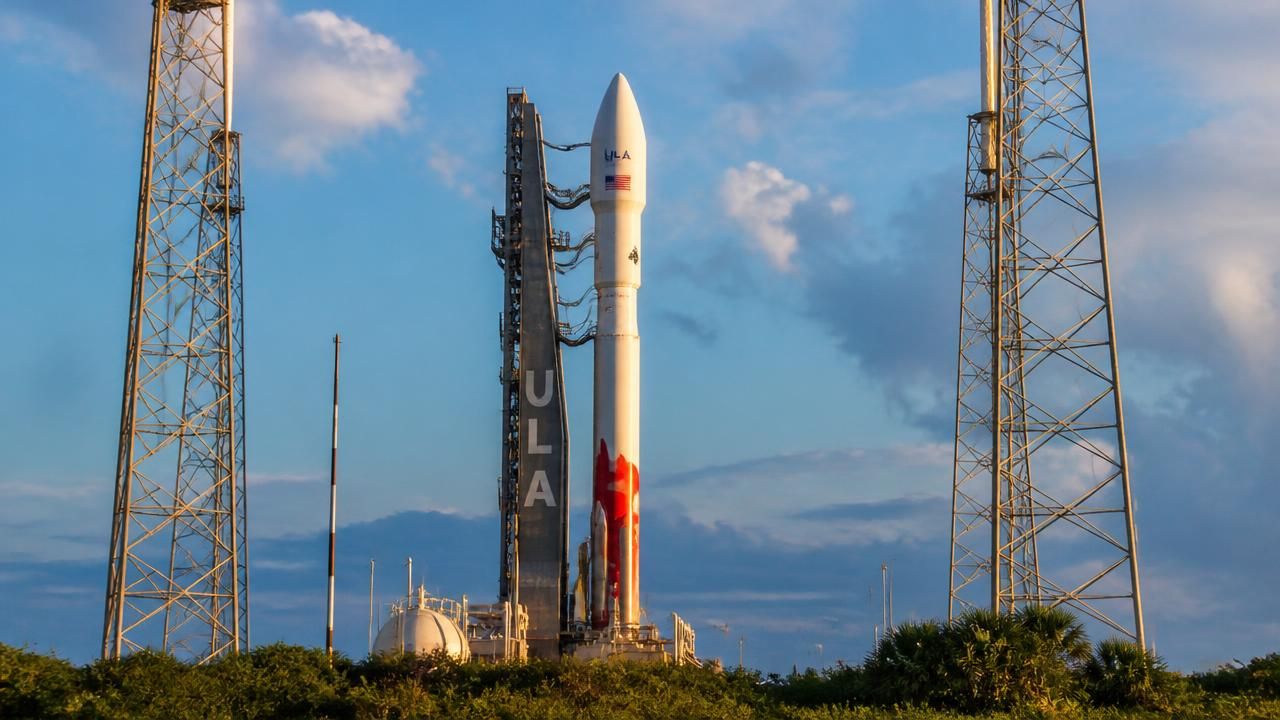
United Launch Alliance is betting that a little superstition can't hurt. The company announced Wednesday that its Vulcan Centaur rocket will return to flight on Thursday, November 13 — a Friday the 13th launch date that ULA is embracing rather than avoiding — carrying 40 satellites for Amazon's Leo broadband constellation. The mission, pending range approval, will lift off from Cape Canaveral Space Force Station in Florida.
The flight ends a nine-month grounding that began after a solid rocket booster anomaly during a February mission, an incident that ULA's most important customer says it has not forgotten. The return is critical not just for Vulcan's commercial manifest but for the company's position in the national security launch market, where confidence is the only currency that matters.
What went wrong — twice
Vulcan's troubles are not a single failure but a pattern. Nozzle failures struck the rocket's solid rocket boosters on two of its first four missions, most recently during the February flight. In both cases, the rocket overcame the anomaly and completed its mission — a testament to the vehicle's margins, but not enough to satisfy the US Space Force.
According to Ars Technica, officials at the Space Force, ULA's primary customer, "lost confidence in Vulcan" after the second occurrence. That loss of confidence is the real story here: a rocket that completes its mission despite a hardware failure is a rocket with a design or quality-control problem that has now repeated itself. Space News reported separately that the Space Force intends to review Vulcan's commercial flights before clearing the vehicle for military missions — meaning the November 13 launch will be scrutinized as much as it is celebrated.
Why this launch matters: Amazon's constellation
The payload is the first of 38 Vulcan flights Amazon has booked to deploy the bulk of its Leo broadband network — the constellation formerly known as Project Kuiper — which is intended to compete directly with SpaceX's Starlink. That contract makes Amazon one of ULA's largest commercial customers and gives Vulcan a multi-year backbone of demand that most new rockets never secure.
But the arithmetic cuts both ways. A grounded Vulcan is a grounded Amazon deployment schedule. Every month of delay pushes back Amazon's ability to reach the service coverage it needs to be a credible Starlink rival, and Amazon's launch agreements with other providers can only absorb so much of the slack.
The launch is critical for ULA after its new flagship rocket suffered nozzle failures on its solid rocket boosters on two of its first four missions.
Vulcan vs. Atlas V: a changing of the guard
Vulcan Centaur was designed to replace both the Atlas V and the Delta IV families, and it carries enormous symbolic weight for ULA. Its first stage is powered by Blue Origin BE-4 engines — a notably different propulsion path from the Russian-built RD-180 that made Atlas V a political liability, particularly after the 2014 Ukraine conflict prompted Congress to mandate an end to reliance on Russian engines for national security launches.
The pairing of BE-4 first-stage engines with Northrop Grumman's GEM 63XL solid rocket boosters is what makes Vulcan a genuinely new vehicle rather than an Atlas derivative. It also means the booster anomaly sits at the heart of the rocket's new-and-unproven hardware, not at its heritage core.
- First stage: Two Blue Origin BE-4 engines burning liquified natural gas and liquid oxygen.
- Boosters: Northrop Grumman GEM 63XL solids — the source of the nozzle failures.
- Heritage: Vulcan retires the Atlas V and Delta IV lines, ending ULA's reliance on the Russian RD-180.
- Backlog: 38 Vulcan flights booked by Amazon for its Leo constellation.
The framing gap: engineering triumph vs. institutional risk
The coverage of this story reveals how differently the space press sees the same facts. Technical outlets like Ars Technica emphasize the institutional dimension — a customer's waning trust and the scheduling chaos that followed the February anomaly. Spaceflight Now and local Florida coverage from Florida Today treat the announcement as a straightforward logistics milestone: a date, a pad, a payload.
Space News, meanwhile, frames the story around oversight: the Space Force's decision to gate military missions behind a review of commercial flights. That is a subtle but significant shift. Rather than certifying Vulcan once and moving on, the Space Force appears to be treating upcoming commercial launches as evidence-generating opportunities — a de facto extension of certification by other means.
Consumer-facing coverage, such as Inverse's Vulcan-versus-Atlas comparisons, approaches the rocket as an explainer subject: what it is, how it differs, why it costs what it costs. That framing serves a general audience but understates the stakes of a rocket whose future is bound to both a commercial mega-constellation and the Pentagon's most sensitive payloads.
What to watch on November 13
The most important data from this flight will not be the telemetry of the primary mission — 40 satellites to low Earth orbit is, by Vulcan's design targets, routine work. It will be whether the solid rocket boosters perform nominally through ascent and separation. ULA has not publicly detailed the root cause of the earlier nozzle failures or the corrective actions taken; the return-to-flight mission is expected to serve as the demonstration that the fix holds.
Then comes the harder test: convincing the Space Force. With military missions gated behind a review of upcoming commercial flights, ULA's path back to national security launches runs through Cape Canaveral on a superstitious date in November. For a company whose flagship rocket has twice flown through a hardware failure, Friday the 13th is either an unlucky coincidence or a marketing gift. ULA, publicly at least, is treating it as the latter.