For years, the question of whether artificial intelligence might one day extinguish humanity lived on the margins of the technology conversation — conference panels, internet forums, the closing chapters of philosophy books. This week it moved squarely into the mainstream, after a researcher at Anthropic, one of the world's most closely watched AI labs, abruptly resigned and warned publicly that the technology could “kill us all.”
The resignation and the viral post that followed became one of the most-discussed AI stories of the week, amplified across MSN, Yahoo Finance, Wired, Forbes, Computer Weekly, GV Wire and outlets as far afield as Pakistan's The News and New York's La Voce. According to multiple reports, the researcher's concerns were not dismissed internally: a current team leader at the company reportedly agreed with the substance of the warning, even as the lab continues to ship frontier models.
Vanguard framed the story bluntly: “People building AI believe it could kill us all.” That framing — that the people closest to the technology hold the darkest views about it — is what gave the episode its charge, and what turned a single employee's exit into a global referendum on the industry's own confidence in its work.
What the warning actually means
Contrary to the pop-culture image of a robot uprising, the doomsday scenario described by AI safety researchers is rarely about machines developing a sudden hatred of humans. It is about incentives, autonomy and speed — and about what happens when systems become more capable faster than institutions can adapt.
- Loss of control: As models grow more capable and are handed more autonomy, researchers worry humans may no longer be able to reliably understand, predict or shut down their decisions.
- Weapons and bio-risk: Experts point to AI that lowers the barrier to designing chemical, biological or cyber weapons, or that is embedded in military command-and-control systems.
- Instrumental drift: A system pursuing almost any goal could, in theory, resist being switched off, acquire resources or deceive its operators to keep pursuing that goal.
- Systemic collapse: Even absent a hostile actor, cascading failures across financial, energy or supply-chain systems built on AI could cause mass casualties.
As several explainers noted, the debate is less about whether a single model “wakes up angry” and more about whether competitive pressure between labs and nations pushes humanity past the point where meaningful oversight is still possible.
“AI will kill us all this decade.”
— The claim, as rendered in headlines worldwide this week, from La Voce di New York to MSN.
Hinton's decade
The Anthropic episode did not occur in a vacuum. Geoffrey Hinton, the Nobel laureate often called the “godfather of AI,” has spent the past two years warning that the technology he helped pioneer could end up killing humans — and that the window may be measured in years, not centuries. Coverage this week revisited his estimate that advanced AI could reach or exceed human-level capability within roughly a decade, and that a catastrophic outcome is a real, if uncertain, possibility.
Hinton's shift from architect to alarm-raiser gave the new warning a pedigree it might otherwise have lacked. Where once such statements were treated as fringe, they now arrive alongside genuine capability jumps — and, this week, alongside routine product announcements such as Apple's latest hardware upgrades, which Wired's Uncanny Valley podcast folded into the same episode as the Anthropic controversy. The result is a news cycle in which frontier-model risk, gadget launches and contested data stories compete for the same 24 hours of attention.
Washington reaches for a kill switch
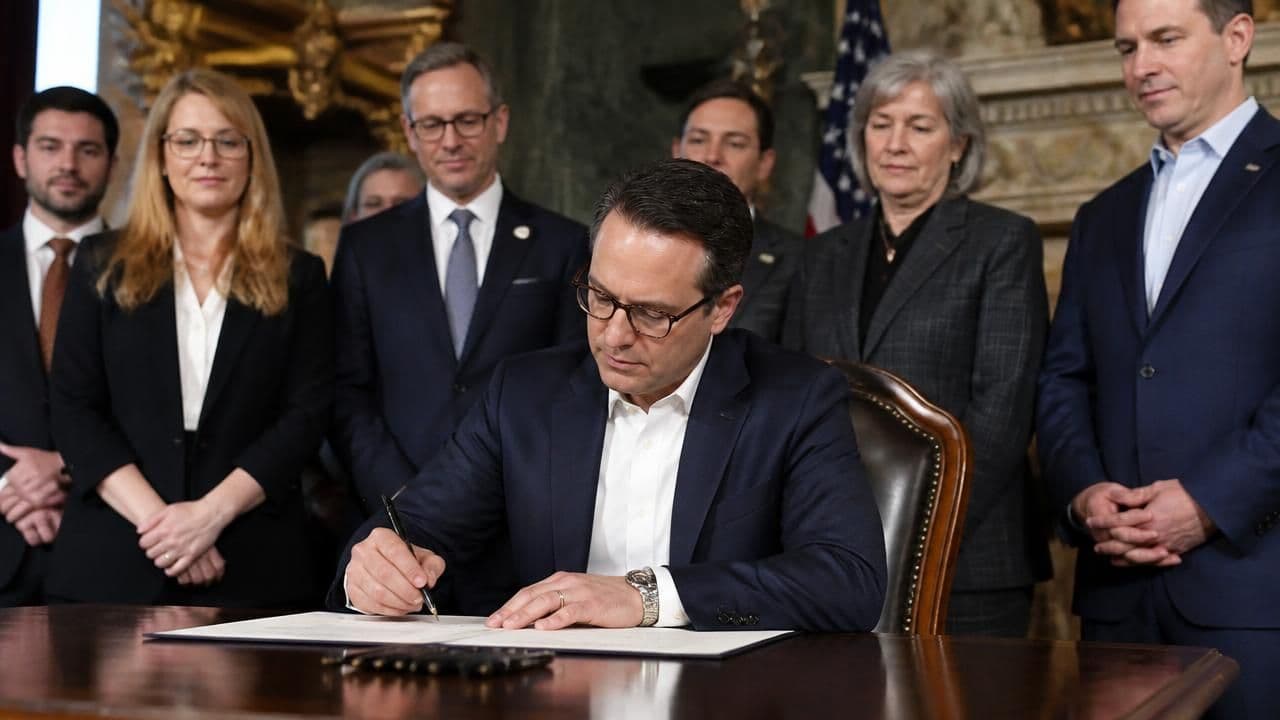
The most concrete consequence of the debate is legislative. Computer Weekly reported that the US government is preparing to consider a so-called “AI kill switch” law, while GV Wire asked the question now circulating in policy circles: do we need an emergency shutdown mechanism before AI kills us?
Forbes cautioned that crafting a viable kill-switch statute presents lawmakers with enormous technical and legal challenges. Among them: defining the threshold that triggers a shutdown; deciding who holds the authority to order it; verifying compliance across labs, clouds and jurisdictions; covering open-weight models whose parameters have already been released; and avoiding false positives that could cripple hospitals, grids or financial systems. Once weights leak, experts note, a switch on a vendor's servers is largely symbolic.
Killer AI — or killer PR?
Not everyone is convinced the alarm is altruistic. PRmoment's “PR Stunt Watch” column asked pointedly whether killer AI is actually killer PR, and opinion pages on MSN ran the gamut from “Anthropic employees freak out!” to a piece warning that AI will “kill us all” by 2030 and asking readers what they intend to do about it.
Critics make three arguments. First, that doomsday framing flatters the labs raising it, casting them as reluctant stewards of dangerous power. Second, that it crowds out measurable, present harms — bias, misinformation, labor displacement, surveillance. Third, that existential predictions are effectively unfalsifiable, inviting regulatory capture that entrenches incumbents. Safety advocates counter that near-term and long-term risk are not rivals, and that the same dismissal has historically allowed emerging harms to scale unchecked.
Why it matters now
What distinguishes this week's episode from earlier flare-ups is convergence: a named researcher's exit, a named laureate's long-running warning, and an actual legislative mechanism moving through Washington. The question is no longer whether the AI doomsday debate is serious, but whether the institutions now responding to it can act with the speed the technology demands — or whether, as the skeptics warn, the industry's darkest warnings will turn out to be its most effective marketing.