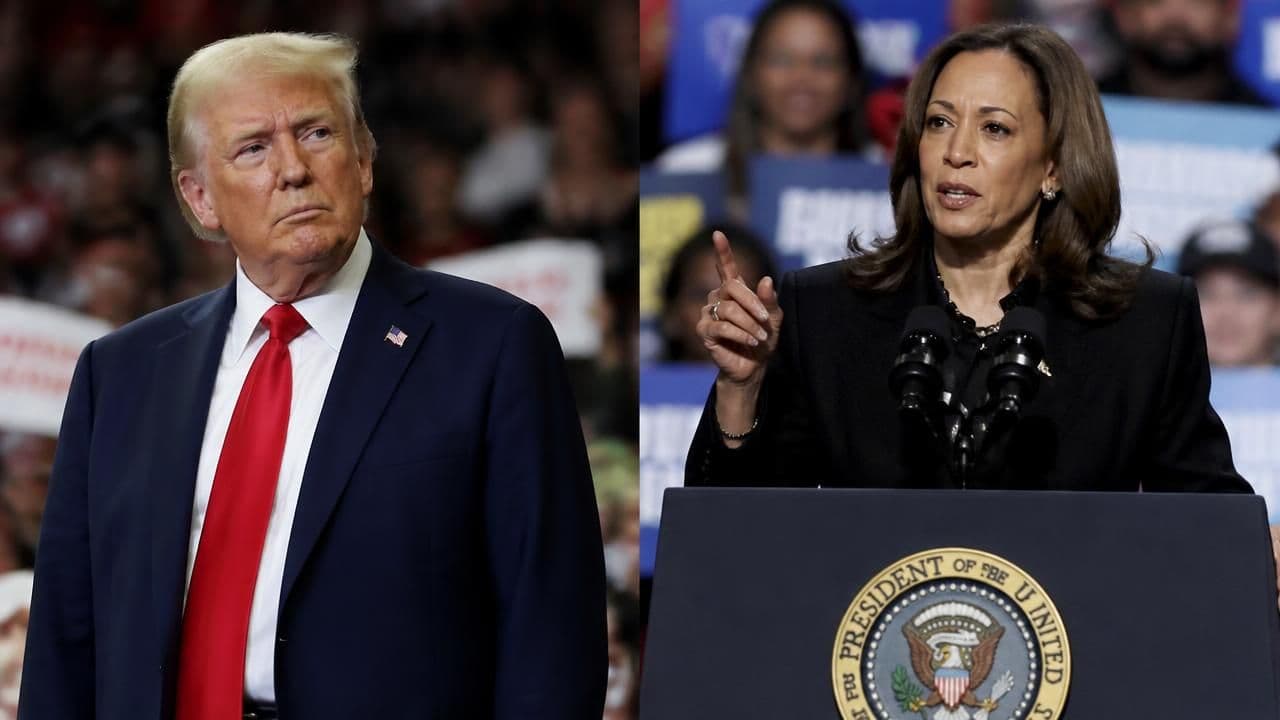
President Trump closed the first day of the Republican Party's national convention in Dallas by promising a $5,000 payment to every American adult — but only if Republicans win the midterm elections and keep control of Congress. The proposal, which the president branded the "Trump Dividend," instantly became the defining story of the convention's opening night and the most consequential economic promise of the 2026 campaign cycle.
The announcement, delivered as the closing act of Day 1, was light on mechanics. According to accounts of the speech, Trump framed the payment as a reward for voters who deliver Republican majorities rather than as a standing policy proposal, and no accompanying legislative text, price tag, or funding mechanism was released. The White House did not immediately detail how the payments would be administered or whether they would arrive as direct deposits, checks, or tax credits.
A Cash Promise, Contingent on Victory
The structure of the pledge is unusual even by the standards of modern campaign economics. Rather than promising a program that would begin immediately upon taking office, Trump conditioned the money on an electoral outcome, effectively converting a fiscal proposal into a get-out-the-vote message. As NPR Politics framed its coverage, the president was "trying to incentivize voters" with the promise of $5,000 — a characterization that emphasizes the political function of the announcement over its policy content.
Other outlets stripped the framing down to its headline. MSN's coverage led with the blunt construction that Trump had announced "$5k for every American adult — but only if Republicans win," while a separate MSN report described the promise as a "Trump Dividend" for every American if the GOP keeps Congress. The Hill, covering the event as a live blog, emphasized the setting: the president closing out Day 1 of the GOP convention in Dallas with the dividend announcement.
Not every outlet was neutral in tone. Yahoo's headline described a "bizarre promise" of $5,000, a word choice that signals how quickly the proposal was absorbed into the broader debate over the president's unconventional style.
"Trump announces $5k for every American adult — but only if Republicans win." — MSN
"Donald Trump Makes Bizarre Promise of $5K Payment if Republicans Win." — Yahoo News
The Mechanics — and the Math
The most immediate question is arithmetic. With roughly 262 million American adults, a universal $5,000 payment would carry a gross cost in the neighborhood of $1.3 trillion before any means-testing or administrative expenses — a figure that would rival the largest one-time transfer programs in U.S. history.
There is precedent, though not at this scale. The 2020 CARES Act delivered $1,200 payments to most adults, followed by $600 payments that December and $1,400 payments under the American Rescue Plan in March 2021. Those rounds were enacted as emergency pandemic relief and were tied to specific public-health and economic conditions. More recently, Trump floated the idea of returning a portion of savings identified by the Department of Government Efficiency to taxpayers — a "DOGE dividend" concept that never became law.
- Funding: No revenue source, offset, or borrowing plan has been specified.
- Legislation: A payment of this kind would require an act of Congress, meaning a Republican majority would be a precondition even if the party wins.
- Timing: No disbursement date, eligibility cutoff, or income threshold has been announced.
- Context: The pledge lands against a national debt that has surpassed $36 trillion and an electorate that has repeatedly cited inflation as a top concern.
Economists across the ideological spectrum have long warned that large, broad-based cash transfers risk adding to inflationary pressure when the economy is near full employment, though the effect depends heavily on whether the money is deficit-financed or offset. Because no financing plan exists, that debate remains theoretical for now.
How the Story Was Framed
The divergence in coverage is itself revealing. Outlets that emphasize political strategy treated the announcement as a turnout play — a headline-grabbing incentive aimed at low-propensity voters. Outlets with a financial lens focused on the missing price tag. Opinion-leaning aggregators leaned into the novelty of a sitting president promising cash contingent on an election result.
Democrats were quick to characterize the proposal as an attempt to buy votes, while supporters described it as returning taxpayer money to households that have absorbed years of higher prices. Neither side disputed the central fact: the promise, as delivered, had no legislative vehicle attached to it.
A Party One Year After Charlie Kirk
The convention's opening night was not only about money. NPR also reported on young conservatives reflecting on the direction of their party one year after the death of Charlie Kirk, a moment that has reshaped how a generation of right-of-center activists talks about organizing, coalition-building, and the movement's future.
Those conversations provide useful context for the dividend pledge. A party courting younger voters and working-class households must speak in concrete, tangible terms — and few messages are more tangible than a check. Whether the promise converts into durable support, or becomes a footnote if Republicans fall short in November, is the question that will follow the convention through the fall.
What Happens Next
Expect the phrase "Trump Dividend" to dominate the remainder of the convention and the campaign season that follows. The near-term tests are straightforward: whether the campaign publishes a cost estimate, whether Republican congressional candidates embrace or distance themselves from the pledge, and whether the proposal survives contact with budget analysts who will demand to know who pays for it.
For now, the promise stands as both a slogan and a gamble — one that ties a trillion-dollar-scale benefit to a single night of election returns.