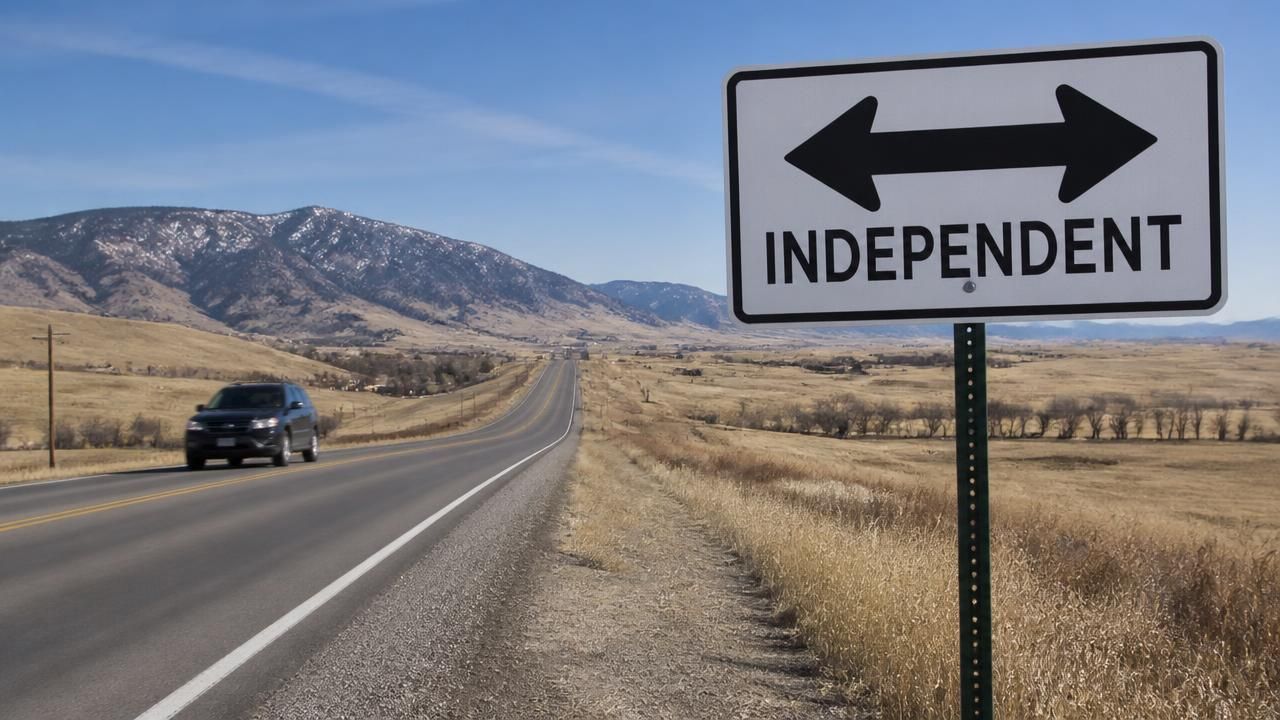
Democrats looking to hold or expand their slim Senate majority are quietly betting on a strategy that would have seemed unthinkable a decade ago: running alongside — and in some cases effectively behind — independent candidates in states where the party's own brand has curdled. As NPR Politics reported this week, party strategists see independent hopefuls in Nebraska and Montana as their best chance to topple Republicans in a stretch of the country where Democratic affiliation is a liability rather than an asset.
The math is unforgiving. In deeply Republican terrain, a candidate carrying a "D" next to their name starts the race in a hole, no matter how much money or national attention flows in. An independent who can court disaffected Republicans, rural moderates and unaffiliated voters, the thinking goes, can assemble a coalition that a partisan Democrat simply cannot.
A Party Brand Problem, Not a Policy Problem
The strategy reflects a hard reality that has been building for years: voters are souring on both parties faster than they are souring on individual candidates. Gallup and Pew Research data have tracked a steady climb in the share of Americans identifying as political independents — now routinely the single largest slice of the electorate — while confidence in Congress and the two major parties sits near record lows.
That is the terrain the opinion pages have been mining. One MSN opinion piece, headlined "Independent voters will decide the midterms. Who are they?", argues that the decisive bloc this cycle is not the party faithful but the growing mass of voters who describe themselves as unaffiliated — a group that is younger, more skeptical of institutions and far less predictable in turnout than either party's base.
A companion MSN "Your Turn" essay, "Our two-party system is broken. Independents like me know it," makes the case more bluntly: that the duopoly's structural advantages — ballot access, debate rules, fundraising networks — suppress competition and leave voters choosing between the lesser of two disappointments rather than the best available option.
"Our two-party system is broken. Independents like me know it" — the argument running through a wave of reader-submitted essays this cycle.
The Skeptics: Inflated Expectations?
Not everyone is convinced the independent surge will translate into Senate seats. A third MSN analysis, "Do Democrats have inflated expectations for the midterms? Examining the case," raises the counterargument that has circulated in party circles for months: that independents historically fade late, that voters who tell pollsters they want an outsider often revert to a major-party option in the voting booth, and that the Democratic Party may be reading a national mood shift into a handful of idiosyncratic races.
The cautionary precedent is familiar to anyone who has watched third-party and independent bids before. Ross Perot's 1992 campaign reshaped the national conversation but won zero electoral votes. Jesse Ventura won a governorship, not a Senate seat. Angus King of Maine and Bernie Sanders of Vermont have thrived as independents — but both caucus with Democrats, and both built decades of name recognition before making the leap.
The Nebraska and Montana cases are being watched precisely because they test whether that model can be replicated quickly, in hostile territory, by candidates with less institutional support.
The Global Frame: Independents Beyond the Beltway
The phenomenon is not uniquely American. In Australia, the 2020 by-election in the Queensland seat of Groom drew a field that included Liberal Democrat candidate Craig Farquharson — one of a wave of minor-party and independent contenders contesting safe seats and forcing major parties to spend resources defending ground they once took for granted. Wikinews' year-in-review coverage of original reporting on that contest highlighted how local, on-the-ground interviews with outsider candidates often produce a clearer picture of voter discontent than national horse-race coverage does.
The parallel matters. Whether in Omaha, Missoula or Toowoomba, the same dynamic recurs: voters who feel unheard by the major parties will back an outsider even when that outsider cannot win, because the vote functions as a message rather than a means of selecting a government.
What to Watch
- Ballot access and filing deadlines — the quiet machinery that decides which independent bids survive to Election Day.
- Late deciders — whether unaffiliated voters actually turn out, or whether the bloc remains a polling artifact.
- Party resource allocation — where Democrats redirect money if their independent bets look viable, and where Republicans counter.
- Caucus commitments — the question every independent Senate candidate faces, and the one that ultimately determines which party controls the chamber.
The deeper story may not be who wins Nebraska or Montana. It is that both parties are now openly structuring strategy around the premise that their own labels are electoral baggage — and that the fastest-growing segment of the electorate belongs to neither of them. Whether that produces a genuine realignment or merely another cycle of dashed independent hopes is the question the midterms will answer.