With two weeks until voting, the midterm election has become a study in contradictory signals: Republicans are spending millions to defend Arkansas, a state that usually sits deep in their column, while Democrats are trying to convert a bleak national mood into a congressional majority without overplaying their hand.
NPR reported that Republicans have spent millions playing defense in Arkansas, one of the most conservative states in the country. For Democrats, that is the kind of data point that explains why they see an opening at the edge of the competitive midterm map. The party is not predicting a rout in Arkansas. It is arguing that the terrain has shifted enough to force the GOP to spend money and time in places it would rather ignore.
Yet the same opening carries a warning. A Yahoo commentary framed the Arkansas question bluntly: Democrats may have their best opening in years, but what if they still cannot win? That question—whether moral victories and expanded maps translate into actual seats—hangs over the party’s strategy nationally.
Arkansas Democrats have their best opening in years. What if they still can’t win?
A national mood that favors Democrats
The national picture, as described across several outlets, is grim for the GOP. One MSN headline said Trump’s approval had hit a record low of 32% as Democrats opened a 10-point midterm lead. The New York Sun reported that Democrats are gaining ground as voter discontent deepens. Those are broad-brush indicators, not guarantees: midterm polls can shift, and a single survey does not settle a race-by-race fight. But they help explain why both parties are behaving as if control of Congress is genuinely in play.
The Fox News Digital framing captures the Republican response. With 14 days until the midterms, Trump is heading to North Carolina as the GOP fights to hold the Senate. That is not the itinerary of a party that believes the map is expanding in its favor; it is the itinerary of a party trying to shore up a battleground and motivate its base. The contrast between a 32% approval reading in one poll and a presidential rally in a Senate battleground is the central tension of the final stretch.
House: districts, not just the national lead
The fight for the House is not one election but dozens of district-level elections. The New York Times published an interactive look at the districts that will determine control of the House, a reminder that the national generic ballot can obscure the specific seats that decide the majority. MSN, meanwhile, compiled one key midterms race in all 50 states and why they matter, underscoring how unevenly the national mood is distributed across the country.
That is why some Democrats are warning their own party not to get too bullish on House gains. MSN reported that Democrats are cautioning against overconfidence even as the environment improves. The warning is practical: a 10-point lead in a national poll does not automatically flip enough districts, and Republican defense spending—as in Arkansas—can keep races close. The party’s best-case scenario is a broad wave; its risk is assuming the wave is already cresting.
Senate: nearly $1 billion and a fraud scandal
The Senate map is even more complicated. MSN reported that Senate races have been flooded with nearly $1 billion, with a detailed Republican-versus-Democrat breakdown. That spending reflects the stakes: the Senate majority will shape confirmations, legislation and the balance of power in Washington. But money is not the only variable.
A $9 billion fraud scandal has put a Democratic Senate seat in play, according to MSN. The headline alone is a caution for Democrats: even in a favorable national environment, a single controversy can put a seat on the defensive and force the party to spend resources it had planned to use elsewhere. Republicans, meanwhile, are fighting to hold their own Senate positions, with Trump’s North Carolina trip serving as the most visible sign of that defensive posture.
- Arkansas: Republicans spend millions to defend a conservative state; Democrats see an opening but face doubts about converting it.
- National mood: One poll shows Trump at 32% approval and Democrats with a 10-point lead; other coverage describes deepening voter discontent.
- House: The majority hinges on specific districts, not just the national popular vote; Democrats are warned against overconfidence.
- Senate: Nearly $1 billion in spending and a $9 billion fraud scandal put a Democratic seat in play as the GOP fights to hold the chamber.
The campaign trail: star power and rocky roads
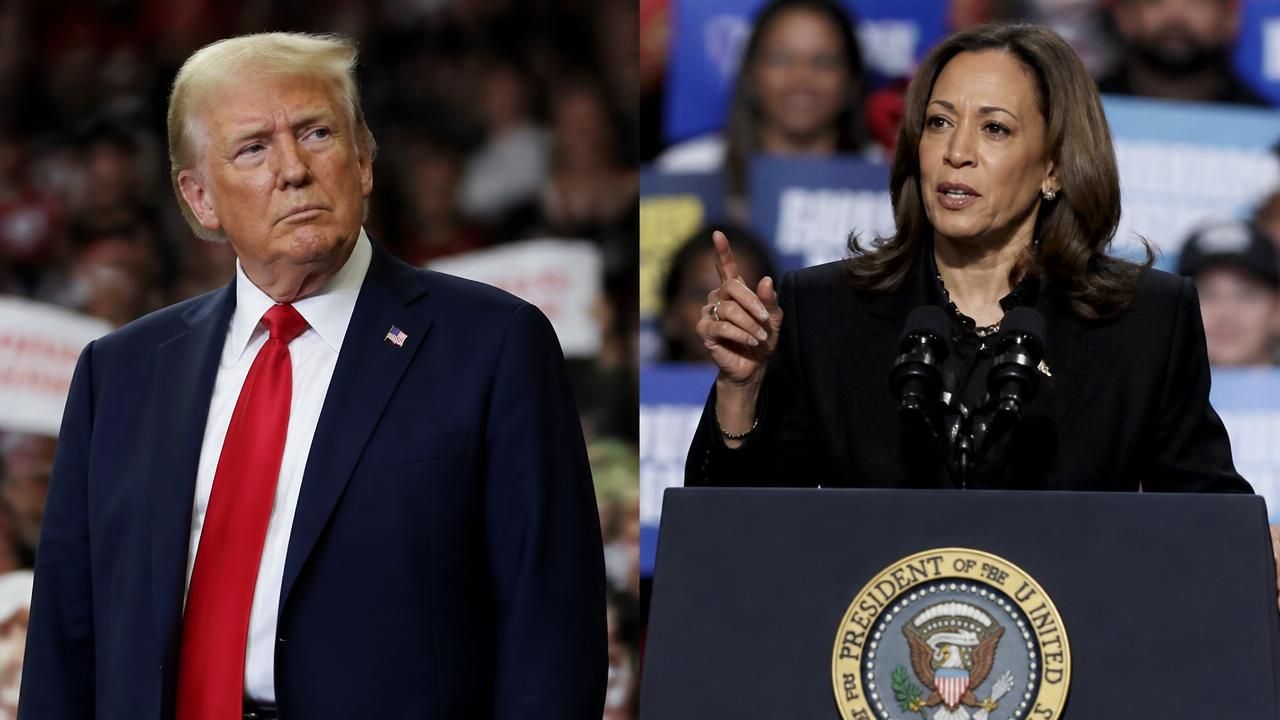
The final days are also being shaped by the surrogates each party sends out. USA Today examined the rocky midterms campaign trail featuring Kamala Harris and Alexandria Ocasio-Cortez, two figures who can energize Democratic-base voters but also give Republicans familiar targets. Their presence underscores a strategic choice for Democrats: whether to make the election a referendum on Trump and Republican governance, or a choice between two distinct visions. Harris and Ocasio-Cortez represent different wings and different audiences within the coalition, and their travel schedules are a map of where the party thinks it needs to turn out voters.
For Republicans, Trump remains the central mobilizing figure. Fox News Digital’s live coverage of his North Carolina trip shows how Trump and party leaders are trying to nationalize the race while defending Senate seats. The GOP’s challenge is to motivate Trump’s base without alienating suburban and swing voters who may be recoiling from the national climate described in the polls.
Why the next two weeks matter
The midterms will determine control of the House and Senate, and with it the ability to pass or block legislation, conduct oversight and shape the final years of the current political era. The sources point to a race that is less a single national story than a collection of local fights: Arkansas is a defensive test for Republicans, North Carolina is a Senate battleground, and districts across the country will decide the House. Democrats have the wind at their backs in several measures, but they also have reasons for caution—an overconfident base, a costly scandal, and a Senate map that does not automatically follow the national lead.
In that sense, the final two weeks are a test of translation: can Democrats turn discontent into votes, and can Republicans turn a defensive map into a hold? The answer will come district by district, state by state, and—if the polling is right—perhaps later than either party would like to admit.