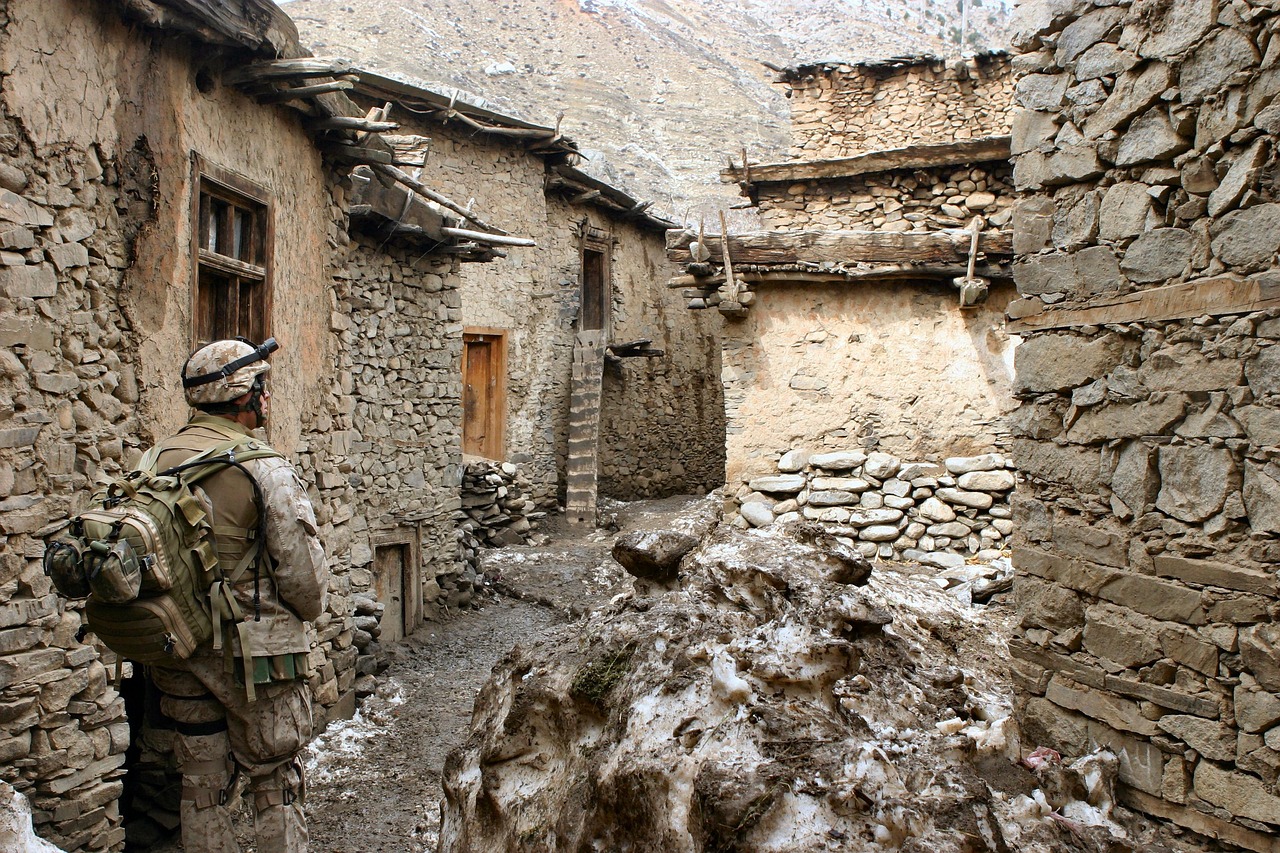
Twenty-five years after the Sept. 11 attacks drew the United States into its longest war, the government America set out to destroy is back in power in Kabul — and it is armed, in part, with American weapons. That is the central paradox of the anniversary being marked this week by news organizations on three continents, each returning to Afghanistan through a different lens.
The New York Times has assembled a quarter-century of photography, tracing the arc from the first weeks after the 2001 attacks through the chaotic U.S. withdrawal and the Taliban's return to power. CBS News frames the same anniversary around a single, startling figure: roughly $7 billion in U.S.-supplied military equipment and firepower that the Taliban now controls. And the Catholic news service UCanews, reporting five years after the American exodus, describes a country where the Taliban's self-declared victory has curdled into what it calls a “forever war” that still haunts ordinary Afghans.
A Quarter-Century, Documented Frame by Frame
The Times' visual retrospective is the most sweeping of the three, spanning from the rubble of lower Manhattan and the bombing campaign over Tora Bora to the scenes of Afghans clinging to departing C-17s at Kabul's airport in August 2021. The through-line, as the paper frames it, is not a sequence of victories or defeats but the daily life that continued underneath them: weddings, harvests, schoolyards, funerals.
That approach matters because the war's meaning has always depended on where the camera was pointed. For most of the past two decades, Afghanistan competed for Western attention with Iraq and, later, Ukraine and Gaza. The Wikinews archive offers an accidental illustration: a 2007 year-end overview by the site devoted a section to Afghanistan and its opium production, alongside the case of David Hicks, the Australian detainee held at Guantánamo Bay — two storylines that, at the time, stood in for the entire conflict in much of the Western press.
The $7 Billion Question
CBS News' report highlights the most concrete consequence of the 2021 collapse: the Afghan national security forces that the United States spent two decades training and equipping dissolved in a matter of weeks, and much of their arsenal stayed behind. Helicopters, armored vehicles, night-vision optics, small arms and ammunition worth an estimated $7 billion are now in Taliban hands.
The figure has become shorthand for a larger argument about how the war ended — whether the equipment was abandoned, surrendered, or simply handed over by an army that had stopped fighting.
Twenty-five years after Sept. 11, the Taliban rules Afghanistan again — but now with $7 billion in U.S. firepower.
Defense analysts note that much of the hardware is difficult for the Taliban to sustain without American contractors and spare parts, and that some of it has already appeared in regional arms markets or been transferred to militant networks. Still, the symbolic weight is considerable: the same aircraft that once hunted Taliban fighters now sit on the tarmac at Kandahar and Kabul.
Five Years of Taliban Rule
UCanews' assessment, published around the fifth anniversary of the withdrawal, focuses less on hardware than on the texture of daily life. Afghan families describe a grinding present: restrictions on women's education and employment, a ban on most female aid workers that has crippled humanitarian operations, and a morality-enforcement apparatus that governs dress, movement and public behavior — including, per the outlet's framing, the official regulation of a society the Taliban insists is finally at peace.
The economic picture is similarly bleak. International reserves remain frozen, development aid has collapsed, and the banking system is largely cut off from global finance. Millions of Afghans depend on humanitarian assistance that aid groups say they can no longer deliver at scale.
Opium, Then and Now
The opium economy, flagged by Wikinews in its 2007 review, has followed a strange trajectory. After the Taliban banned poppy cultivation in 2022, United Nations surveys found cultivation had fallen by more than 90 percent — devastating for rural households with no alternative income. By 2024, U.N. monitoring showed a modest rebound, evidence that prohibition without economic substitution is difficult to sustain.
How the Story Is Being Told
- The New York Times emphasizes memory and continuity — 25 years of photojournalism as a record of a war that never really ended.
- CBS News emphasizes accountability and matériel — what the United States left behind and who is using it.
- UCanews emphasizes human cost — the lived reality for Afghans five years into Taliban rule.
The differing frames echo an older pattern in coverage of the conflict. During the 2008 U.S. presidential campaign, Afghanistan was still a live electoral issue; Wikinews' interview with Darcy Richardson, a long-shot Democratic challenger to Barack Obama, is a small artifact of that moment, when candidates competed over who would prosecute the war more effectively. Within a few years, the subject had migrated to the back pages.
What Comes Next
No country formally recognizes the Taliban government, though several have opened embassies or maintain working diplomatic channels. The central unresolved questions are familiar: whether to engage the Taliban over humanitarian access and counterterrorism, whether to link any normalization to women's rights, and what happens if the group's internal hardline faction tightens its grip further.
Twenty-five years after the planes struck New York and Washington, and five years after the last U.S. troops left Kabul, those questions remain as open as they were on the day the Taliban walked back into the presidential palace.