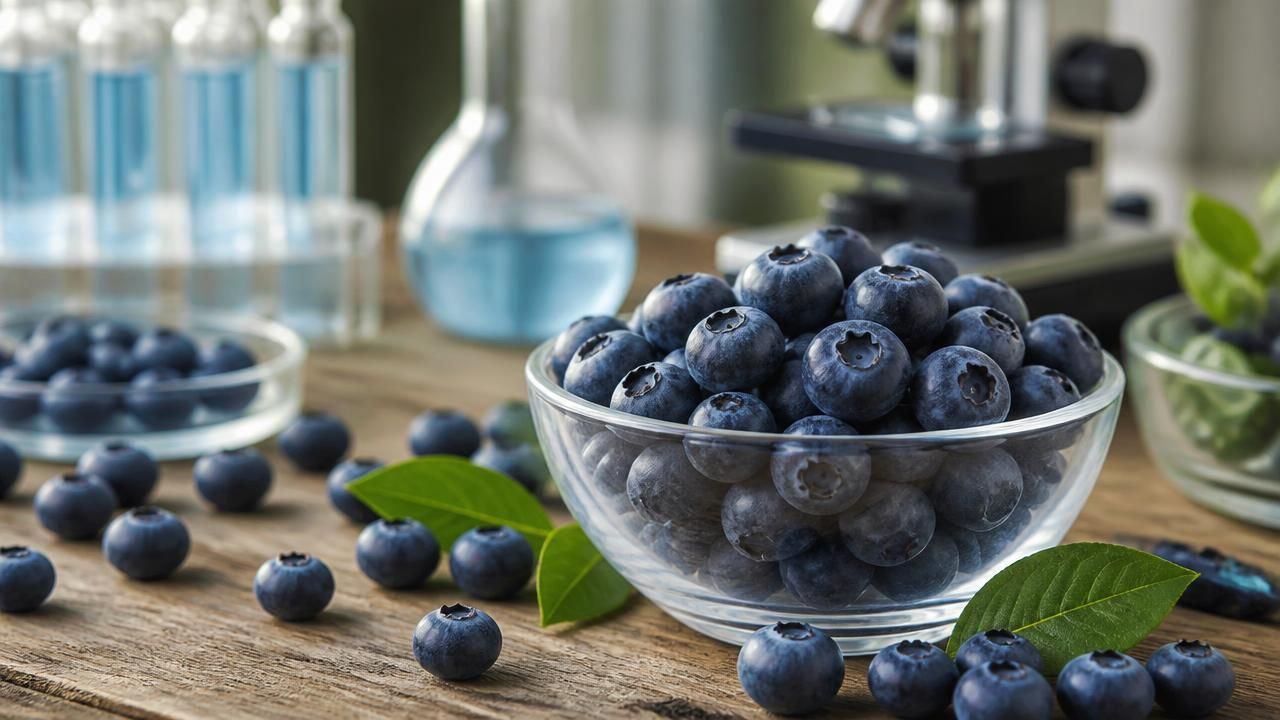
What if the blueberries you toss into your smoothie carry a hidden tool to help your muscles burn fat instead of storing it? That’s the intriguing possibility raised by a new study from a team of Japanese scientists. They identified a natural compound called pterostilbene, also found in grapes and other berries, which appears to help muscle cells break down excess fat, potentially without triggering muscle loss. The research, reported across several outlets this week, takes an important step toward understanding how diet-derived compounds could combat obesity and metabolic disease.
A compound with roots in the 1970s
Pterostilbene is not an exotic novelty. It belongs to the stilbenoid family of plant polyphenols and is chemically similar to the well-known resveratrol found in red wine. First identified in the 1970s, pterostilbene has long been a subject of nutritional research for its antioxidant and anti-inflammatory properties.
Media coverage from MSN drew attention to this decades-old lineage, headlining the compound as a “1970s compound” that can burn more fat without undermining muscle tissue. That framing underscores an important point: pterostilbene is an established molecule, but its role in fat metabolism is only now being unraveled.
How the study worked
In laboratory experiments described by ScienceDaily and MedicalXpress, researchers cultured mouse muscle cells and treated them with pterostilbene. The results were striking: the compound reduced abnormal fat buildup by boosting fat breakdown and stabilizing a key protein involved in fatty acid metabolism. Rather than allowing lipids to accumulate inside the muscle fibers—a condition often linked to insulin resistance and type 2 diabetes—the cells appeared to switch toward burning those fats for energy.
“The compound reduced abnormal fat buildup in cultured mouse muscle cells by boosting fat breakdown and helping stabilize a key protein involved in fatty acid metabolism,” the research team reported.
The study, described as “experimental” by the second ScienceDaily article, is still far from a human therapy. But the mechanistic insights offer a compelling explanation for why diets rich in berries have repeatedly been associated with better metabolic health.
Why muscle fat matters
Muscle tissue is a major player in whole-body energy balance. When muscles become clogged with fat—especially the toxic lipid intermediates that accumulate under conditions of excess calorie intake—they lose their ability to respond to insulin. This impairment, known as lipotoxicity, is a central feature of obesity and prediabetes.
“The idea that a natural compound could help muscle cells shift from fat storage to fat oxidation is a promising avenue for addressing the root causes of metabolic disease,” the researchers emphasized.
By encouraging fat breakdown while preserving muscle integrity, pterostilbene could theoretically help maintain lean body mass during weight loss—a key challenge for people trying to lose weight.
Different framings, same core finding
The four sources that covered the story each brought a distinct lens. ScienceDaily’s initial report focused on the discovery itself, highlighting pterostilbene’s presence in blueberries and grapes. MedicalXpress echoed that framing but emphasized the reduction in fat buildup rather than the fat-burning mechanism. MSN, with its 1970s angle, placed the compound in historical context and stressed the absence of muscle loss—a key concern for athletes and older adults. The final ScienceDaily piece called it an “experimental compound,” reminding readers that laboratory results on cultured cells do not instantly translate to dietary recommendations.
Together, the coverage forms a richer narrative: a well-known berry molecule is being reconsidered as a potential metabolic tool, and the fact that it doesn’t cause muscle wasting sets it apart from many existing fat-loss agents.
From cells to humans: the road ahead
While the study is intellectually exciting, it comes with major caveats. The experiments were performed on mouse muscle cells in a dish—not on live animals or humans. The effective dose of pterostilbene used in the lab would be impossible to achieve by eating blueberries alone. A person would need to consume enormous quantities, far beyond what is reasonable, to match the concentration applied to the cultured cells.
Still, the findings open doors for future research. Scientists may explore whether pterostilbene supplements or enriched extracts could replicate these effects in animal models, and eventually in clinical trials. There is also potential for structural modifications that increase the molecule’s potency or bioavailability.
- Source: Natural compound, pterostilbene, found in blueberries, grapes, and other berries.
- Mechanism: Boosts fat breakdown and stabilizes fatty acid–metabolism proteins in muscle cells.
- Demonstrated in: Cultured mouse muscle cells—not yet in humans.
- Why it matters: May help reduce abnormal fat buildup in muscle, potentially improving insulin sensitivity and metabolic health.
The future of berry-based therapies
Despite the hype that sometimes surrounds “superfood” compounds, the scientific community remains cautious. The Japanese team behind this study plans to investigate whether oral consumption of pterostilbene can produce meaningful muscle changes in live animals.
“We are at the beginning of a long process,” they noted. “But every novel mechanism brings us one step closer to realistic interventions for the global obesity epidemic.”
For now, the take-home message is not that you should start eating buckets of blueberries. It’s that the compounds naturally found in berries have real biological effects—and with rigorous scientific work, they may one day be repurposed into targeted treatments that help people burn fat without sacrificing the muscle they need to stay healthy.
The findings add to a growing body of evidence that polyphenolic compounds in plants are more than passive antioxidants. They interact intimately with cellular metabolism, and pterostilbene may just be scratching the surface.