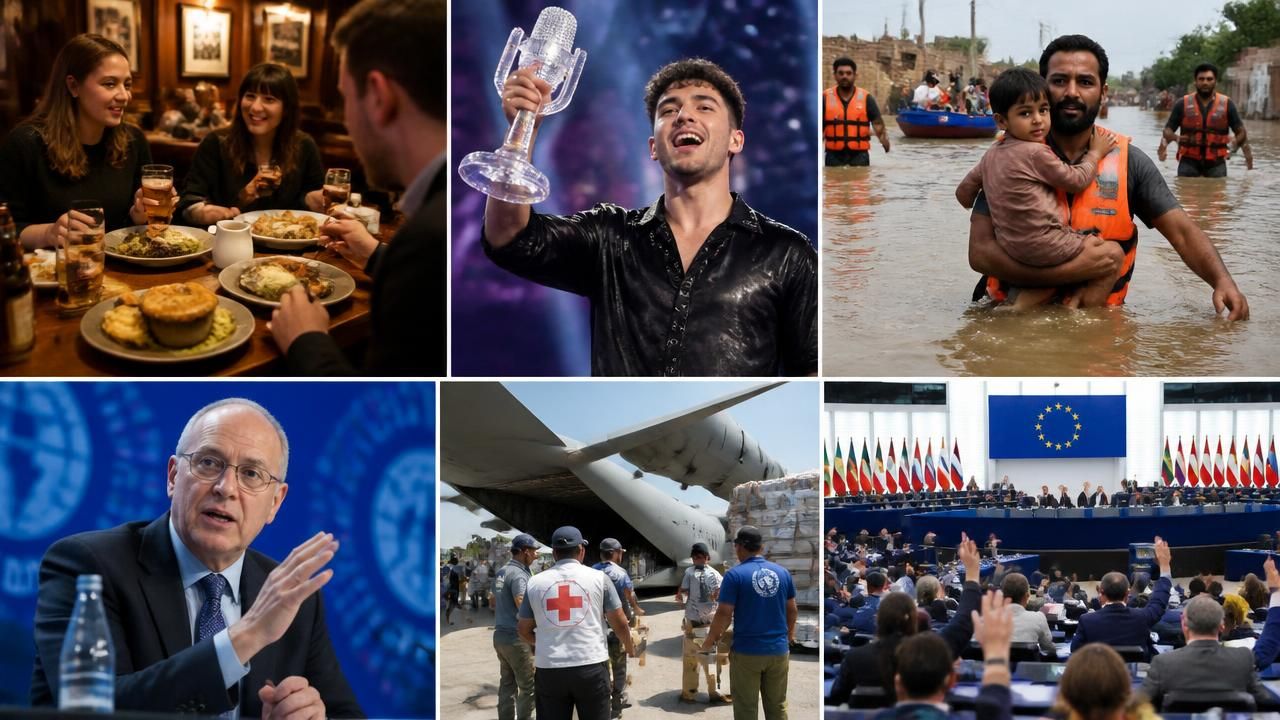
In a single news cycle, the world offers a study in contrasts: a renewed American appetite for British comfort food, an Israeli pop star's Eurovision triumph, catastrophic flooding in Pakistan, a leading economist's warning on overlapping crises, a multinational relief effort for Haiti, and a contentious EU copyright fight. Though seemingly unrelated, each story underscores the ties that bind global markets, cultures, and communities.
British Food's American Renaissance
Bloomberg Markets recently spotlighted a surprising culinary trend: British food is having a moment in the United States. Pub-inspired restaurants are drawing crowds with traditional dishes served in modern settings, from New York's Dean's to other establishments putting classics like stargazy pie and bubble and squeak back in the spotlight.
The trend is fueled by social media, increased travel, and a demand for affordable comfort food, according to Bloomberg's contributing restaurant columnist and anchors on Bloomberg This Weekend.
"Social media, travel and demand for affordable comfort food are helping fuel the trend..." – Bloomberg This Weekend
For finance and business readers, this culinary wave represents more than taste; it signals an exportable British brand. If pub-style dining and premium comfort foods continue to gain traction, investors and UK food producers may find a growing transatlantic market.
Eurovision: A Cultural Flashpoint
In entertainment news, Netta won the Eurovision Song Contest for Israel. The contest has always mixed music with national identity, and Netta's victory was celebrated as a high point for Israeli pop. The event also highlights how cultural exchange can transcend political boundaries, even as protest movements often shadow the contest.
Pakistan's Catastrophic Floods
Humanitarian crises remain front and center. In Pakistan, spreading floods have claimed at least 1,600 lives, and the situation is worsening. Survivors are desperately short of water, food, and medicine. The flooding, exacerbated by climate change and extreme monsoon rains, has affected vast swaths of the country.
- At least 1,600 confirmed dead
- Urgent shortages of clean water, food, and medicine
- Floodwaters continue to spread, complicating relief efforts
International aid agencies are mobilizing, but the scale of the disaster demands global attention and funding.
Trade, COVID-19 and Brexit: Compounding Shocks
On the economic front, Professor L. Alan Winters of the University of Sussex has warned that recovery from overlapping crises is especially difficult. In an interview with Wikinews, he discussed how trade, COVID-19, and Brexit interact, saying: "Each makes the other more difficult to recover from."
His insight is critical for policy makers navigating a complex global economy where supply chain disruptions and regulatory changes are intertwined.
"Each makes the other more difficult to recover from." – Professor L. Alan Winters, University of Sussex
Winters's perspective suggests that countries cannot solve these problems in isolation; coordinated responses are needed to restore trade flows and economic stability.
Global Aid for Haiti
Separately, countries around the world are sending aid to Haiti, a nation repeatedly struck by natural disasters and civil unrest. This outpouring of international support demonstrates a shared sense of responsibility for vulnerable populations. However, long-term recovery will require more than emergency shipments; sustainable investments in infrastructure and governance are essential.
EU Copyright Extension Battle
Finally, in the realm of policy, lobby groups are opposing plans to extend copyright protection in the European Union. The issue pits creators who want longer protection against advocates for the public domain and tech firms that rely on reuse. The outcome will affect the digital economy, journalism, and the arts across Europe. With stakeholders highly mobilized, the debate promises to be a test of how EU institutions balance competing interests.
Framing the News
Each of these stories is covered by different outlets with varied lenses: financial media emphasize market opportunities and risks; wire services focus on casualties and logistics; political coverage highlights negotiation and regulation. Together, these perspectives enrich the reader's understanding of a world where a restaurant opening, a song contest, a flood, and a trade dispute can all shape our collective future.
In summary, what appears to be disjointed news is actually a tapestry of global interdependence. Recovering from crises requires not just local action but international cooperation across food, music, health, trade, and law.