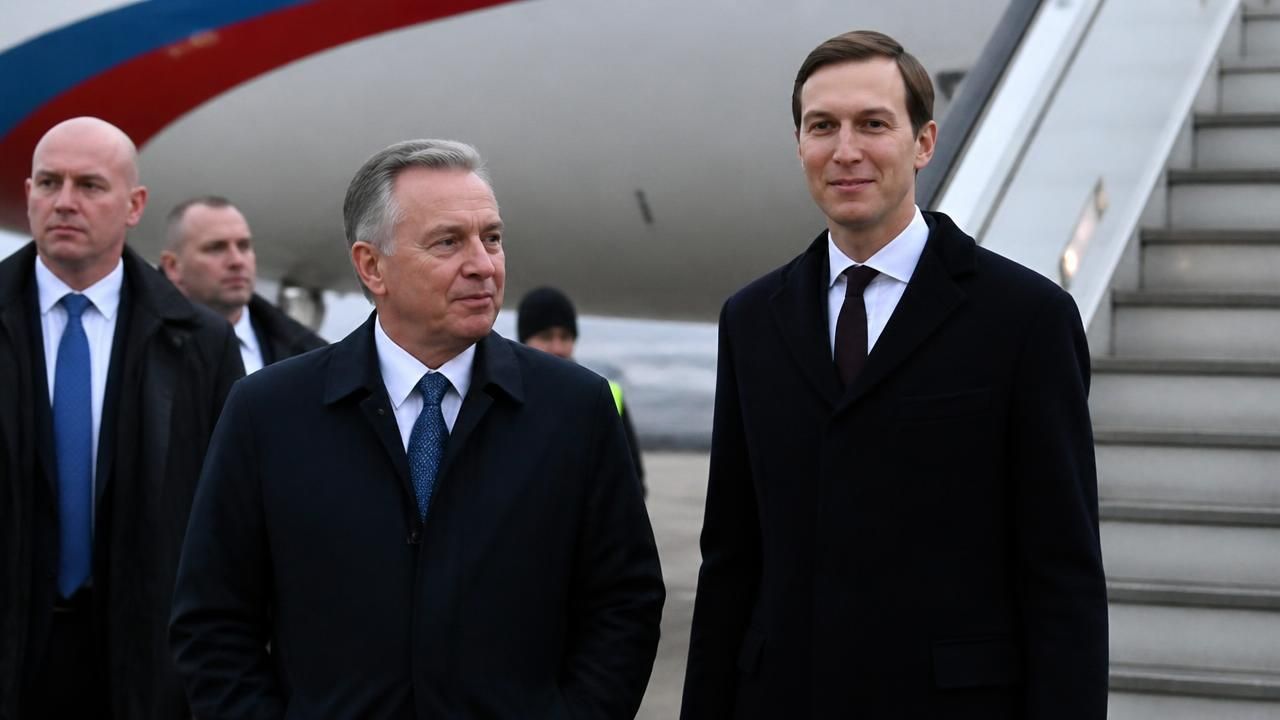
In a significant diplomatic gambit, US envoys Steve Witkoff and Jared Kushner landed in Moscow on Saturday in a bid to resurrect stalled negotiations to end Russia's invasion of Ukraine. The visit comes as Russian President Vladimir Putin ordered a 72-hour pause in strikes on Kyiv, a gesture that both sides framed as a goodwill measure during the high-level talks.
The envoys were greeted at the airport by Kirill Dmitriev, the Russian presidential envoy who has served as a key interlocutor for the Trump administration’s peace efforts. According to a report from Axios, the pair is expected to meet with Putin later in the day, followed by a trip to Kyiv for talks with Ukrainian officials.
A Renewed Diplomatic Push
The trip marks one of the most direct attempts yet by the Trump administration to broker an end to a conflict that has persisted for over three years. Trump, who made ending the war a cornerstone of his second-term agenda, hinted on Friday at a new proposal, though he declined to provide specifics. The lack of detail has fueled speculation about the contours of the plan, but the presence of Kushner — Trump’s son-in-law and a senior adviser with deep Middle East dealmaking experience — suggests a fresh, unconventional approach.
Previous US-led peace efforts have floundered amid disagreements over territorial concessions, security guarantees, and Ukraine's NATO aspirations. This visit, which includes both Witkoff, the official US special envoy, and Kushner, could signal a more flexible, off-script diplomatic channel. Dmitriev, known for his role in facilitating early back-channel contacts, is seen as a pragmatist within the Kremlin, and his involvement underscores Moscow's willingness to engage.
Cease-Fire Amid Talks
Reports from multiple outlets, including the New York Post and HuffPost, confirmed that Putin had ordered a 72-hour pause in attacks on Kyiv, coinciding with the envoys' arrival. The move is widely interpreted as an attempt to create a favorable atmosphere for negotiations, though no official statement from the Kremlin has detailed the scope of the cessation. Ukrainian authorities have not yet publicly confirmed the pause, and skepticism remains, given previous cease-fires that collapsed under mutual accusations of violations.
Nevertheless, the symbolic timing is notable. In a statement, Dmitriev emphasized that Moscow was acting in good faith. “We are committed to exploring every avenue for peace and appreciate the constructive engagement from the US side,” he was quoted as saying by Russian state media.
“We are committed to exploring every avenue for peace and appreciate the constructive engagement from the US side.”
Framing the Story
Coverage of the event varies by outlet, reflecting broader editorial perspectives. The Guardian frames the visit as an effort to “resuscitate a deal” after months of little progress, emphasizing the challenges that remain. HuffPost places the focus on the envoys' “new push,” while the New York Post headlines the cease-fire, suggesting a more optimistic note. LiveMint, meanwhile, highlights the tactical pause in airstrikes as the key development.
- The Guardian describes the peace efforts as “floundering in recent months,” pointing to official weariness.
- New York Post leads with Putin’s cease-fire declaration, calling it a breakthrough gesture.
- HuffPost underscores the diplomatic momentum, tying the visit to broader US-Russia engagement.
- LiveMint takes a transactional tone, listing the meeting schedule and logistical details.
Historical Context and Stakes
Since the invasion began in February 2022, the conflict has reshaped European security, displaced millions, and caused tens of thousands of military casualties. Previous peace talks, including the Istanbul negotiations in early 2022, nearly yielded a framework but collapsed over issues of neutrality and territorial control. Later efforts, brokered by Turkey and the UN, led to the Black Sea Grain Initiative, but a comprehensive settlement has remained elusive.
The involvement of Kushner — whose portfolio has historically focused on Middle East negotiations rather than Eastern Europe — raises question about the administration's willingness to bypass traditional diplomatic channels. Witkoff, though lesser-known, has become a trusted envoy for Trump on high-stakes issues. Together, they represent a fusion of insider loyalty and dealmaking pragmatism.
On the Ukrainian side, President Volodymyr Zelensky has repeatedly demanded a full withdrawal of Russian forces, a position likely to clash with any US-mediated plan that involves territorial concessions. Meanwhile, European allies watch warily, concerned that Washington may press Kyiv into an unfavorable settlement.
What Comes Next?
After Moscow, the envoys are expected to travel to Kyiv, where they will meet with Ukrainian officials. The plan, according to a source cited by Axios, is to present a “framework" that could be announced in the coming weeks. However, no concrete details have leaked, and both sides have downplayed expectations. A senior White House official said: „We are at the beginning of a process, not the end."
For now, the world watches as two of President Trump's closest confidants walk the corridors of power in Moscow. Whether this gambit yields a historic breakthrough or ends in another diplomatic deadlock, the 72-hour silence over Kyiv will at least provide a brief respite for its civilians — and a measure of the fragility of peace efforts.