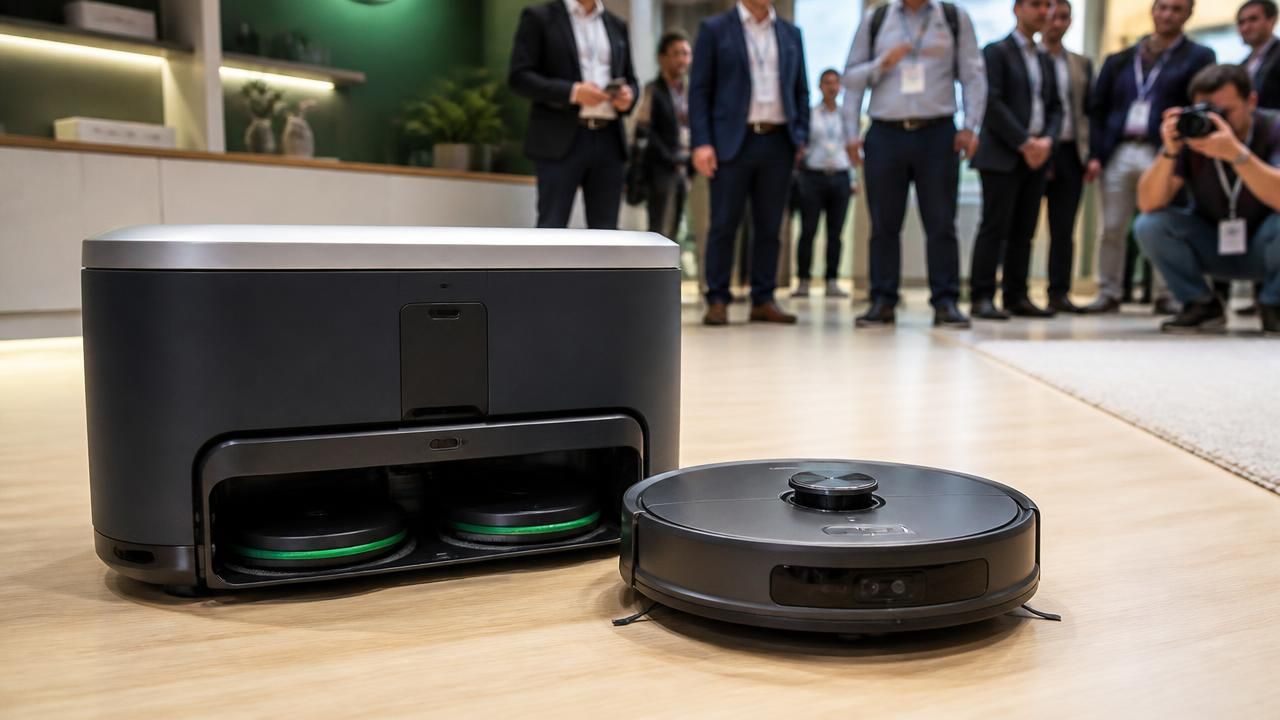
At the IFA 2026 tech show in Berlin, iRobot didn't just upgrade its famous Roomba—it doubled down. The company unveiled the Roomba Duo, a two-robot cleaning concept that pairs a heavy-duty floor washer with a smaller, agile sidekick designed to squeeze into tight spaces. The announcement has energized the floor-care sector, but an undercurrent of caution from analysts and long-time observers warns consumers to think twice before opening their wallets.
A New Vision for Autonomous Floor Care
According to The Verge, the Roomba Duo is “two robot floor cleaners in one.” The main unit tackles open floor areas, sweeping and mopping, while a second, slimmer Roomba mechanically lowers itself to reach under tables, along corners, and into other confined spaces. The Duo also functions as an autonomous mobile dock—it carries clean water, collects dirty water, and houses a dust bag, enabling the robots to operate for far longer without human intervention.
“The Roomba Duo is two robot floor cleaners in one.” — The Verge
The system uses a combination of lidar and camera-based navigation to map rooms, detect obstacles, and scan for dirt, building on iRobot’s decades of robotics research. “The Duo is also an autonomous mobile dock,” The Verge’s report notes, emphasizing the unit’s ability to move through the home while replenishing its smaller partners.
Key features at a glance:
- Two-robot team: A main floor-washing/mopping unit paired with a smaller edge-cleaning robot.
- Self-contained dock: The main unit includes clean/dirty water tanks and a dust bag.
- Smart navigation: Lidar and camera sensors map the home, detect obstacles, and identify dirt spots.
- Space-efficient: The smaller robot deploys mechanically to clean under furniture and in corners.
More Than a Concept: The Expanding Roomba Lineup
While the Duo was the star of iRobot's IFA presentation, other reports point to immediate product launches that push the envelope in different ways. An MSN headline highlighted iRobot's "new flagship Roomba [that] creates an airtight seal with your carpet," suggesting a focus on deeper suction and allergen control. Meanwhile, a separate report referenced the Roomba Max 875 Combo, priced at $1,199, described as "its most powerful robot yet." That device merges vacuuming and mopping into a single high-end unit, competing directly with premium offerings from Roborock, Dreame, and Samsung's Jet Bot line.
Yahoo Finance and a press release on uk.finance.yahoo.com both carried iRobot’s branding: “iRobot Unveils Roomba® Duo at IFA 2026, Proving the Future of Floor Care Has a Familiar Name.” The company is leaning into its heritage as the pioneer of robot vacuums—even as it pushes hard into multi-robot ecosystems and higher price points.
What Makes the Duo Different?
The Duo’s core innovation is its ability to coordinate two physically separate machines. Rather than requiring a human to move the main unit or manually dock components, the two robots communicate and navigate as a team. The central unit serves as a moving base, allowing the smaller “buddy” to come along for the ride and deploy only when needed. For homes with lots of furniture, this could finally solve the long-standing problem of inaccessible dust bunnies.
iRobot’s approach builds on its own technology portfolio, including the lidar-camera hybrid system that enables the Duo to recognize not just obstacles but types of mess, adjusting pressure and cleaning mode depending on surface—carpet, hardwood, or tile.
The Company’s Rocky Road
But for all the product excitement, the financial reality for iRobot remains complicated. Popular Mechanics ran a piece with the headline: “Roomba's Parent Company May Get a Second Life, But We Can't Recommend Buying Its Robot Vacuums Right Now.” The magazine points to iRobot’s ongoing cost-cutting measures and uncertain future after the collapse of a proposed acquisition by Amazon. Amazon’s deal to buy iRobot was blocked by European regulators in early 2024, citing competition concerns in the robot vacuum market. Since then, iRobot has undergone layoffs, restructurings, and efforts to turn the business around.
The company has reportedly posted net losses, and its share price has been volatile. Popular Mechanics advises readers to hold off on purchasing iRobot products until the company’s trajectory becomes clearer, noting that “a second life” might come—but not yet.
Divergent Frames: Hype vs. Caution
This split coverage is telling. Tech outlets like The Verge frame the Duo as a breakthrough in autonomous floor cleaning—a glimpse of a future where tiny bots weave around chair legs and then return to a "mothership." iRobot’s corporate messaging, echoed by Yahoo Finance, is forward-looking and confident: the Roomba brand remains the default name in robotic vacuuming, much like Kleenex is for tissues. Consumer advocates and financial analysts, however, warn that buying into the future during a period of corporate restructure carries risk. Service, software updates, and warranty support could suffer if the company runs into deeper trouble.
Popular Mechanics isn't alone. The broader sentiment in some corners of the tech press is: "Wait for the dust to settle." With the Duo still described as a concept, and the Max 875 Combo shipping soon, consumers are caught between admiring the engineering and worrying about longevity.
What Should Consumers Do?
If you need a robot vacuum today, there are plenty of competent options from other brands. If you're a die-hard Roomba fan, the existing models are still solid. But if you're eyeing the $1,199 premium combo or the future Duo, it may be prudent to wait for street reviews and the company’s next earnings report. As Popular Mechanics suggests, by 2027 we should know whether iRobot truly gets a second life—or whether the original industry pioneer gets outmaneuvered by agile newcomers.
For now, iRobot’s presence at IFA 2026 proves one thing: the brand that invented the robot vacuum still knows how to imagine the future. Whether it survives long enough to build that future is another question entirely.