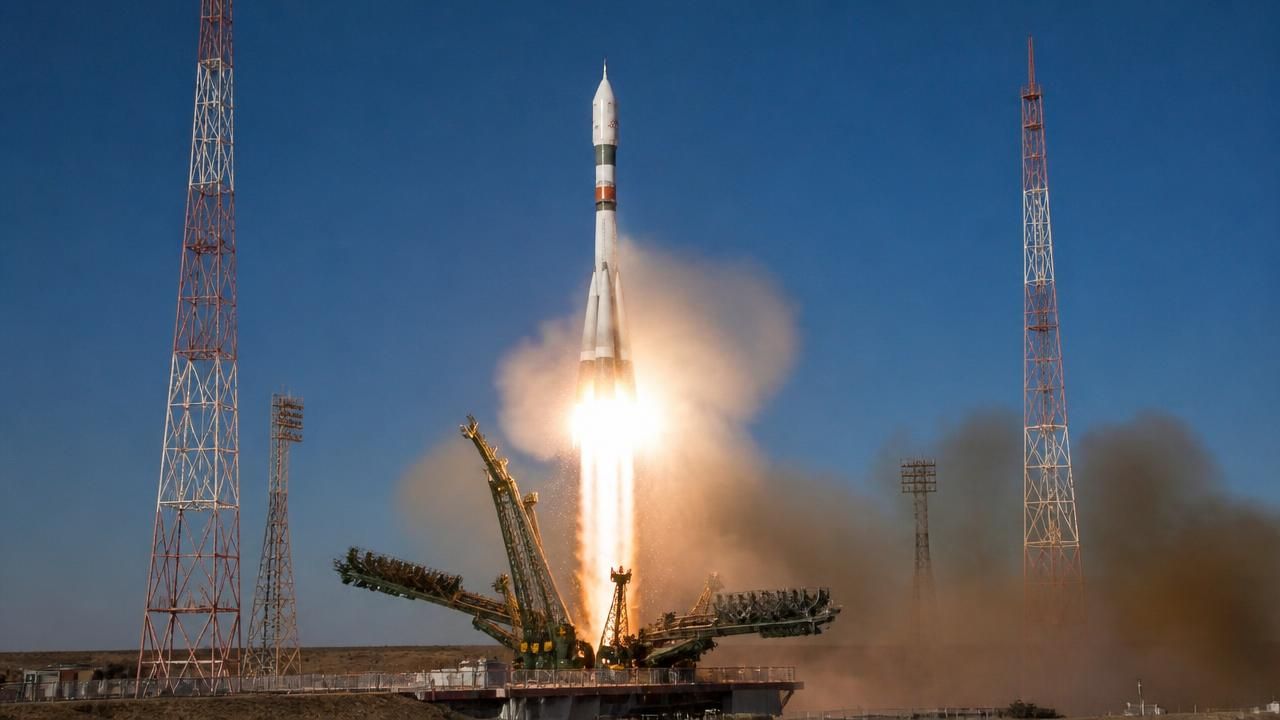
As the International Space Station (ISS) continues its third decade of continuous human presence, NASA is preparing to broadcast the launch and docking of an unpiloted Roscosmos Progress 96 resupply spacecraft. The mission, carrying nearly three tons of food, fuel, and crew supplies, is scheduled to lift off at 12:15 p.m. EDT on Wednesday, September 9, from the Baikonur Cosmodrome in Kazakhstan. But the event arrives at a moment when NASA's focus is also turning outward—toward the Moon, where commercial landers built by SpaceX and Blue Origin will soon be tested under the Artemis program.
Routine yet Vital: The Progress Resupply Mission
The Progress 96 spacecraft will travel for two days before autonomously docking to the Poisk module's space-facing port on Friday, September 11, at 2:37 p.m. EDT. NASA's coverage begins 15 minutes prior to each milestone, with a live stream available on NASA's website. The spacecraft will remain docked for approximately five months, then depart for a destructive re-entry over the Pacific Ocean—a standard end-of-life procedure for Russian cargo vehicles.
This resupply is part of a continuous logistics chain that has supported the space station for over 25 years. The Progress series descends from the automated cargo spacecraft developed in the Soviet era, and its design has proven remarkably durable. The mission comes just days after the undocking of Progress 94, scheduled for Monday, September 7, which will also burn up harmlessly in Earth's atmosphere.
"The unpiloted Progress 96 resupply spacecraft is scheduled to launch at 12:15 p.m. EDT on a Soyuz rocket from the Baikonur Cosmodrome," NASA announced, emphasizing that the agency will provide live coverage across multiple platforms.
Beyond Low Earth Orbit: Lunar Docking Systems and Lander Tests
While Progress 96 represents a well-oiled routine in low Earth orbit, several sources covering the same news cycle have pointed to NASA's parallel pursuit of lunar docking infrastructure. Regional outlets and science publications have reported on NASA shifting mission focus to lunar docking systems and testing the SpaceX Starship and Blue Origin Blue Moon landers before the Artemis III crewed landing. These landers are central to the agency's plan to return humans to the lunar surface for the first time since 1972.
The Artemis III lander test campaign is expected to validate critical systems—including docking interfaces that will connect the Orion spacecraft to the landing vehicle in lunar orbit. NASA's Gateway station, a small lunar outpost, will also rely on autonomous docking technologies similar to those used by Progress. This convergence of Earth-orbit logistics and lunar exploration underscores the agency's dual-track approach: maintaining the ISS while building the capabilities for sustainable deep-space missions.
Different Frames: From Cargo to Exploration
Coverage of the Progress 96 launch varies by outlet. The primary NASA release focuses the operational details and viewing times. Meanwhile, outlets like WESH and Phys.org have chosen to place the story in a broader context, examining how NASA's cargo resupply experience informs the development of lunar docking systems. ScienceDaily, likewise, emphasizes upcoming lander tests. These varying angles suggest that the public interest is shifting from the ISS—an aging but still productive laboratory—to the ambitious lunar program that will define NASA's next decade.
Historical Echoes: Mir and the Path to Cooperation
The legacy of orbital stations is not lost on this mission. The Progress freighter is a direct descendant of the logistics infrastructure built around Russia's Mir space station, which hosted international crews from 1986 to 2001. Mir was the first modular space station, a precursor to the ISS in both design and spirit. As one historical account notes, Mir "was very much the curtain-raiser for the International Space Station"—a platform for international cooperation that included NASA astronauts aboard Russian spacecraft.
Today, the ISS remains a testament to that cooperation, with Roscosmos and NASA still flying together on Soyuz and Progress vehicles despite geopolitical tensions. Progress 96's cargo includes fuel, food, and scientific supplies, enabling the continuation of research in microgravity that benefits life on Earth and prepares crew for future long-duration stays on the Moon and Mars.
What to Watch
NASA's live coverage offers the public a window into complex orbital choreography. Viewers can watch the Soyuz rocket lift off from the steppes of Kazakhstan and follow the spacecraft's automated approach to the Poisk module. The docking will be a testament to decades of refined autonomous rendezvous technology—technology that will eventually be adapted for lunar landings and beyond.
As the agency divides its attention between the tried-and-true Progress flights and the untested lunar landers, the next few months will be telling. Successful tests of SpaceX and Blue Origin vehicles will pave the way for Artemis III, while the steady cadence of ISS resupply missions keeps the current crew safe and productive. From Mir's early modular design to the ISS's sprawling complexity, and now to the Moon, each milestone builds on the last.
Key Details at a Glance
- Launch: Sept. 9, 12:15 p.m. EDT (9:15 p.m. Baikonur time) aboard a Soyuz rocket.
- Docking: Sept. 11, 2:37 p.m. EDT; NASA coverage begins 1:45 p.m.
- Cargo: ~3 tons of food, fuel, and supplies.
- Prior undocking: Progress 94 departs Sept. 7 at 11:18 a.m. EDT.
- Context: Lunar lander tests (SpaceX, Blue Origin) are expected prior to Artemis III.
For now, all eyes are on the sky over Kazakhstan, where a Soyuz rocket will soon carry a familiar cargo ship toward its orbital destination—proof that even as humanity reaches for the Moon, the practical work of resupplying our only current outpost continues unabated.