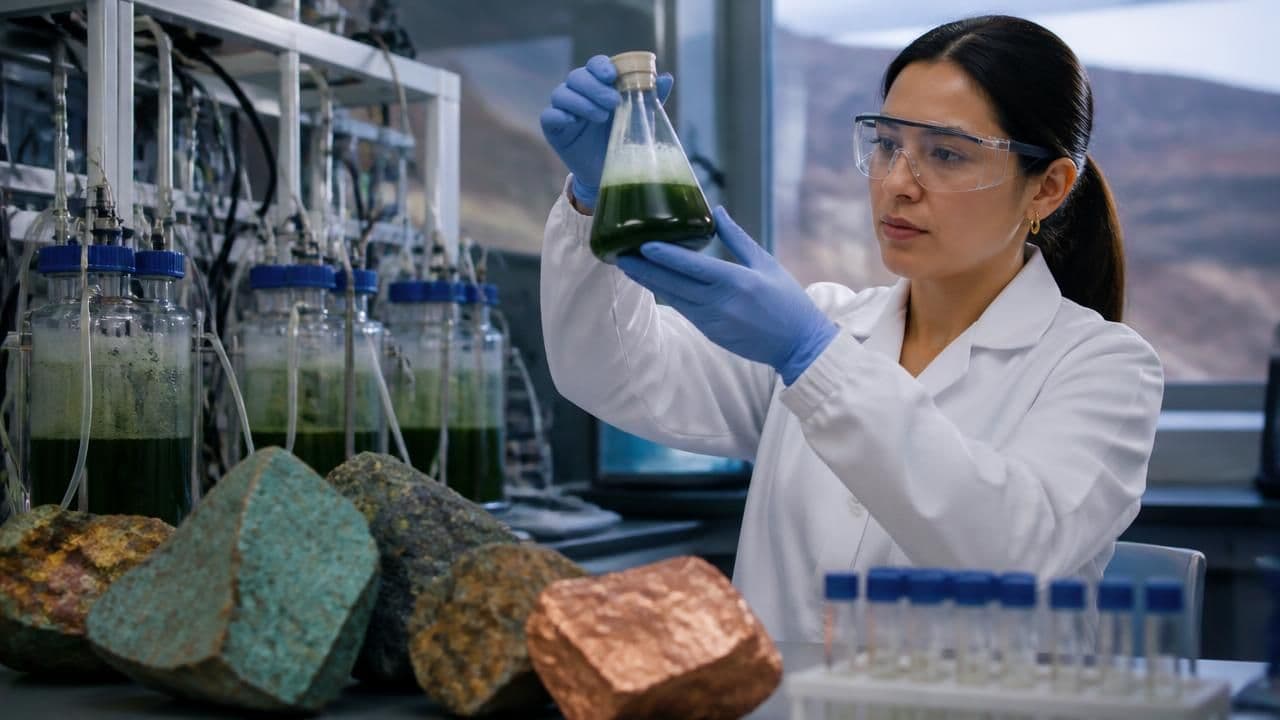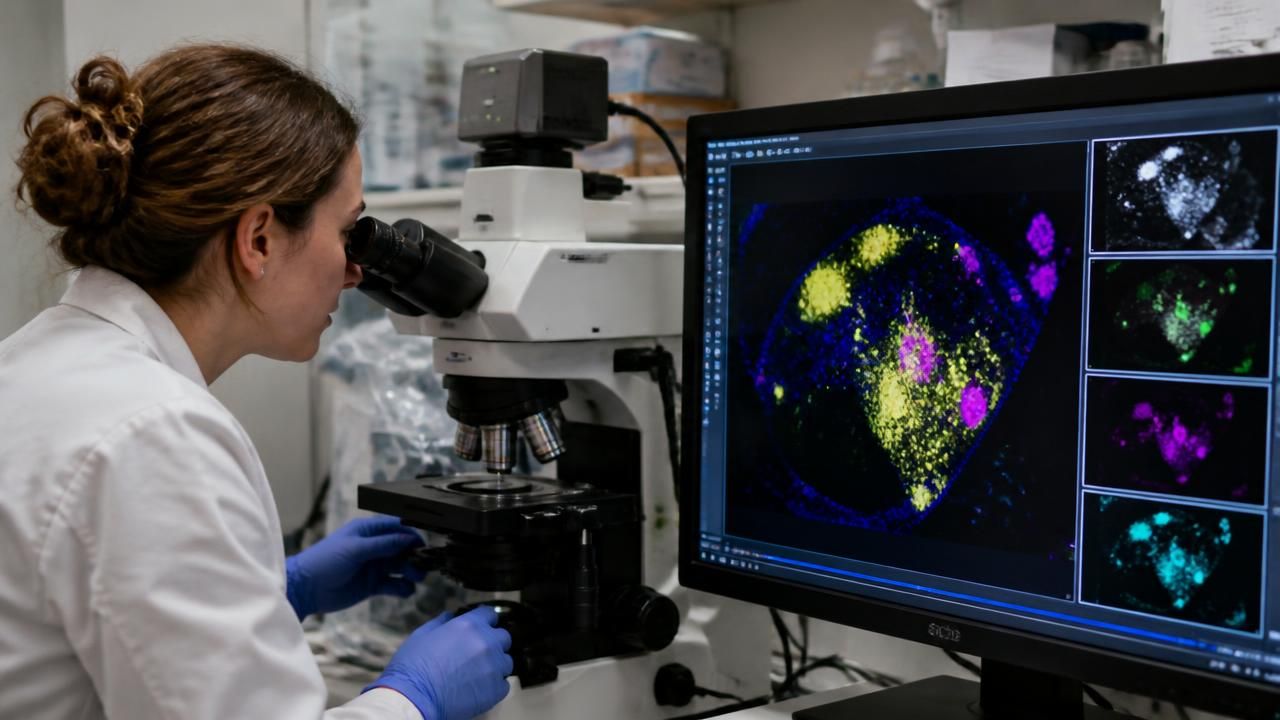
Using cutting-edge microscopy, scientists have captured an intimate moment between two ancient microbes — an Asgard archaeon and a bacterium — locked in a kind of metabolic embrace. The discovery unfolded inside living stromatolites, laminated rocky pillars built by microbial communities that have existed on Earth for billions of years. The images, the first of their kind, may offer a powerful view of how the complex cell — the unit of all multicellular life — first arose.
Stromatolites: The oldest cities on Earth
Stromatolites are formed when cyanobacteria trap and cement sediment into layered mineral mounds. These structures once dominated the world's oceans, and today they are often called "living fossils." Some of the most famous exist in Shark Bay, Western Australia, and at the Exuma Cays in the Bahamas, where extreme salinity keeps predators at bay. Because stromatolite communities are dominated by biofilms that still employ ancient metabolic strategies, they serve as windows into microbial life as it existed roughly 3.5 billion years ago.
In these ancient ecosystems, bacteria, archaea, and a host of other microorganisms coexist in tightly packed, layered colonies. Interactions among these microbes are not simple — they exchange nutrients, genetic material, and signaling molecules. But until recently, the nature of the physical contact between the most evolutionarily intriguing of these microbes remained a mystery.
Asgard archaea: The architects of complexity?
Asgard archaea were first identified from DNA samples collected around deep-sea hydrothermal vents in Norway and named after the Norse gods. Their genomes are remarkable: they contain many genes that were once thought to be exclusive to eukaryotes — cells with a distinct nucleus and internal organs, such as the cells of plants, animals, and fungi. These genes encode proteins involved in membrane remodeling, actin dynamics, and vesicle transport, all traits that suggest a capacity for dramatic cellular shapes and engulfment.
Because of these genetic hallmarks, many evolutionary biologists believe that the earliest eukaryotic cell emerged from an Asgard-like archaeon. The prevailing theory, known as the eukaryogenesis model, holds that this archaeon engulfed a bacterium that eventually became the mitochondrion — powering all complex life.
Yet that story has remained a theory without strong observational support. Researchers had never directly witnessed an Asgard archaeon physically interacting with a bacterium. That lack of evidence made it difficult to understand whether these microbes can truly partner with bacteria at the membrane level.
A modern echo of an ancient event
The new study changes the picture. The research team used high-resolution electron microscopy and three-dimensional tomography to capture images of an Asgard archaeon connected to a bacterium in a stromatolite sample. The two cells were observed in direct contact, with apparent fusion at their outer membranes. Small vesicle-like structures appeared in the space between them, suggesting an active exchange of proteins, lipids, or even RNA.
This physical coupling is the first direct visual evidence that Asgard archaea can enter sustained, intimate partnerships with bacteria. The researchers believe that this relationship is a modern analog of the symbiotic event that gave rise to the first complex cell. In the same way, billions of years ago an ancestor of this archaeon might have formed a similar attachment to a bacterium — eventually leading to the evolution of mitochondria.
"This is exactly the kind of interaction that has long been predicted but never seen," the study authors noted. "We are witnessing the cellular choreography that may have set the stage for all complex life."
Why did the partnership matter?
For decades, the leading explanation of complex cells came from Lynn Margulis and the endosymbiotic theory, which proposed that mitochondria evolved from engulfed bacteria. But how did that engulfment begin? Some researchers have argued that it started with an archaeon somehow wrapping its membrane around a very small bacterium. Others suggested that viruses co-opted the process. The new finding offers a third possibility: that the initial step was not engulfment but a persistent membrane-to-membrane connection — a "tethered" state in which each microbe directly fed or supported the other.
In some respects, the relationship resembles syntrophy, a form of mutualism in which one organism consumes the metabolic waste of another. In modern stromatolite communities, nutrients are scarce, and such close cooperation can be the key to survival. The observed connection may have begun as a metabolic convenience, evolving over millions of years into a permanent alliance.
Implications beyond Earth
The discovery stretches beyond our immediate family tree. By understanding the physical constraints on early cellular cooperation, scientists can refine models of how life gets started on other worlds. If the path from simple microbes to complex life requires such symbioses, then finding similar structures on Enceladus or Mars could become a target for astrobiology.
Key findings at a glance
- The first direct images linking an Asgard archaeon to a bacterium.
- The microbes show intimate membrane contact likely involved in nutrient exchange.
- Supports the theory that eukaryotic life began via a similar symbiosis between archaea and bacteria.
- Reminds us that even in the age of genomics, direct observation remains essential.
The team now plans to probe the molecular details of this interaction by analyzing the proteins at the contact point. They also hope to observe other Asgard lineages in different environments to see whether such connections are a general trait or a special adaptation of certain cases.
As more secrets emerge from living stromatolites, one theme is becoming clear: the line between distinct species is often blurry. Perhaps the origin of complexity was not a single violent act of engulfment, but a long, patient conversation — one that these ancient microbes continue to whisper today.