September delivers a celestial spectacle that bridges the warmth of summer and the crisp anticipation of autumn. From the dazzling glow of Venus to the seasonal turning of the equinox, the night sky offers a wealth of observer-friendly events for both casual stargazers and dedicated astronomers. This month's highlights include the Harvest Moon rising near Saturn, Venus meeting one of the sky's brightest stars, and the subtle glow of the zodiacal light, sometimes called the "false dawn."
Whether you're setting up a telescope in the backyard or simply stepping outside to look up, here's your guide to September's most remarkable night sky happenings.
Venus Dazzles at Its Brightest
Venus, the most brilliant planet in our skies, reaches its peak brightness in September, making it unmissable in the western evening sky. According to Science Daily, September brings a "dazzling Venus" visible shortly after sunset. National Geographic includes "Venus at Its Brightest" among its top nine night sky events for the month. With an apparent magnitude around -4, the planet outshines everything but the Moon, casting a silvery glow that can even be seen from urban areas with light pollution.
One of the most anticipated encounters occurs in early September when Venus meets Spica, a blue-white giant star in the constellation Virgo. As MSN notes, "Look up tonight: Venus and one of the sky's brightest stars are about to meet." This conjunction is a visual treat: two of the night's most luminous objects appear within a few degrees of each other, creating a striking juxtaposition of planet and star.
Venus's brilliance this month comes from its favorable orbital position relative to Earth, as the planet's illuminated disk is both large enough and sufficiently lit by the Sun. Observers with binoculars or a small telescope can even catch Venus's gibbous phase, similar to a nearly full Moon.
"September's night sky is a bridge between summer and winter, and this year it opens with Venus stealing the show."
The Harvest Moon and Saturn
Late September brings the beloved Harvest Moon, the full Moon nearest the autumnal equinox. This year, the full Moon falls on September 18, rising at sunset and illuminating the fields long after the Sun has gone. The name traces back to agricultural traditions, where farmers relied on its light to harvest crops into the evening hours.
Adding to the spectacle, the Harvest Moon will rise near Saturn, appearing close to the ringed planet throughout the night. Science Daily notes that the Moon also floats near "faint Neptune," offering a rare window for observers with telescopes to spot the distant ice giant. Neptune, at opposition on September 20-21, shines at magnitude 7.8, too faint for the naked eye but within reach of small telescopes or high-power binoculars.
The Moon Pairing with Saturn
For the best viewing of the Moon and Saturn, head out on the evening of September 17 or 18. Find a location with a clear southeastern horizon, as the pair will rise together around sunset. The Moon's brilliant glare may wash out some of Saturn's features, but the planet's soft golden hue remains distinctive. A pair of binoculars can enhance the view, revealing Saturn's rings and its largest moon, Titan.
The Fall Equinox: A Seasonal Turning Point
September 22 marks the autumnal equinox in the Northern Hemisphere (and the vernal equinox in the Southern Hemisphere). At 12:44 UTC, the Sun crosses the celestial equator, making day and night nearly equal across the globe. This astronomical event has been celebrated by cultures for millennia, from the Greek myth of Persephone to modern harvest festivals. It also signals a shift in the night sky, as summer constellations give way to the stars of autumn.
Hidden Wonders: The Milky Way, False Dawn, and Fireball Meteors
Beyond the bright planets, September offers subtler but equally mesmerizing sights. The heart of the Milky Way, with its hazy band of stars and cosmic dust, is still visible in the western sky after dusk, especially during the first half of the month. Science Daily highlights the "Milky Way's hazy center" as a September highlight.
For those who are willing to wake before dawn, the zodiacal light—often called the "false dawn"—appears as a faint, triangular glow in the eastern sky. This phenomenon is caused by sunlight scattering off interplanetary dust particles along the plane of the solar system. MSN's guide to September's celestial wonders urges skywatchers to watch for this elusive glow in the hour before morning twilight.
September also hosts several meteor showers, including the Southern Taurids, which are known for producing spectacular fireballs that streak across the sky slowly and brightly. While their peak activity is in October, the early fireballs can sometimes appear as early as September. National Geographic notes that fireball meteors are a dramatic addition to the month's lineup.
- Best date for Venus/Spica conjunction: Early September – look west about 45 minutes after sunset.
- Harvest Moon & Saturn: September 17–18 – rise in the east at sunset.
- Neptune at opposition: September 20–21 – best time to view the distant planet.
- Autumnal equinox: September 22 – day and night nearly equal.
- Zodiacal light (false dawn): Late September, one hour before sunrise, in the east.
Jupiter: The Morning Star and a December Preview
Jupiter, the largest planet in our solar system, remains a brilliant morning object throughout September. Rising in the late evening and climbing high by dawn, Jupiter outshines all the stars and offers endless detail through telescopes: its four Galilean moons, cloud bands, and the Great Red Spot. For late-night observers, Jupiter is visible in the constellation Taurus, alongside the Pleiades star cluster.
Looking ahead, space.com reminds us of a noteworthy alignment on December 7, when Jupiter will shine close to the waning gibbous Moon. That will be another excellent opportunity for astrophotography and visual observation, offering a preview of winter sky events.
How and Where to Observe
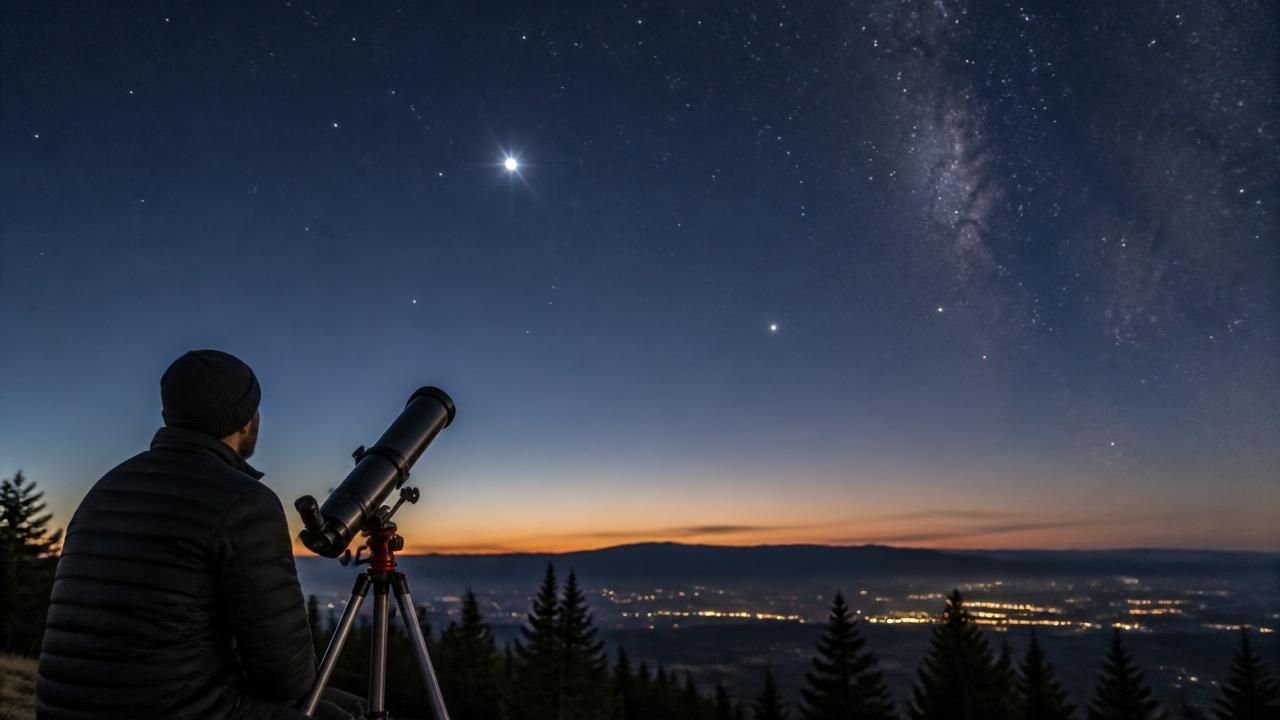
No special equipment is required to enjoy most of September's events, though binoculars or a small telescope will enhance your experience. For the best views, choose a dark site away from city lights, allow your eyes 15–20 minutes to adapt, and check local weather forecasts for clear skies. Apps like Stellarium or SkySafari can help you locate objects in real time.
As the month progresses, the stars of summer slowly sink into the western twilight, replaced by the familiar constellations of autumn: Pegasus, Andromeda, and Cassiopeia. September is a month of change, and the night sky is the perfect canvas to witness it.
So whether you're an experienced astronomer or just someone who occasionally looks up, make it a point to step outside this month. Venus will not shine this bright again until next year, and the Harvest Moon always rises right on schedule, reminding us of the cyclical rhythms of the universe.