Markets have been whipsawed through 2026 as a resurgent United States–Iran military confrontation repeatedly sends oil prices spiking and forces investors to reassess the global outlook. What began as ship seizures and drone encounters in the Persian Gulf escalated into direct strikes on Iranian territory, with President Trump threatening more attacks as Tehran weighed responses. The result: a volatile trading environment in which equities, bonds and currencies have swung on every new headline from Washington and the Strait of Hormuz.
Brent crude has surged past $100 a barrel at several peaks, while U.S. equity futures have dropped and Treasury yields have hovered near multi-year highs. The conflict has revived an uncomfortable question for central banks: if energy-driven inflation persists, can the Federal Reserve really cut rates—or might it need to hike again? That dilemma has put a spotlight on every data release and every Fed official speech, from jobs reports to CPI prints and the Jackson Hole symposium.
From Skirmishes to Open Conflict
The current cycle of violence began in earnest in late March 2026, according to Bloomberg Brief reports, when Iran attacked an oil tanker and President Trump reportedly mulled an exit from an earlier understanding. Within days, the U.S. had seized an Iran-flagged ship, triggering further tit-for-tat strikes. By early April, Trump had doubled down on an ultimatum to Tehran, warning of a “last chance” for the regime. BBC coverage captured the immediate market reaction: "Oil prices jump and shares drop after Trump threatens more Iran strikes."
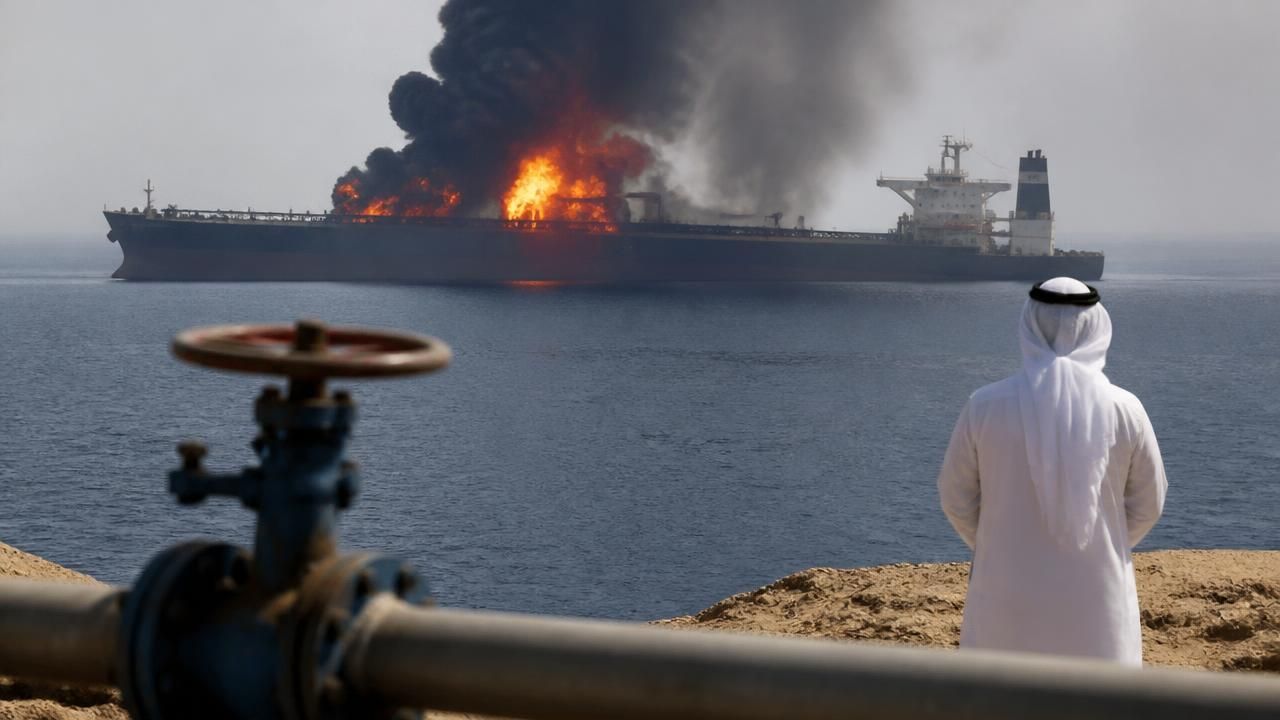
That threat swiftly became deadly. In a major escalation, U.S. forces struck military targets on Iran’s Kharg Island, one of the most strategically important oil export terminals in the world. Iranian retaliation followed, including fresh attacks on tankers and claims that vessels had hit mines near the Strait of Hormuz, the chokepoint through which roughly a fifth of global oil passes. By mid-spring, the two sides had agreed to a two-week ceasefire, only to see it fray repeatedly. Interim peace negotiations were announced in June, then stalled; an elusive "deal" on Hormuz began to look like the conference-room equivalent of a mirage.
A Timeline of Market Shockwaves
- April 2: President Trump addresses the nation; stocks fall, oil climbs.
- April 8: A two-week ceasefire sparks a relief rally, with stocks jumping and oil plunging.
- April 20: The U.S. seizes an Iran-flagged vessel; equities slide again.
- May 5–6: Peace-deal hopes lift stocks and pull oil down, even as U.S. gasoline tops $4.50 a gallon.
- June 15: An interim agreement sends stocks and bonds up; crude slides.
- July 29: Iranian attacks push oil higher again, with major tech earnings and a Fed decision adding to anxiety.
- August 4: Trump gives Iran yet another “last chance”; oil exports remain at risk.
Stocks, Bonds and the Fed Connection
The equity market has been caught between geopolitical risk and a red-hot earnings cycle. Wall Street has frequently managed to look through the war—at times hitting record highs, as Bloomberg reported when chipmakers surged on AI optimism. But each fresh strike has reminded investors that higher energy costs act as a tax on corporate margins and consumer spending. "Stock rally stalls as oil rises on US-Iran clashes," one Bloomberg Markets Wrap declared. Meanwhile, U.S. stocks sank and yields spiked after oil first kissed the $100 mark, with the benchmark 10-year Treasury yield reaching levels not seen since 2007.
That bond-market stress has become a central story in its own right. With oil feeding into headline inflation, former Fed official Kevin Warsh—widely seen as a potential successor to Fed Chair Jerome Powell—has been scrutinized for his views on rate policy. Bloomberg Brief segments have repeatedly asked whether the "September rate hike" is back on the table, and State Street’s Cayla Seder flagged deepening concerns in Treasury markets. The tariff-heavy Trump trade agenda, including a reported rollback of metals tariffs, has added another layer of complexity to the inflation calculus.
“Oil is the driver. Every time the war drums beat, the whole macro trade reprices—equities down, yields up, dollar bid.” — A State Street market strategist quoted on Bloomberg Brief (paraphrased)
Regional Divides and Global Losers
The war’s economic toll is not evenly shared. Saudi Arabia’s stock market, surprisingly, has defied the gulf turmoil, rising as local buyers stepped in to absorb foreign selling. In Asia, Chinese stocks have fared better than global peers during Iran-driven routs, partly because China is a large oil importer that benefits from any eventual diplomatic resolution; its own policy easing has also provided a floor. But economists surveyed by Bloomberg warn that China is still among the biggest losers of the war, given its dependence on imported energy and fragile consumer confidence.
For Europe, the situation is even more fraught. The region is heavily reliant on Middle Eastern oil and LNG, and a prolonged closure of the Strait of Hormuz would be an economic catastrophically. That is why European leaders have pushed for de-escalation, even as they also watch the ripple effects on the yen, which prompted the U.S. and Japan to warn of coordinated intervention to support it.
The Media Framing Divergence
Different outlets have emphasized different dimensions of the story. Bloomberg’s market-focused coverage frames every Iranian missile test as a pivot point for equities, bond yields, and algorithmic trading strategies. The BBC, by contrast, has focused on the human and political stakes: presidential threats, civilian casualties, and the risk of a broader regional domino effect. Both agree on the central mechanism: energy prices are the transmission cable between the battlefield and the wallet.
“Stocks hit record on jobs data as chipmakers surge” versus “Stocks sink as yields spike after oil hit $100”—both Bloomberg headlines are true within days of each other. That whiplash is the signature feature of this era.
Looking Ahead
As October approaches, investors are watching three things: whether the U.S.-Iran interim framework can be converted into a lasting truce, whether OPEC+ can make up for any lost barrels from Kharg Island, and whether the Fed’s next move will finally resolve the rate-hike debate. Analysts remain divided. The bulls argue that AI-driven productivity gains will eventually overcome energy shocks. The bears counter that $100 oil plus 5% yields is a classic pre-recession cocktail.
For now, the only certainty is volatility. With the Strait of Hormuz still under the shadow of drones and mines, every cargo ship that clears the strait arrives as a small victory for global trade—and every new threat arrives as a down day on trading screens from New York to Shanghai.