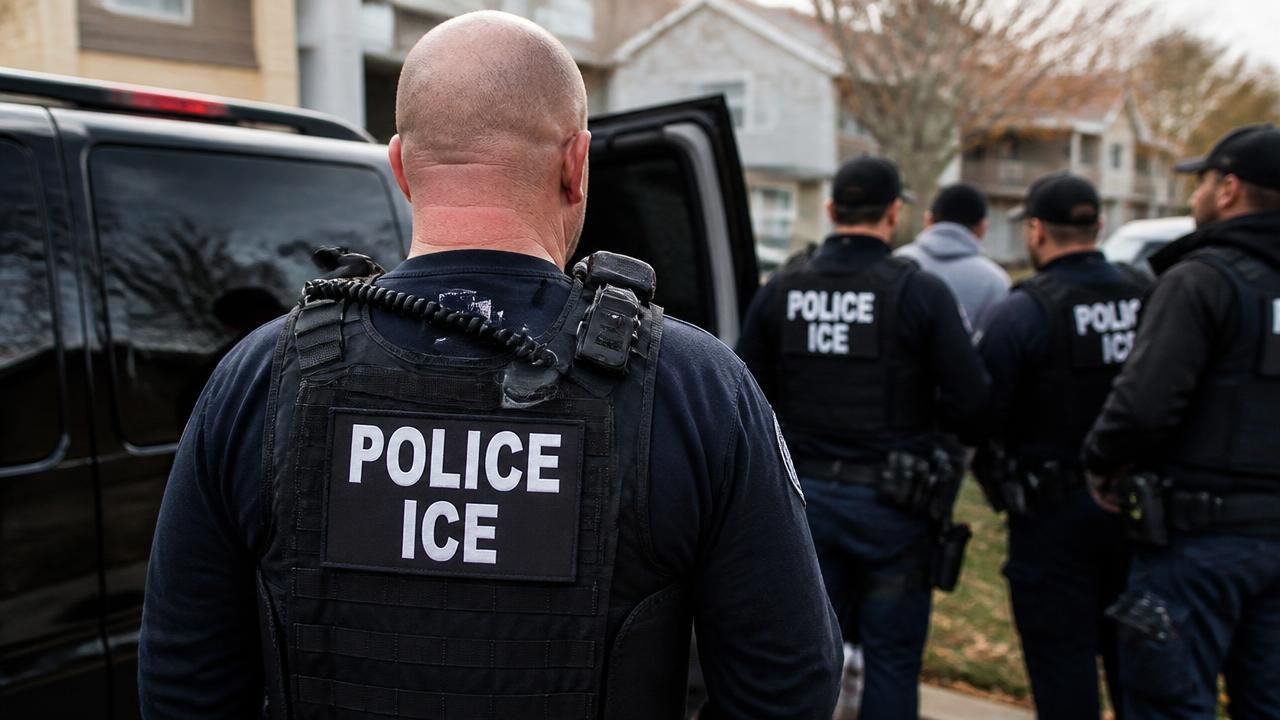
U.S. Immigration and Customs Enforcement (ICE) announced that it will complete the rollout of body-worn cameras to all field officers and agents by the end of this month, fulfilling a pledge made six months ago after a series of deadly shootings. The agency says it now has enough cameras in inventory to equip its entire field workforce, a step that officials hope will increase transparency and rebuild public trust. Yet the rollout is already drawing skepticism from advocates, immigration attorneys, and Democratic lawmakers who question whether the cameras will actually lead to accountability — especially after a recent fatal shooting in Houston in which the agents involved were not wearing any cameras.
A pledge born from crisis
The push for body cameras gained momentum after ICE officers were involved in more than two dozen shootings during the Trump administration, according to NPR. In response, the Department of Homeland Security (DHS) was granted $20 million to fund the cameras. The agency made a formal pledge roughly six months ago, but the deadline to equip every field officer has slipped. Now, an ICE leader confirmed to Reuters that the rollout will finally be completed by the end of this month. “We are on track to complete the distribution by the end of the month,” the official said.
Democrats demand answers
The delay has not gone unnoticed on Capitol Hill. Six months after the initial pledge, Democrats are pressing for details. According to The Hill, Democratic lawmakers have sent letters demanding answers about why the rollout has taken so long, what policies govern camera activation and data retention, and how the public can access footage. The Hill's report highlights the political pressure surrounding the issue, as immigration enforcement remains a flashpoint in Washington.
The Houston shooting raises questions
One of the most glaring examples of the gap between promise and practice occurred in Houston, where ICE agents were involved in a deadly shooting. DHS later confirmed that the officers were not wearing body cameras, as reported by KHOU and Yahoo News. That incident undercuts the agency’s assurance that cameras will soon be universal. If the agents had been equipped and activated, would the outcome have been different? The question lingers, and it has become a rallying cry for critics who argue that the rollout is too little, too late.
Rollout mechanics and challenges
So what’s been keeping all ICE officers from using body-worn cameras? MSN posed that exact question, pointing to logistical hurdles, training requirements, and policy debates. Body-worn camera programs typically require clear rules about when to record, how to store footage, and who may review it. For a decentralized agency like ICE, with officers working in airports, jails, and field operations, the challenge is significant. The agency says it has now acquired enough cameras for all field personnel. But having a camera on a belt is not the same as using it correctly. Critics point to instances across the country where officers failed to activate cameras or obscured events, raising concerns about whether ICE will enforce its own policies.
Local skepticism in border communities
In border towns like Laredo, Texas, the announcement has been met with suspicion. MSN reported that advocates worry cameras could be selectively turned off or that footage might be shielded from public records requests. Similarly, a San Antonio immigration attorney told KENS 5 that while the rollout is a positive step, it is not a panacea. The attorney stressed that without independent oversight and strict penalties for non-compliance, cameras may simply become a cosmetic addition to an agency with a long history of opaque operations.
Will cameras ensure accountability?
Yahoo News asked the question directly in a headline: “ICE Is Getting Body Cameras. But Will They Help Hold Agents Accountable?” The answer is far from clear. Research on body-worn cameras in local police departments has shown mixed results. While cameras can reduce use-of-force incidents and complaints in some contexts, they are not a cure-all. Positive outcomes depend on robust policies, clear sanctions for non-compliance, and meaningful public access to footage.
“ICE Is Getting Body Cameras. But Will They Help Hold Agents Accountable?” — Yahoo News
For ICE, the stakes are particularly high. The agency operates in the shadows of immigration enforcement, where distrust runs deep. NPR noted that cameras could help alleviate some concerns about ICE transparency and accountability. But that will only happen if the agency is transparent about what constitutes a recorded event and if it allows independent review.
What's next?
As the month-end deadline approaches, all eyes will be on ICE to see if it lives up to its word. The agency says it is ready. But the true test will come in the field: Will cameras be worn and activated in every interaction? Will footage be available to the public and Congress? And will the agency discipline officers who fail to comply?
For now, the rollout is a landmark moment in ICE’s 20-year history — the first time all officers will be equipped with body-worn cameras. But without broader reforms, it may be little more than a technological bandage on a deeply troubled institution. The coming weeks will reveal whether the agency is genuinely committed to accountability or simply checking a box on a promise made under pressure.