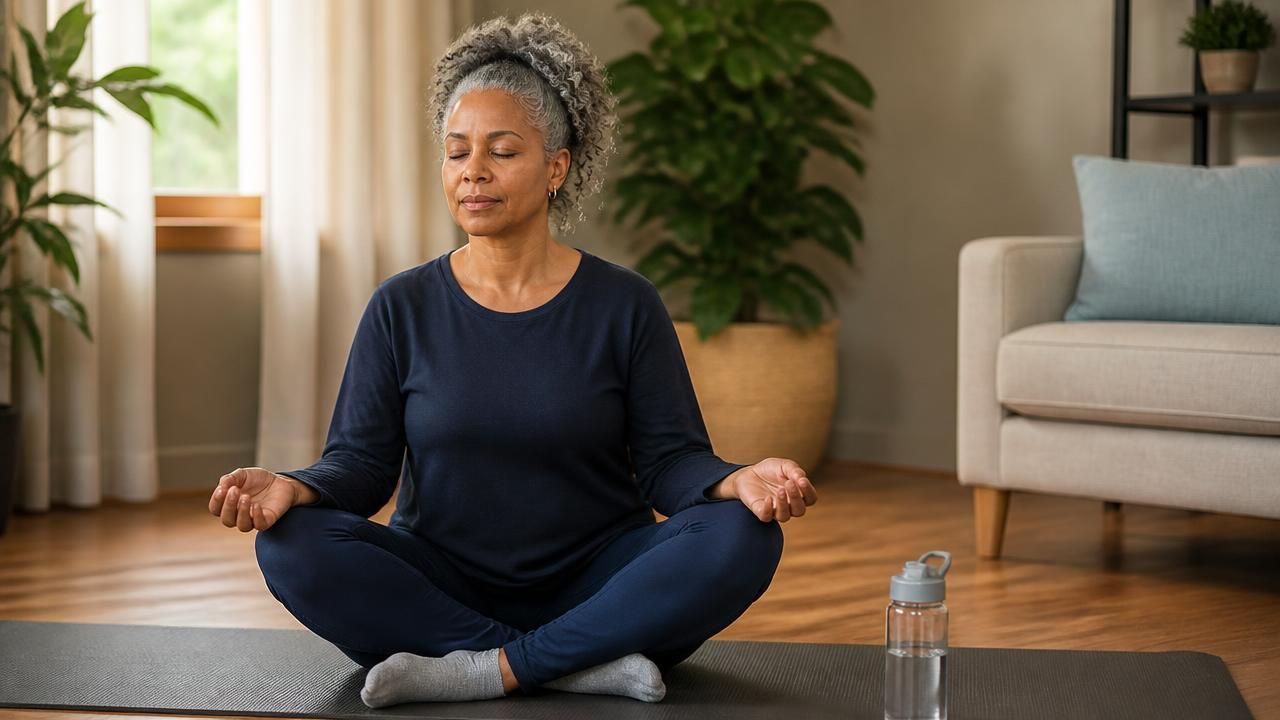
It has long been said that a healthy heart starts with a healthy mind. Now, a growing body of research is giving that adage scientific teeth. From mindfulness meditation and deep-breathing exercises to gratitude journaling and positive psychology, evidence suggests that training your mind may lower your blood pressure, reduce inflammation, and improve cardiovascular health—sometimes in as little as eight weeks.
The Power of Positive Thinking
In one recent study, researchers at the University of Illinois at Urbana-Champaign found that mindfulness, gratitude, and optimism training improved blood pressure and inflammation markers within eight to 12 weeks. The strongest results came from programs that paired daily practice with regular reinforcement, such as weekly check-ins or coach support. The researchers noted that improving psychological well-being could become another tool for protecting cardiovascular health.
“The findings suggest that improving psychological well-being could become another tool for protecting cardiovascular health,” they wrote. The study adds to a growing body of evidence linking positive mental states to physical heart health. It also suggests that taking a few minutes each day to focus on what’s going well could have measurable benefits.
What the Trials Show
Larger clinical trials are also exploring the effects of meditation on blood pressure. The Mindfulness-Based Blood Pressure Reduction (MB-BP) program, developed by researchers at Brown University, targets people with uncontrolled hypertension. Early results presented at major cardiology conferences showed significant systolic blood pressure reductions among participants who completed the eight-week course.
Another study, published in the Journal of the American Heart Association, tested a standard Mindfulness-Based Stress Reduction (MBSR) program in patients with elevated blood pressure or hypertension. Participants experienced modest but meaningful drops in both systolic and diastolic pressure, along with reduced psychological distress. These findings align with guidelines from the American Heart Association and the British National Health Service, which now recommend meditation and breathing exercises as complementary approaches to managing blood pressure.
Evidence From the Lab
Harvard researchers have shown that meditation can affect gene expression—turning on genes related to immune function and turning off genes involved in inflammation. That may explain how a mental practice can influence physical health. A separate study on the Wim Hof method, which combines controlled breathing and cold exposure, found changes in cardiac autonomic function and blood pressure, though the effects varied among participants.
Breathing Your Way to Lower Blood Pressure
One of the simplest interventions is also one of the oldest: slow, deep breathing. A study in Frontiers in Physiology found that mindful breathing—about six breaths per minute—can lower blood pressure by improving baroreflex sensitivity and reducing sympathetic nervous system activity. Even a three-minute breathing practice has been shown to reduce stress and blood pressure in small studies, according to Psychology Today.
Other mind-body approaches, including inspiratory muscle training—which uses a handheld device to strengthen the diaphragm—has shown promise in lowering systolic blood pressure, according to a column by Dr. Keith Roach. Similarly, tai chi, an 800-year-old Chinese mind-body exercise, has been found in multiple studies to reduce blood pressure, sometimes as effectively as aerobic exercise. Hot yoga, which combines physical postures with mindfulness, has also been linked to lower blood pressure and improved mindfulness.
The Caveats: Meditation Alone Isn’t a Magic Bullet
Still, not all research is unequivocal. A study reported by Reuters and other outlets found that meditation alone—without lifestyle changes or medication—did not lower blood pressure more than a standard health education class. The study, which included people with mild hypertension, taught participants a well-known mindfulness meditation technique. “We found no evidence that training in mindfulness meditation alone lowers blood pressure,” the lead researcher said. However, he noted that meditation might still be useful as an adjunct to drug therapy, diet, and exercise.
This nuance is crucial. Experts emphasize that mindfulness is not a substitute for antihypertensive medication or lifestyle changes, but rather a complementary strategy. The key is to use these practices in addition to—not instead of—treatments proven to work.
How to Put This Into Practice
So what should you do if you want to harness the mind-heart connection? Here are some evidence-informed strategies:
- Meditate daily, even for 10 minutes. Consistency matters more than duration.
- Try a gratitude journal. Writing down three things you’re grateful for each day has been linked to lower blood pressure and reduced inflammation.
- Practice slow breathing. Aim for five to six breaths per minute, for five minutes a day.
- Consider an online mindfulness course or app. Programs with structured support tend to work better.
- Combine with exercise and a heart-healthy diet. Mindfulness is not a replacement.
Many experts suggest integrating these practices into a nightly routine. Cardiologists recommend winding down with short meditations or deep-breathing exercises before bed, as sleep and blood pressure are closely linked. A morning routine can also help: spending a few minutes in quiet reflection before starting the day sets a calm tone.
What the Experts Say
“There is now ample evidence that mind-body practices can improve cardiovascular risk factors, including blood pressure,” said one cardiologist. “The question is no longer whether they work, but how best to prescribe them.” This sentiment is echoed by psychologists who study mindfulness: the simplest forms of meditation—like focusing on the breath—can be highly effective, especially when practiced regularly.
The Bottom Line
While meditation may not replace your blood pressure medication, it could be a powerful addition to your health toolkit. With more research under way, the prospect of a drug-free intervention that benefits both mind and body is an appealing one. As one researcher put it, “Maintaining a healthy heart may require regular doses of positivity.”