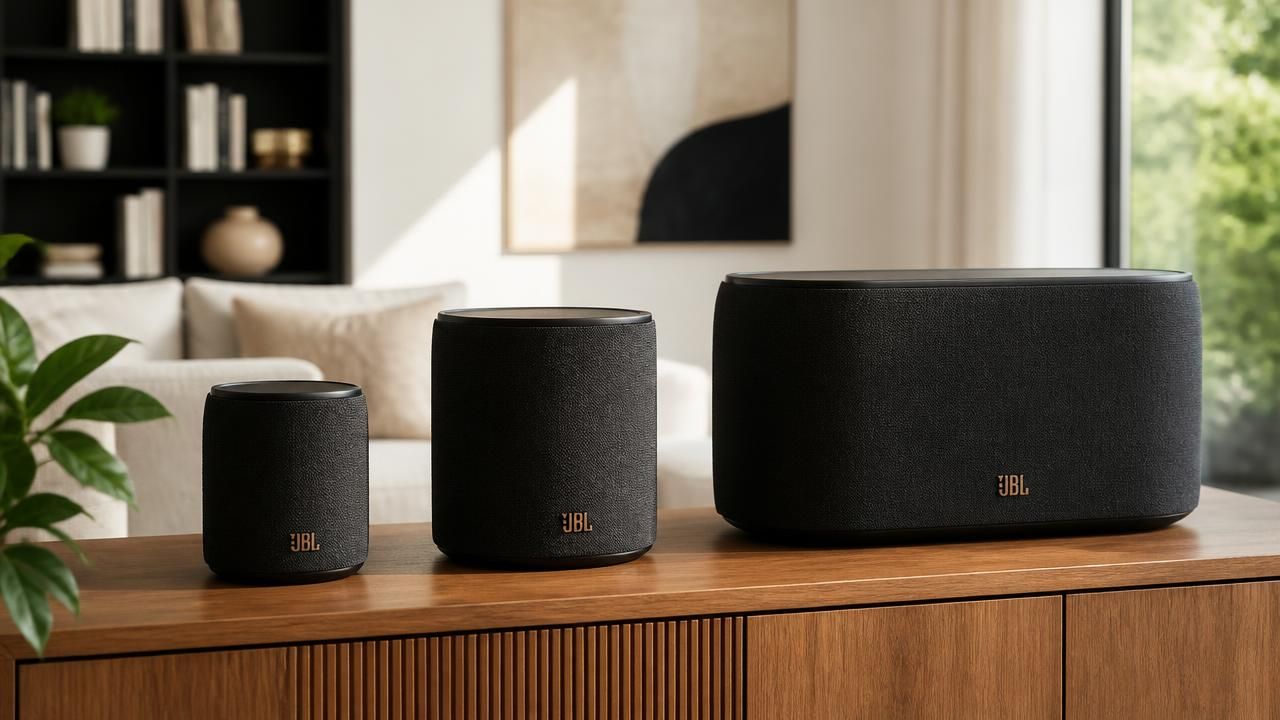
JBL, the audio giant best known for its rugged portable Bluetooth speakers and boombox-style party speakers, is making a serious play for your living room. The company today unveiled JBL Cove, a three-model family of Wi-Fi connected speakers designed to work together as a whole-home wireless audio system. The move puts JBL in direct competition with Sonos, Bose's new Lifestyle Ultra speakers, and other multi-room audio platforms.
As The Verge put it: “JBL is well known for its portable Bluetooth and party speakers, but now it's also stepping into the world of connected whole-home audio.” The new Cove series can be used independently, paired as a stereo set, or linked across multiple rooms, giving listeners the kind of seamless, synchronized audio experience that has long been Sonos’s bread and butter.
The Cove lineup at a glance
The JBL Cove series consists of three models, each available in black or white, and each designed to fill different room sizes. All three use Wi-Fi rather than Bluetooth for multi-room playback, and they can also work as standalone speakers via AirPlay 2, Chromecast built-in, and Spotify Connect. JBL says the speakers will be available starting September 13th.
- JBL Cove M1 ($229.95): The most compact model, featuring three 0.75-inch tweeters and a single 4-inch woofer. It’s designed for small to medium rooms, bookshelves, or as a stereo pair for near-field listening.
- JBL Cove X1 ($349.95): A larger mid-range model with a more powerful driver array, intended for living rooms and open-plan spaces.
- JBL Cove P1 ($499.95): The flagship floor-standing model, delivering the deepest bass and highest output, meant to anchor a whole-home setup or act as a high-end stereo pair.
All three speakers can be grouped through the JBL One app, which also supports voice assistants such as Alexa. The app allows users to create custom listening zones, adjust EQ, and stream music from popular services. JBL says the Cove series is designed to be expandable, so owners can start with a single speaker and gradually build out a multi-room system.
A direct challenge to Sonos and Bose
For years, Sonos has dominated the whole-home audio market with its seamless mesh network, simple app, and extensive ecosystem of speakers, soundbars, and subwoofers. Bose has also stepped up its game with the recent Lifestyle Ultra speakers, which offer spatial audio and multi-room capabilities. JBL’s entry into this space signals a desire to leverage its strong brand recognition and acoustic heritage to win over consumers who want a more versatile, price-competitive alternative.
What Hi-Fi? framed the launch as “JBL joins the multi-room race with its three 'immersive' wireless speakers,” noting that the Cove series could appeal to buyers who already own JBL portable speakers and want to extend that sound quality to the home. Meanwhile, Forbes and Yahoo News both characterized the launch as a direct challenge to Sonos, with Forbes headline reading “JBL Launches New Whole-Home Wireless Speaker System To Challenge Sonos.”
Pricing and positioning
At $229.95, the Cove M1 undercuts the Sonos Era 100 ($249) and Bose Smart Speaker 500 ($299), making it an attractive entry point. The X1 and P1 sit closer to Sonos’s mid-range and premium tiers, such as the Sonos Five ($499) and the architectural speakers in Bose’s lineup. JBL is clearly aiming to offer similar functionality at slightly lower price points while also tapping into its expertise in high-output, bass-heavy sound — a signature of its party speakers.
Techradar and Digital Trends noted that the Cove series supports AirPlay 2 and Chromecast built-in, which means they can be integrated into existing smart home setups alongside other speakers from different brands. This cross-platform compatibility is a key differentiator from Sonos, which uses its own proprietary system, though the latest Sonos speakers do support AirPlay 2.
What the experts are saying
Early reactions from the tech press have been cautiously optimistic. The Gadgeteer called the Cove system “a serious contender,” while Mashable highlighted the “luxury audio” positioning of the collection. On the other hand, some reviewers noted that JBL is entering a crowded and mature market, and that the success of the Cove series will hinge on software reliability and ecosystem integration — areas where Sonos has historically excelled.
“JBL joins the multi-room race with its three 'immersive' wireless speakers,” declared What Hi-Fi? in its coverage, pointing to the immersive soundstage promised by the multi-driver array.”
One notable aspect is the absence of a portable model in the initial Cove lineup. JBL has long been synonymous with battery-powered speakers like the Flip and Charge lines, so the decision to focus solely on AC-powered home speakers is a deliberate pivot. However, the P1’s floor-standing design suggests JBL is targeting the traditional hi-fi segment, not just casual listeners.
Historical context and implications
JBL’s parent company, Harman International (a subsidiary of Samsung), also owns other audio brands like AKG and Harman Kardon. That gives JBL access to Samsung’s SmartThings ecosystem, which could allow the Cove speakers to function as part of a broader connected home setup. In fact, some reports hint that the Cove series may be compatible with Samsung’s multi-room system and could gain support for SmartThings in future updates.
The launch comes at a time when consumer interest in whole-home audio is growing again, driven by the popularity of streaming services and voice assistants. Sonos has faced software challenges in recent years, and Bose’s Lifestyle Ultra line is still relatively new. JBL sees an opportunity to capture market share by offering a compelling combination of sound quality, aesthetics, and cross-platform compatibility at a competitive price.
For consumers, the Cove series expands the options available beyond the usual Sonos-vs-Bose debate. The ability to mix and match with existing AirPlay 2 and Chromecast speakers is a significant advantage. But the real test will be how well the JBL One app handles grouping, latency, and stability — areas where newcomers to multi-room audio often stumble. If JBL can deliver a smooth, reliable experience, the Cove series could become a serious rival in the connected home space.
Availability
The JBL Cove M1, X1, and P1 will be available in black or white starting September 13th, directly from JBL.com and select retailers. Pre-orders are expected to open shortly. With a lower entry price than Sonos and Bose, JBL’s newest lineup is poised to make some noise in the whole-home audio market.