The S&P 500 is approaching a pivotal moment. With nearly $27 trillion in index-tracking funds tied to the benchmark, the upcoming rebalancing announced this Friday could trigger massive market moves. Brook Cutright, portfolio manager at Hedgeye Asset Management, told Bloomberg's ETF IQ that investors are "trying hard to outfox" the index—a game with enormous stakes.
The Looming Rebalancing
Every quarter, S&P Dow Jones Indices reviews the composition of the S&P 500, adding companies that meet strict market-capitalization and liquidity criteria while removing those that no longer qualify. This Friday's announcement is particularly significant: according to Cutright, 36 companies appear to qualify for entry, while more than 110 existing members no longer meet the index's market-cap hurdle.
The sheer scale of passive investment tied to the S&P 500 means that any change to its membership can trigger billions of dollars in forced buying or selling. Index funds must rebalance their portfolios to mirror the new composition, creating predictable price pressure that active traders often try to anticipate.
Why It Matters
The S&P 500 is not just a stock index; it is the backbone of modern passive investing. Retirement accounts, ETFs, and institutional portfolios all track it. When a stock is added, index funds must purchase shares, often driving the price up. Conversely, when a stock is removed, funds sell, depressing the price. This dynamic has created a cottage industry of traders who speculate on the index committee's decisions.
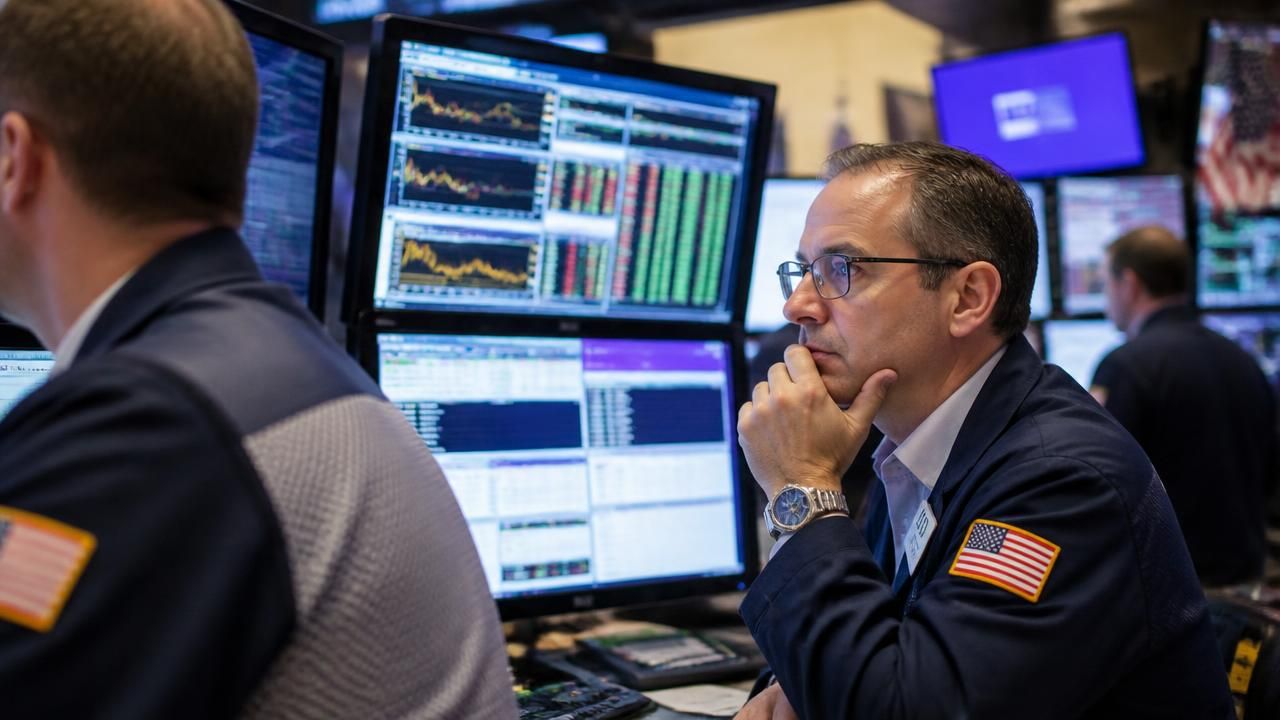
Cutright's comment about "outfoxing" the S&P 500 highlights the game of anticipation that surrounds these rebalancings. Some traders build positions in candidates for inclusion, hoping to profit from the inevitable inflow. Others short struggling members facing removal. The risk is that the index committee's decisions are not purely mechanical—they use subjective judgment, which can confound even the most sophisticated models.
The Numbers Behind the Shake-Up
- Nearly $27 trillion in assets are indexed to the S&P 500.
- 36 companies currently appear to meet the index's entry criteria.
- Over 110 existing members no longer meet the market-cap threshold.
- Friday's announcement will specify actual additions and removals.
Market Impact and 'Outfoxing'
"People trying hard to 'outfox' S&P 500," Cutright said, capturing the speculative fervor ahead of the rebalance.
The impact extends beyond the stocks directly affected. For every addition, there is a ripple effect on related ETFs, futures contracts, and options. The announcement could also signal broader market trends: a wave of new entrants might indicate that small-cap growth has outpaced the bottom of the S&P 500, while a wave of removals could reflect deteriorating fundamentals among weaker members.
Cutright's perspective from Hedgeye, which is known for its macro-driven investment approach, suggests that the rebalancing is not just a mechanical event but a window into market dynamics. The 110-plus members at risk represent a significant portion of the index's smaller constituents, and their removal could reshape sector weights.
Historical Context
The S&P 500 has evolved significantly since its inception in 1957. Originally a simple list of 500 large-cap U.S. stocks, it has become the most widely followed equity benchmark in the world. The index committee, run by S&P Dow Jones Indices, uses a set of criteria including market capitalization, liquidity, public float, and sector representation. Unlike rules-based indices, the committee retains discretion, which adds an element of unpredictability.
In recent years, the index has seen a trend toward megacaps dominating, with companies like Apple, Microsoft, and Nvidia representing outsized weights. This concentration has raised concerns about passive investing distorting markets. However, rebalancings like this one help ensure the index remains a true reflection of the largest U.S. companies.
What to Watch
Investors should monitor Friday's announcement closely. Stocks that are added often experience a temporary boost, while those removed can suffer significant losses. However, the effects can be muted if they were widely anticipated. The real opportunity—or risk—lies in the surprises.
As Cutright suggests, the attempt to outthink the index is a high-stakes endeavor. The $27 trillion following the S&P 500 ensures that for every winner in this game, there is a loser. With 36 potential entrants and 110 at-risk incumbents, the upcoming rebalancing could be one of the most consequential in years.
Whether you are an active trader or a passive investor, this Friday's announcement will shape portfolios for the next quarter. The only certainty is uncertainty—and the never-ending quest to outfox the S&P 500.