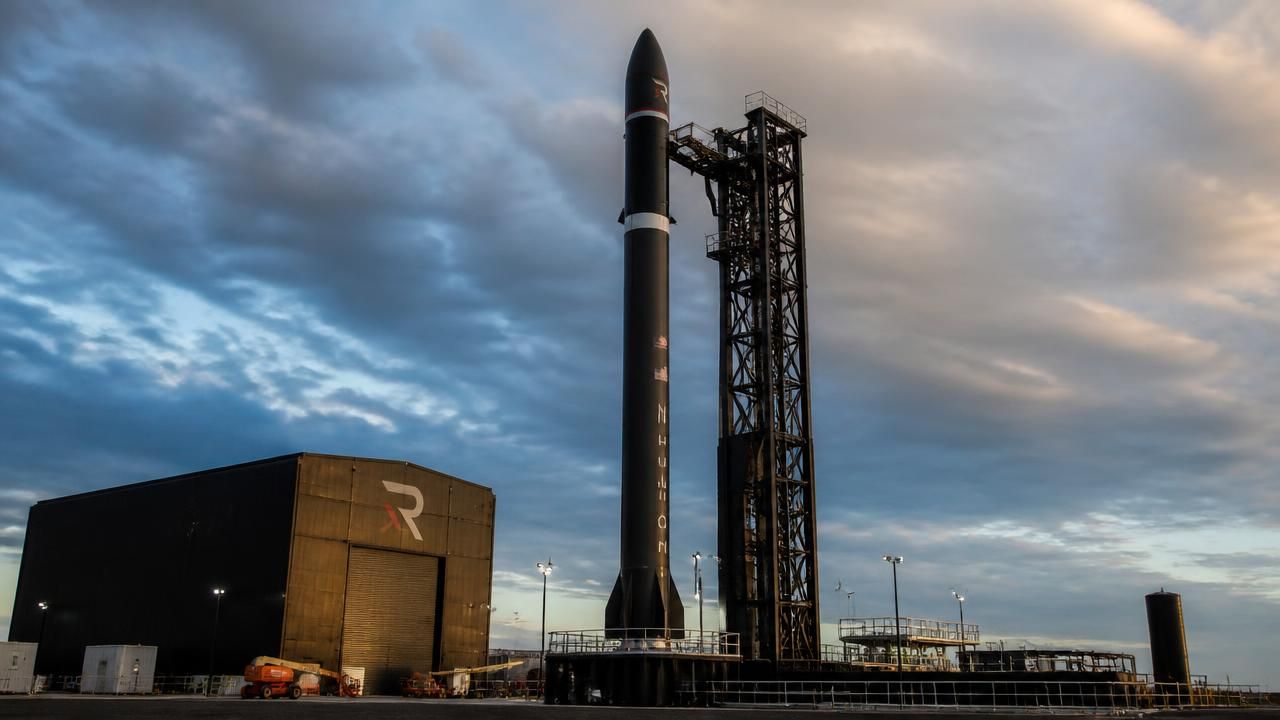
Rocket Lab has pushed the first flight of its Neutron rocket to 2027, a delay the company attributed to a problem uncovered during manufacturing of the launch vehicle's carbon composite structures. The announcement, made Wednesday, sent the company's shares tumbling as much as 15% intraday as investors absorbed another slip in the timeline for what has become the central test of Rocket Lab's ambition to move beyond small-satellite launches.
What Rocket Lab Actually Said
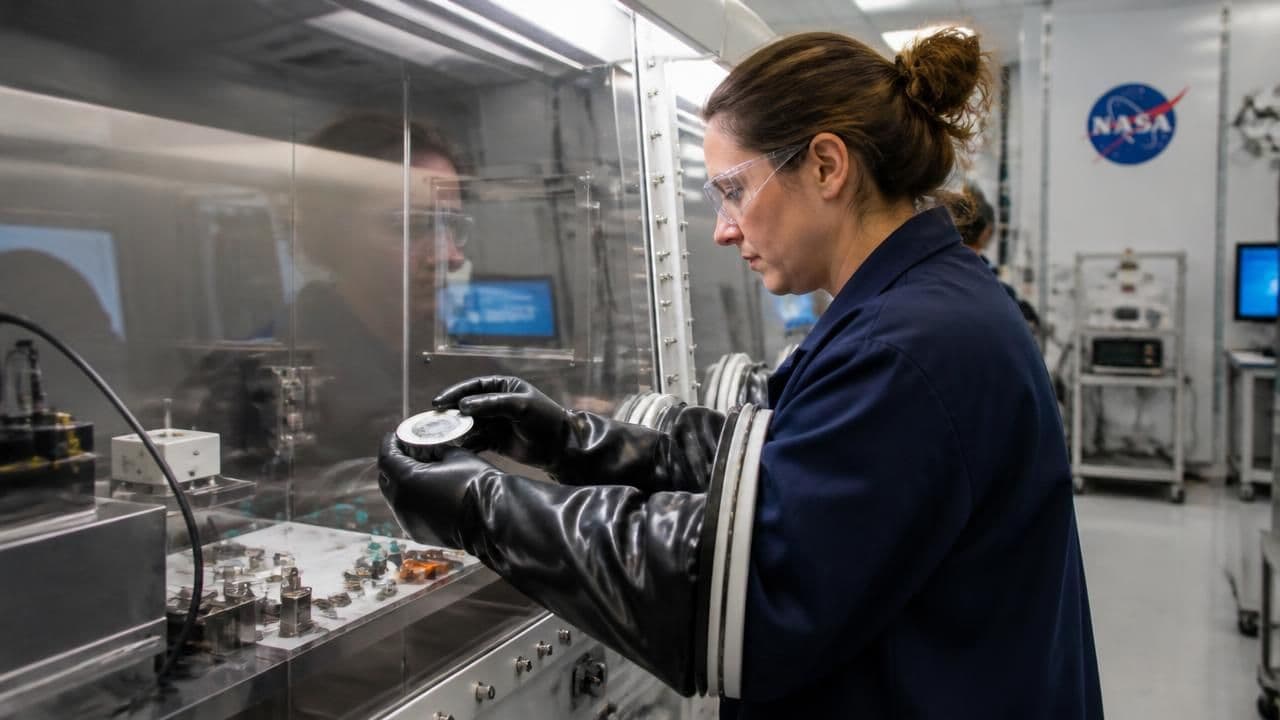
According to Ars Technica, the company cited an issue discovered while producing Neutron's large booster stage, which is built from carbon composite materials. The most recent official update, issued in August, had suggested Rocket Lab still hoped to deliver the first Neutron vehicle to its launch pad at Wallops Island, Virginia, before the end of this year — a schedule that would almost certainly have pushed the maiden flight into 2027 anyway.
Wednesday's statement went further, acknowledging that the rocket will not fly until 2027 at the earliest. Ars Technica characterized the disclosure as "public confirmation of what nearly everyone inside Rocket Lab and the wider space industry already knew," adding that the company "is still struggling with manufacturing the rocket's large booster stage."
The announcement was public confirmation of what nearly everyone inside Rocket Lab and the wider space industry already knew. — Ars Technica
Why Carbon Composites Are the Hard Part
Neutron's reusable first stage is constructed from carbon composite structures, which offer low weight, high strength and corrosion resistance — properties that make them attractive for a rocket that must survive reentry and fly again. But carbon composites in aerospace are generally harder to manufacture than metallic structures, and defects can be difficult to detect and costly to remedy. The manufacturing stumble puts a spotlight on a materials trade-off Rocket Lab chose early in Neutron's design to differentiate the vehicle from metallic competitors.
Neutron is positioned as a medium-lift rocket capable of carrying roughly 13 metric tons to low Earth orbit in a partially reusable configuration, targeting the crowded but lucrative market for constellation deployment, national security missions and commercial rideshare — the segment currently dominated by SpaceX's Falcon 9.
Wall Street Reacts: A Selloff and a Split
Financial coverage of the delay was uniformly bleak on the headline number, but varied on the magnitude of the damage. Yahoo Finance and MSN reported a 13%–15% slide in Rocket Lab (ticker: RKLB) shares. Coincentral and MoneyCheck put the drop at roughly 8%–10%. Blockonomi and Stocktwits framed the move as a push toward 10-month lows. The common thread: investors had priced Neutron's debut as the catalyst that would justify Rocket Lab's premium valuation, and that catalyst has moved further out.
Analyst reaction was more nuanced. KeyBanc cut its price target to $100 while maintaining its view on the stock, according to FinanceFeeds. Roth Capital, per Stocktwits, "sees the bright side" — a posture consistent with a company whose underlying launch business continues to compound. Ad-hoc-news noted that Rocket Lab's launch record keeps growing, with Electron missions setting a steady cadence, while arguing that Neutron's fourth-quarter deadline — now missed — is "what really matters" to the long-term thesis.
Beyond the Rocket: Mounting Execution Risk
The Neutron slip does not land in isolation. Ad-hoc-news reported that Rocket Lab also lost a NASA contract, layering a second data point onto a narrative of execution risk. Stocktwits noted that retail sentiment around RKLB has hit an all-time low, and pointed to Rocket Lab's takeover target Iridium as a possible earnings-driven distraction from the rocket news — a sign of how much the company's equity story now depends on near-term news flow.
The framing differences across outlets are instructive. Engineering-focused coverage, led by Ars Technica, treated the delay as a technical manufacturing problem — serious but solvable. Financial coverage treated it as a valuation event, with headlines organized around percentage declines and price targets. The result is a story that reads very differently depending on whether you own the stock or the rocket.
What the Delay Means
For Rocket Lab founder Peter Beck, who has spent years positioning Neutron as the vehicle that takes the company from a niche small-launch provider to a full-spectrum space company, the delay tightens a window that is already narrowing. Competitors are scaling: SpaceX continues to dominate the medium-lift market, Blue Origin is expanding, and a generation of new launch startups is racing toward first flight.
None of that invalidates Neutron. Rocket Lab retains a proven Electron business, a growing space systems division, and, for now, the confidence of at least some analysts. But the longer the booster stage sits in the factory rather than on the pad, the more the company must answer a harder question: whether its manufacturing base can deliver on the design ambitions it has set.
For investors, the practical takeaway from this week's selloff is that Rocket Lab now trades less on its track record and more on its delivery dates. The next milestone is not another launch record — it is a booster stage that passes inspection.