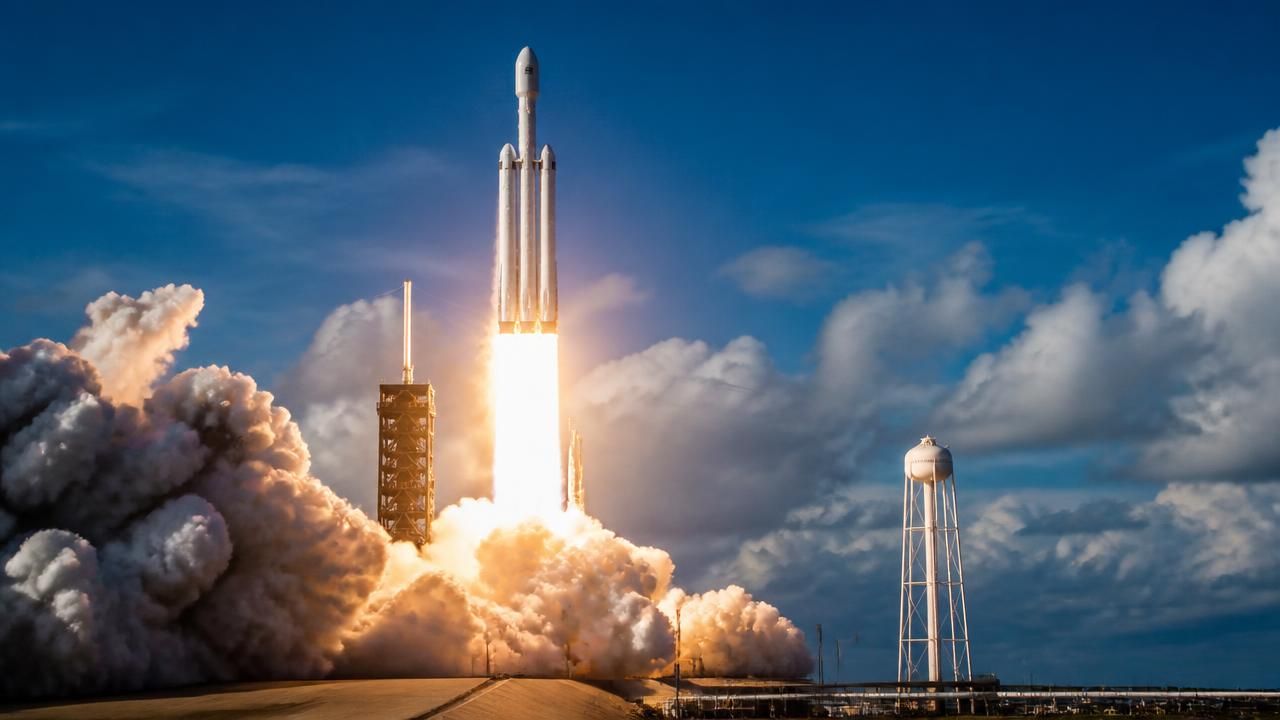
In a milestone for astrophysics, NASA's Nancy Grace Roman Space Telescope — often called the next great observatory — launched successfully atop a SpaceX Falcon Heavy rocket from Kennedy Space Center in Florida on August 30, 2026. The lift-off, which occurred a day before NASA's Astronomy Picture of the Day captured the event, marks the beginning of a mission designed to survey billions of galaxies, investigate dark energy, and discover exoplanets and potentially hazardous asteroids.
A New Great Observatory Takes Flight
The Roman Space Telescope, named after NASA's first chief astronomer, has been in development for over a decade. It carries a primary mirror the same size as the Hubble Space Telescope's (2.4 meters), but its wide-field instrument gives it a field of view 100 times larger. This design allows Roman to capture more sky in a single snapshot than Hubble, making it an unparalleled surveyor of the cosmos. As noted by NASA's Astronomy Picture of the Day, Roman's mirror is more curved, its secondary mirror is closer, and its main camera is larger — enabling rapid, panoramic observations.
Unlike Hubble, which orbits Earth, Roman will travel to the Sun-Earth Lagrange point 2 (L2), about 1.5 million kilometers from our planet. This halo orbit, similar to the one used by the James Webb Space Telescope, offers a stable thermal environment and unobstructed views of the deep universe.
Science Goals: Dark Energy, Exoplanets, and Everything in Between
One of Roman's primary missions is to probe the nature of dark energy, the mysterious force accelerating the expansion of the universe. By mapping the distribution of dark matter and measuring the expansion history over billions of light-years, Roman will help astronomers understand how cosmic structure evolved. The telescope will also spot thousands of supernovas, providing additional clues about the universe's rate of expansion — a key to deciphering dark energy's properties.
In the realm of exoplanets, Roman will conduct a microlensing survey to find countless worlds orbiting distant stars, including potentially habitable rocky planets. This complements the work of missions like TESS and Kepler, offering a statistical census of planetary systems across the galaxy. As MIT Technology Review highlighted, Roman's capabilities extend to spotting 'killer asteroids' — near-Earth objects that could pose a collision threat. Its wide-field camera can scan large swaths of the sky quickly, making it a potent tool for planetary defense.
Scientists also expect Roman to build on discoveries from the James Webb Space Telescope. While JWST peers deep into the early universe, Roman's wide surveys will provide the broader context needed to understand how galaxies formed and evolved. As Discover Magazine noted, Roman will help us comprehend how the early cosmos transitioned to the universe we see today — a vital complement to JWST's high-resolution, narrow-field observations.
Launch Triumph and Political Spotlight
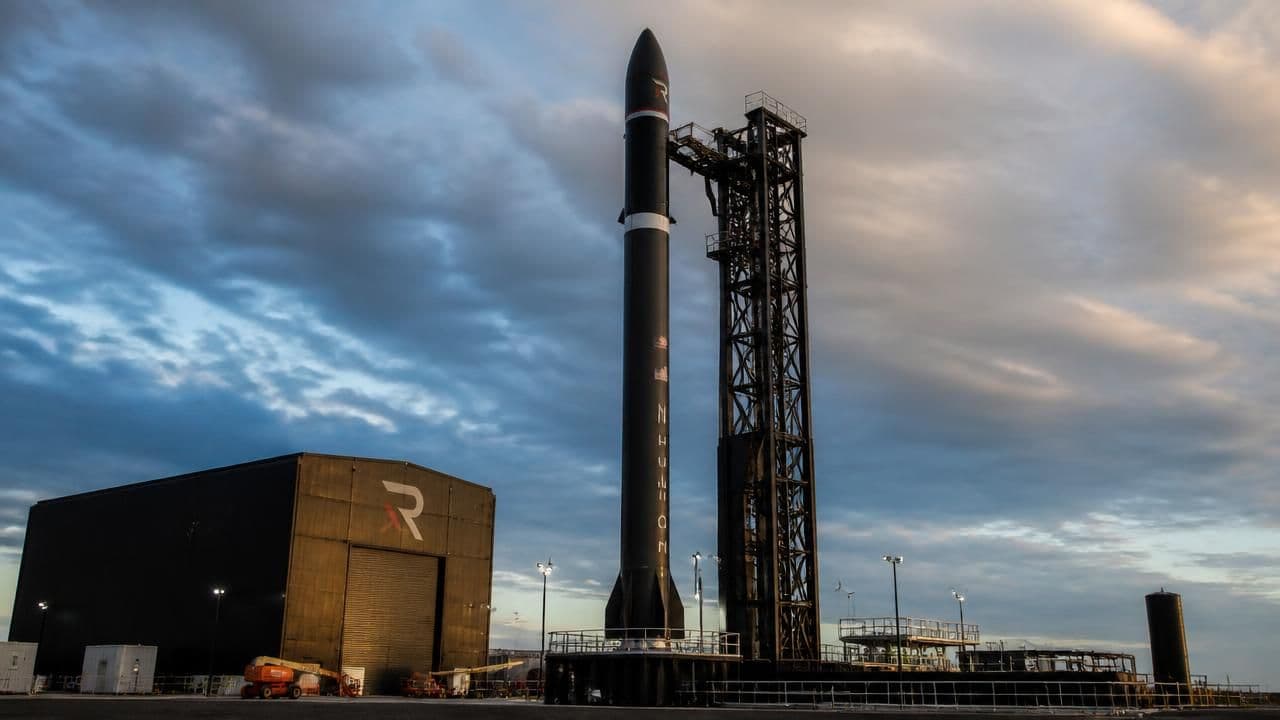
The launch on Sunday was the culmination of years of preparation. NASA and SpaceX teams worked to get Roman ready for liftoff, with coverage from multiple outlets. The rocket, a Falcon Heavy, thundered into the Florida sky, carrying the observatory on a trajectory toward L2. Within hours, mission controllers confirmed solar array deployment and initial communications, signaling a healthy spacecraft.
According to reports from Yahoo News, the post-launch press conference took an unexpected turn when former President Donald Trump called in live during the event, congratulating NASA and SpaceX. While details of the call were not fully released, it underscored the political significance of the launch, which occurred ahead of schedule — roughly nine months earlier than originally planned, as Forbes reported. This accelerated timeline reflects the efficiency of the mission team and the maturity of the Falcon Heavy vehicle, which has now successfully launched several high-profile NASA payloads.
Different Frames, One Story
The coverage of Roman's launch illustrates how different outlets focused on various aspects of the mission. NASA's Astronomy Picture of the Day emphasized the technical design and the rapid survey capability, with a striking video of the launch. Forbes concentrated on the photogenic liftoff and the fact that the telescope was launching ahead of schedule, calling it a 'huge win' for NASA. Spaceflight Now described Roman as 'NASA's next great observatory,' harking back to the legacy of Hubble, Compton, Chandra, and Spitzer. Meanwhile, MSN headlines touted Roman's dual role in hunting dark energy and killer asteroids, capturing the public's imagination with the more dramatic implications. MIT Technology Review similarly highlighted the asteroid detection angle, showing how planetary defense adds a tangible, near-Earth benefit to a deep-space observatory.
Looking Ahead: Unlocking the Universe's Biggest Mysteries
In the coming weeks, Roman will maneuver to its final orbit at L2, where it will undergo an extensive commissioning period. Over the next five years, it is expected to generate massive datasets that will be made publicly available, enabling thousands of scientists worldwide to study everything from the first moments after the Big Bang to the potential for life beyond our solar system.
As the telescope begins its mission, it embodies the collaborative spirit of modern astrophysics — a partnership between NASA, SpaceX, and the international scientific community. With its unprecedented combination of wide field, high resolution, and infrared sensitivity, the Roman Space Telescope is set to write a new chapter in our understanding of the universe.