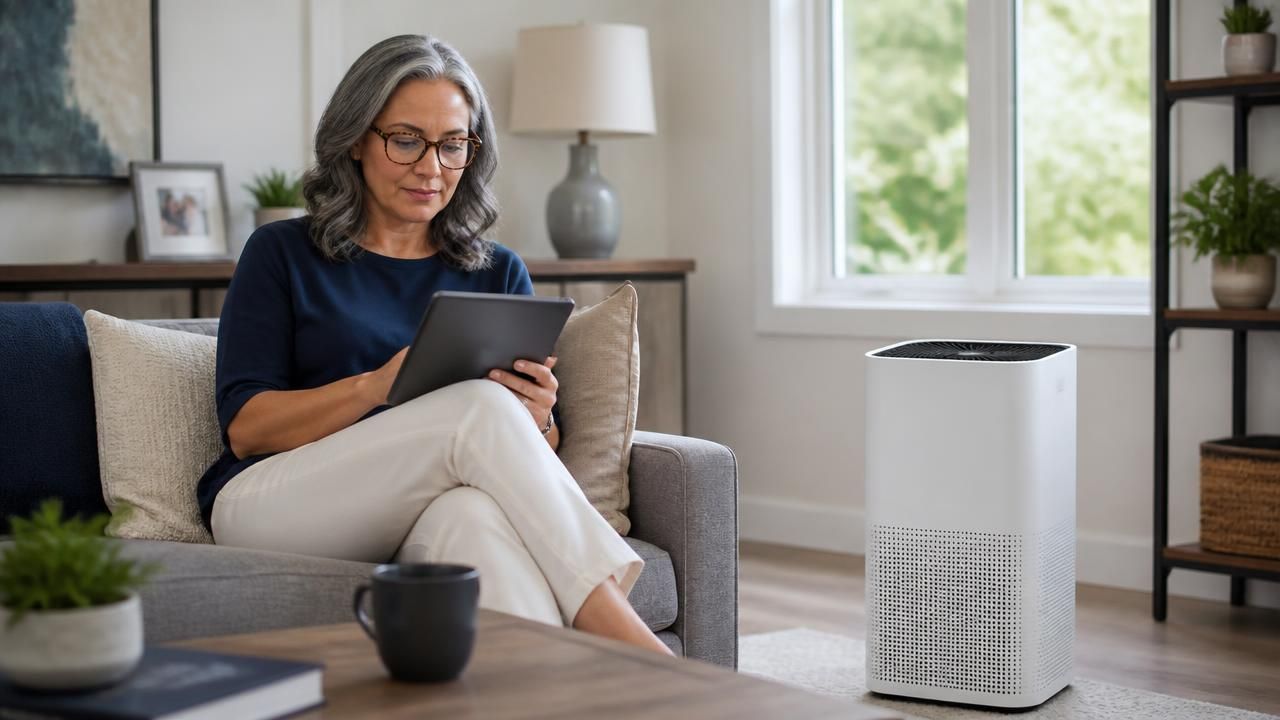
In an era where indoor air quality often takes a backseat to outdoor pollution concerns, a new study brings fresh urgency to the air we breathe at home. Researchers have found that using HEPA air purifiers may boost brain function in adults over 40, with participants performing about 12% faster on a test of executive function after just one month of use. The findings, published in Scientific Reports, suggest that cleaner indoor air could offer a simple, low-effort way to protect the brain from the harmful effects of traffic-related pollution.
The Study: A Pragmatic Crossover Trial
Conducted by researchers who analyzed secondary outcomes from a pragmatic randomized crossover trial, the study recruited adults aged 40 and older to use HEPA air purifiers in their homes. The crossover design meant that each participant served as their own control, alternating between periods with an active purifier and a sham (inactive) unit. The cognitive assessment focused on executive function—the set of mental skills that include working memory, flexible thinking, and self-control. After one month of true HEPA filtration, participants showed a measurable improvement in reaction time and accuracy, amounting to roughly 12% faster performance on the executive function task.
“The findings suggest that cleaner indoor air could offer a simple way to help protect the brain from the effects of traffic-related pollution,” the authors wrote, highlighting the potential public health significance for urban dwellers.
The study is particularly notable for its real-world setting. Instead of a tightly controlled laboratory, participants used the purifiers in their own homes, lending ecological validity to the results. However, as a secondary outcome analysis, the findings should be considered preliminary until confirmed by dedicated prospective trials.
Why Air Quality Matters for the Brain
Mounting evidence links fine particulate matter (PM2.5) and traffic-related pollutants to cognitive decline, dementia, and accelerated brain aging. These ultrafine particles can cross the blood-brain barrier and trigger neuroinflammation, oxidative stress, and damage to neural connections. The regions of the brain responsible for executive function, particularly the prefrontal cortex, appear especially vulnerable. By filtering out airborne particles, HEPA purifiers may reduce this neurological burden.
Adults over 40 are at a critical juncture, as cognitive aging begins to accelerate in middle age. Even modest improvements in executive function could translate to better decision-making, memory, and quality of life in later years. The finding echoes a broader shift in public health toward recognizing indoor air quality as a modifiable risk factor, especially with Americans and Europeans spending up to 90% of their time indoors.
Choosing the Right Air Purifier
With the brain-boosting potential making headlines, many consumers are asking which purifier to buy. From a raft of product roundups—including those from Real Simple, NY Post, Good Housekeeping, and Medical News Today—several key features distinguish top-rated models:
- True HEPA filters that capture 99.97% of particles as small as 0.3 microns, including pollen, dust, smoke, and some viruses.
- Appropriate room size—look for a CADR (clean air delivery rate) matched to your room’s square footage. Oversizing is fine, but undersizing will leave air uncleaned.
- Low noise levels for nighttime use, especially if you’ll run it in a bedroom. Many top picks offer a “sleep mode.”
- Energy efficiency—as An energy expert told The Independent, running a typical purifier costs only a few pence or cents per day, making it an affordable habit. Look for Energy Star-rated models.
- Additional features like air quality sensors, filter replacement indicators, and smart controls add convenience but aren’t necessary for cognitive benefits.
For those with space constraints, small desktop purifiers tested by Better Homes & Gardens can handle a single room, while larger units like the one reviewed by mindbodygreen tackle wildfire smoke, mold, and dust more robustly. During wildfire season, the Stark Insider recommends portable purifiers as a first line of defense against smoke damage.
Beyond Brain Health: Broader Implications
The HEPA purifier study arrives amid a surge of research on environmental and lifestyle interventions for brain health. Just this week, other headlines have also captured the imagination: a study found that a single dose of psilocybin (magic mushrooms) can cause anatomical brain changes, and preliminary research presented at the Society for Neuroscience annual meeting showed that Alzheimer’s patients’ brains are “boosted” by singing The Sound of Music. Even hearing loss, a known risk factor for dementia, may be reversible with a novel single injection. While these findings are diverse, they collectively underscore the brain’s remarkable plasticity and the potential for simple, non-pharmaceutical interventions.
Cleaning up indoor air is arguably one of the easiest lifestyle levers to pull. Beyond cognition, reducing particulate exposure may also improve cardiovascular health, sleep, and respiratory conditions. Some experts also point to the mental health benefits of a clean, clutter-free environment—a theme explored by Verywell Mind—suggesting that proactive home maintenance can have psychological payoffs.
Caveats and Next Steps
Health experts caution that this single study does not prove cause and effect. The 12% improvement was observed in a secondary analysis, and the crossover trial was originally designed to measure cardiovascular outcomes. Moreover, placebo effects cannot be entirely ruled out, though the crossover design mitigates some bias. Larger, longer-term studies are needed to determine whether the cognitive gains persist and translate into reduced dementia risk.
Still, the intervention is remarkably low-risk. HEPA purifiers are widely available, have no known side effects, and can be integrated into daily life without major disruption. The cost is modest—both to purchase and to run—as energy experts confirm. For the millions of adults living in urban areas with high traffic-related air pollution, the potential upside is significant.
A Simple Addition to a Brain-Healthy Routine
In the same way that we wear seatbelts and sunscreen to protect our bodies, ensuring clean indoor air may become a staple of cognitive health. The study’s message is clear: you don’t need a pharmaceutical or a medical device to give your brain a boost—just a good filter. As research continues, the humble air purifier could emerge as a cornerstone of healthy aging, one breath at a time.