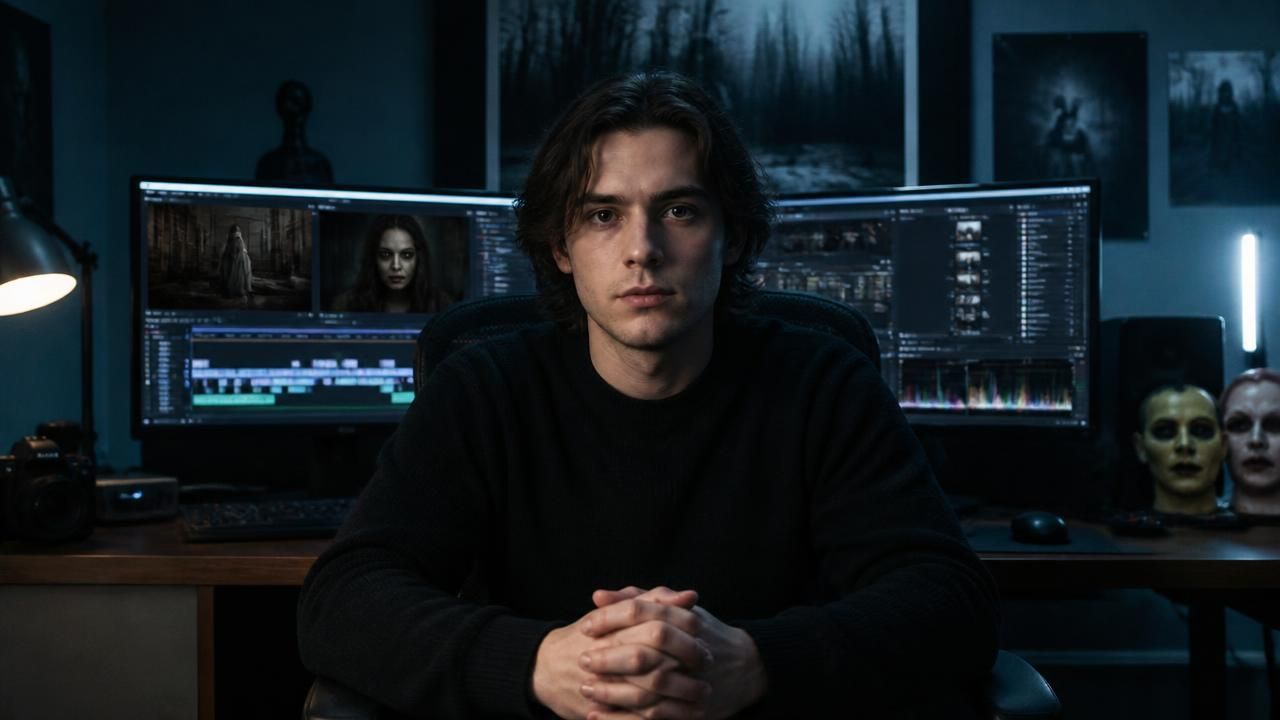
The line between YouTube stardom and Hollywood success has never been thinner. This week, the industry is buzzing over reports that Curry Barker, director of the viral horror short Obsession, was offered a staggering $10 million by a studio for his next film—sight unseen. The deal, first reported by Bloomberg, is just the latest sign that online creators are no longer just influencers but a serious talent pipeline for the entertainment industry.
Barker’s rise mirrors a broader trend: filmmakers who built massive audiences on YouTube, TikTok, and Instagram are now being courted by studios, streamers, and FAST (free ad-supported streaming) services. From Alex Kister’s The Backrooms to Barker’s Obsession, these DIY horror hits are out-performing major franchises and reshaping how Hollywood discovers and develops new voices.
From Bedroom to Backlot: The New Talent Route
Traditionally, breaking into Hollywood required film school, connections, and a spec script. Now, a smartphone, a YouTube channel, and a knack for viral storytelling can bypass the gatekeepers. Creators like Barker and Kister have cultivated millions of followers by posting affordable, high-concept horror that resonates with Gen Z audiences.
“YouTube is now Hollywood’s horror-film pipeline,” noted Morningstar, echoing a sentiment shared by Forbes and Mashable.
The economics are compelling. A YouTube creator can test concepts, build an audience, and prove demand without millions in marketing spend. When a short like Obsession—made for a few thousand dollars—explodes into millions of views, studios take notice. The risk is lower; the built-in fanbase guarantees an opening weekend.
Case Study: Obsession and Backrooms Beat Star Wars
Forbes headlines screamed that “YouTubers Take Over Hollywood As ‘Backrooms’ And ‘Obsession’ Beat Star Wars.” Both titles have topped streaming charts, outperforming blockbuster franchises on platforms like Tubi or Prime Video. This isn’t just a fluke; it reflects a shift in viewer behavior. Audiences are loyal to creators, not just IP.
- Curry Barker – director of Obsession, reportedly offered $10M for his next film.
- Alex Kister – creator of The Backrooms, an analog horror series that has become a cultural phenomenon.
- Other creators – Mashable notes that TikTok, YouTube, and Instagram stars are being cast and hired for TV and film roles, bridging the gap between social media and traditional media.
Why Hollywood Is Pouncing
Studios are desperate for content that cuts through the noise. Streaming services need volume, and FAST channels need cheap, engaging programming. YouTube creators offer exactly that: proven content, dedicated audiences, and a direct line to Gen Z viewers who have abandoned traditional TV.
“The creator boom is flooding the market with content,” Bloomberg reported, “making it easier to start but harder to win.” This is the paradox—while the barriers to entry have dropped, the competition for attention is brutal. Yet the payoff can be enormous, as Barker’s $10 million offer demonstrates. Even without a finished script or concept, his name alone is seen as bankable.
Differing Perspectives: Is It a Fad or the Future?
USA Today asks whether this is a passing trend or a lasting shift. Proponents argue that internet-native storytellers understand modern audiences better than legacy executives. Skeptics worry that viral fame can be ephemeral and that YouTube success doesn’t translate to feature-length filmmaking.
Forbes counters that Obsession and Backrooms prove a sustainable model: short films serve as pilots or proof of concept, then expand into features or series. The $10 million offer to Barker—reportedly without asking what his film would be—shows the industry’s willingness to bet on the creator rather than the project.
The Road Ahead
As Hollywood and YouTube continue to converge, expect more creator-driven deals, more hybrid distribution models, and more debates about quality vs. engagement. What’s clear is that the talent pipeline has been rewired. The next Scorsese might be making videos in their bedroom right now, waiting for an offer that begins with ‘we want to give you money, just make something.’
For creators, the advice is simple: keep uploading. For studios, the lesson is that the next big franchise could be a click away. And for audiences, the result is a more diverse, more unpredictable entertainment landscape—one where a $10 million film deal can start with a zero-budget YouTube video.