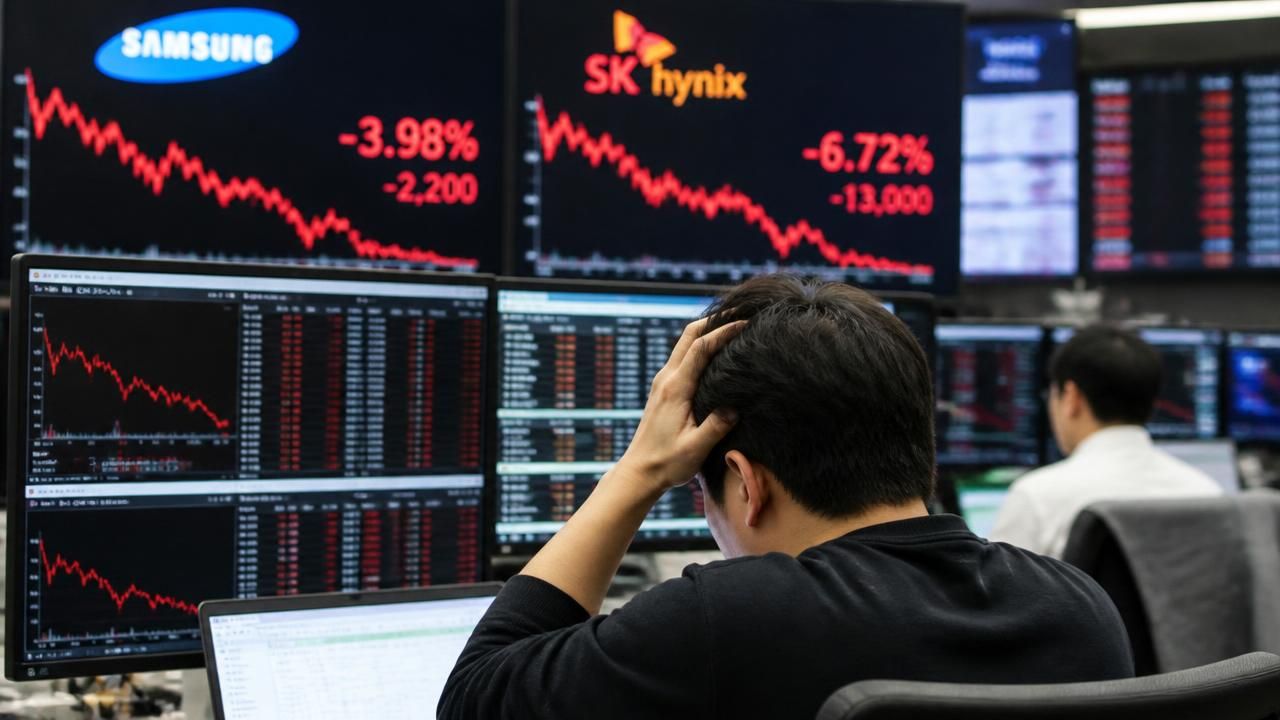
South Korea's once-red-hot market for single-stock leveraged exchange-traded funds (ETFs) is experiencing a dramatic exodus. Retail investors who had piled into ETFs tracking semiconductor giants Samsung Electronics and SK Hynix are now abandoning their positions in droves, caught off guard by a brutal chip sell-off that amplified their losses and triggered a wave of regulatory scrutiny. The retreat marks a stunning reversal for a product class that launched with great fanfare in May and quickly became a favorite tool for day traders seeking outsized returns.
The Chip Rout and Its Fallout
The trouble began as semiconductor stocks — the backbone of South Korea's $4.3 trillion stock market — fell sharply amid concerns over global demand, memory-chip oversupply, and geopolitical tensions. Samsung and SK Hynix, the world's two largest memory-chip makers, saw their shares tumble, dragging leveraged ETFs designed to deliver 2x daily returns along with them. One such ETF tracking SK Hynix reportedly plunged as much as 70% from its peak, devastating investors who had bet on continued gains.
“Give me my money back!” — the anguished cry of South Korean day traders whose leveraged bets unraveled.
Desperate retail traders took to online forums, with some demanding regulators and fund issuers take responsibility. The pain was severe enough that a South Korean minister publicly apologized to investors nursing heavy losses, acknowledging the risks embedded in these complex products.
Regulators Step In
In response, South Korean financial regulators deployed an unusual tool: an "onerous mock trading course" that investors are now required to complete before they can trade leveraged ETFs. The course, designed to simulate the extreme volatility of daily-leveraged products, has proved remarkably effective in cooling enthusiasm. According to Bloomberg, the measure is "becoming an effective tool for South Korea to cool investor fervor" over risky products that have made the stock market extremely volatile.
The new rules came into effect just as the semiconductor rout hit, and the combination proved decisive. Trading volumes in leveraged chip ETFs have plunged, and for the first time since their May launch, the funds have recorded net outflows. Data from ETF issuers shows that investors are not just selling; they are quitting the products entirely.
The Mechanics of Single-Stock Leveraged ETFs
Single-stock leveraged ETFs are among the riskiest products available to retail investors. They are designed to provide a multiple (usually 2x) of the daily return of an underlying stock, with the leverage reset each day. This daily rebalancing makes them highly sensitive to volatility; in a falling market, the compounding effect can erode value rapidly, even if the underlying stock eventually recovers. This "volatility decay" is a well-known hazard, yet it remains poorly understood by many amateur traders.
The appeal is obvious: during a strong uptrend, these ETFs can deliver spectacular gains. A professional quant and even a Korean dentist were cited in separate reports as pushing the limits of leveraged ETFs, illustrating the wide range of participants drawn to the product. But for every winner, there are many more who misjudge the timing or the magnitude of reversals.
Key numbers shaping the story:
- South Korea's stock market: $4.3 trillion
- Leveraged ETF tracking SK Hynix: down ~70% from peak
- First net outflows since May launch
- Trading volumes: plunged after new mock-trading rules
Broader Implications
The Korean experience offers a cautionary tale for other markets where leveraged and single-stock ETFs are gaining popularity. Regulators worldwide are watching closely. In South Korea, the episode has prompted calls for stricter oversight of retail speculation, particularly in products that can wipe out a portfolio in days. The mock trading course, while seemingly cumbersome, may serve as a model for other jurisdictions looking to protect inexperienced investors.
For the ETF industry, the fallout is a reminder of the double-edged sword of innovation. While leveraged ETFs have become important revenue generators for asset managers, a product that maims its customer base can quickly turn into a regulatory liability. The first outflows since May are a clear signal that the party is over — at least for now.
As South Korea's semiconductor market continues to grapple with global headwinds, the broader stock market remains volatile. The question now is whether the regulatory intervention will be enough to prevent the next speculative mania. For the day traders who got burned, the lesson has been brutally expensive.
How the Media Is Framing the Saga
Different outlets have emphasized different angles of the same story. Bloomberg led with the effectiveness of the regulator's tool, headlining that day traders are abandoning the ETFs "in droves." MarketWatch framed it as a broader market tremor: "South Korea Reins in Single-Stock Leveraged ETFs as Markets Reel From Semiconductor Rout." CNBC focused on the official acknowledgment of pain, with the minister apologizing as investors nursed heavy losses. Meanwhile, BeInCrypto and MSN highlighted the human element, with headlines like "Give me my money back" and "How South Korea's leveraged ETF gambit backfired." Taken together, these perspectives paint a picture of a speculative bubble deflated by a combination of market reality and regulatory foresight.