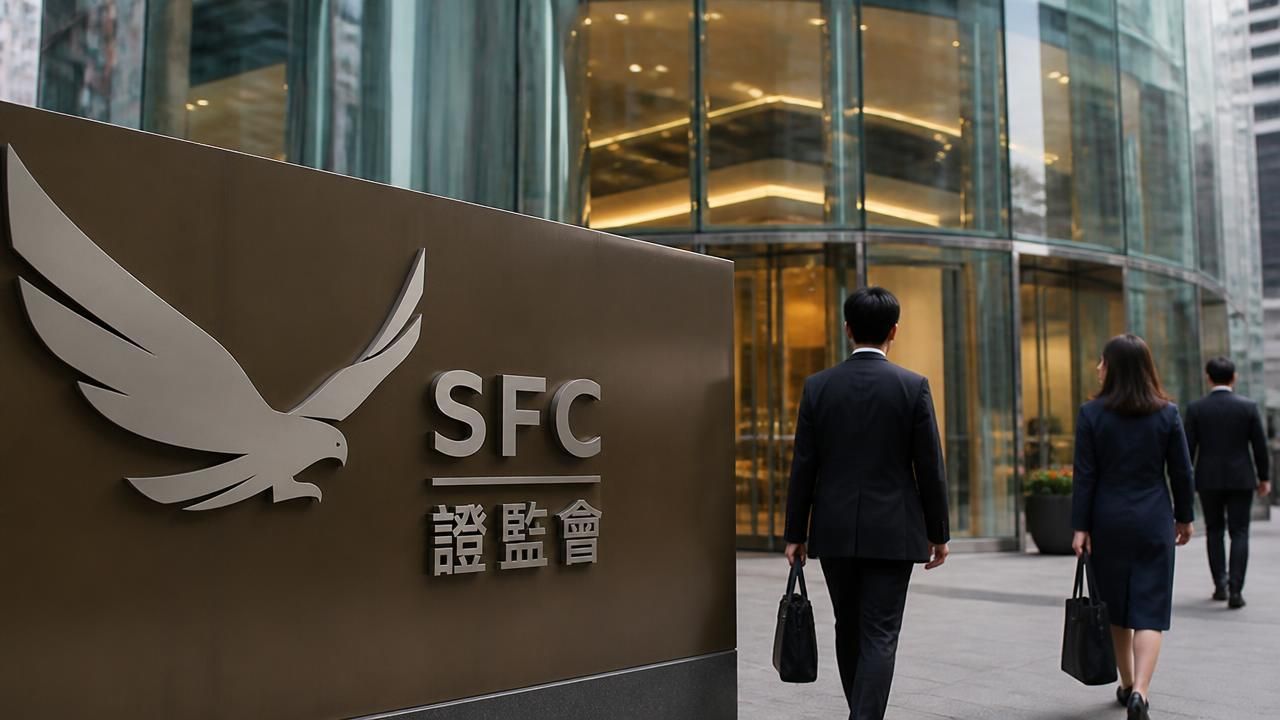
Hong Kong’s securities watchdog has frozen assets worth several billion Hong Kong dollars and halted trading in at least two recently listed companies as part of a widening investigation into suspected manipulation of initial public offerings — a crackdown that could reshape how deals are marketed in one of Asia’s busiest listing venues.
The Securities and Futures Commission (SFC) took action against two separate groups suspected of IPO manipulation and ordered ChaBaiDao, the Chengdu-based bubble tea chain, to suspend trading, according to the Hong Kong financial outlet etnet. Bloomberg reported the same development under the rendering “Baicha,” noting that the SFC had suspended the stock, while MSN carried reports that the regulator had frozen roughly US$590 million of assets over alleged IPO fraud schemes and was separately investigating Cloudbreak Pharma over a so-called rigged listing.
The regulator’s message, first aired in Bloomberg’s Asia markets coverage, was blunt: it “warned investment banks and other intermediaries against arrangements that may artificially inflate demand for initial public offerings.”
The numbers: a telling discrepancy
The most striking feature of the coverage is how much the headline figures vary — a reflection of how early the story remains and how thinly detailed the official announcement has been.
- marketscreener.com reported the freeze at HK$4.38 billion, though its article page returned an access-denied error.
- etnet.com.hk put the total at “nearly HK$4.7 billion” in the body of its report, even as its own headline said “nearly HK$5 billion” — an internal inconsistency that suggests a fast-moving, unconfirmed tally.
- MSN framed the same action in US dollar terms as US$590 million, which converts to roughly HK$4.6 billion.
Taken together, the freeze appears to sit in the HK$4.4 billion to HK$4.7 billion range, or about US$560 million to US$600 million. The variation is typical of cross-border regulatory stories, where dollar-denominated wire copy, Cantonese-language local coverage and aggregator headlines each round differently — but it also underscores how few hard details the SFC has released publicly.
Two companies, two alleged schemes
ChaBaiDao, which listed in Hong Kong in April 2024, is one of mainland China’s best-known mass-market tea brands, with thousands of outlets across the country. Its shares were suspended at the regulator’s order, making it the most visible corporate casualty of the probe.
Cloudbreak Pharma, a dermatology-focused biotech that listed in 2023, was named in MSN’s coverage as the subject of a separate SFC investigation into a “rigged” IPO. The fact that the regulator appears to be pursuing two distinct groups — a consumer brand and a biotech — points to a pattern rather than an isolated case.
How an IPO gets ‘rigged’
IPO manipulation in Hong Kong typically takes forms that are hard to prove but familiar to regulators:
- Manufactured demand. Shares are directed to affiliated or cooperative accounts that place inflated orders during the bookbuild, creating the appearance of overwhelming institutional appetite.
- Cornerstone and placement games. Investors agree to take allocations in exchange for undisclosed promises to buy more after listing, or to hold shares for a fee.
- Aftermarket ramping. Coordinated buying in the grey market or on debut lifts the price, allowing insiders holding cheap stock to exit into retail demand.
- Wash trading. Related accounts trade among themselves to generate volume and a misleading price signal.
The SFC’s warning, as reported by Bloomberg, targeted the intermediaries — banks, brokers and placing agents — rather than only the issuers, signalling that the regulator is looking up the chain at the institutions that structure and allocate deals.
Why this matters now
The timing is delicate. Hong Kong has spent the past two years fighting to restore its status as the premier listing destination for Chinese companies, after a slump that saw IPO proceeds collapse from their 2021 peak. A revival in 2025 has been built largely on mainland champions seeking offshore capital, and any perception that allocations are gamed could spook exactly the international institutional investors the city needs.
That tension is visible in the broader deal pipeline. As MSN reported, the Chinese artificial intelligence developer Moonshot AI is seen as a candidate to break Hong Kong IPO records — but only if it can first settle a shareholder dispute. Stories like that illustrate the market’s ambition; the SFC’s probe illustrates the governance risk that could undermine it.
What comes next
Trading suspensions are usually the opening move, not the end point. The SFC can freeze assets for an extended period while it assembles evidence, and it has broad powers to compel documents and testimony from banks and brokers. Penalties in proven cases of market manipulation in Hong Kong can include criminal prosecution, fines and disqualification of directors.
For now, the practical effect is a chill. Sponsors and underwriters weighing new mandates must assume their allocation books will be scrutinised, and issuers — particularly smaller mainland consumer and biotech names chasing Hong Kong listings — face a higher evidentiary bar before their shares trade.
The story is still developing, with much of the detail reaching the market through headlines rather than a full SFC statement. But the direction is clear: Hong Kong’s regulator is signalling that it will protect the integrity of its IPO franchise even at the cost of a headline-grabbing trading halt.