The global auto industry is witnessing a surprising plot twist: just as the electric vehicle revolution hits a speed bump, hybrid technology is roaring back—now in the rarefied world of supercars. From Audi to Lamborghini, Ferrari, and Bugatti, elite automakers are increasingly pairing electric motors with combustion engines, not merely to save fuel, but to deliver jaw-dropping performance while preserving the visceral sound and feel that enthusiasts crave.
The trend was highlighted by Bloomberg's Hannah Elliott, co-host of the "Hot Pursuit!" show, in a recent segment on Bloomberg This Weekend. Elliott explained to anchors Christina Ruffini and Bailey Lipschultz that hybrid systems are becoming a sweet spot for luxury performance brands navigating the uncertain road to full electrification.
The Hybrid Resurgence
Hybrids were once seen as a transitional technology—a pragmatic stopgap on the way to a fully electric future. But with EV adoption slowing in key markets, range anxiety persisting, and charging infrastructure still patchy, automakers are recalibrating. The result is a "new hybrid boom," particularly in the upper echelons of the automotive world.
For supercar makers, hybrids offer a compelling engineering proposition. An electric motor can fill torque gaps, eliminating turbo lag and providing instant acceleration off the line. It can also power auxiliary systems, allowing engineers to tune the combustion engine purely for peak performance rather than low-speed refinement. The electric motor becomes a performance tool, not just an economy aid.
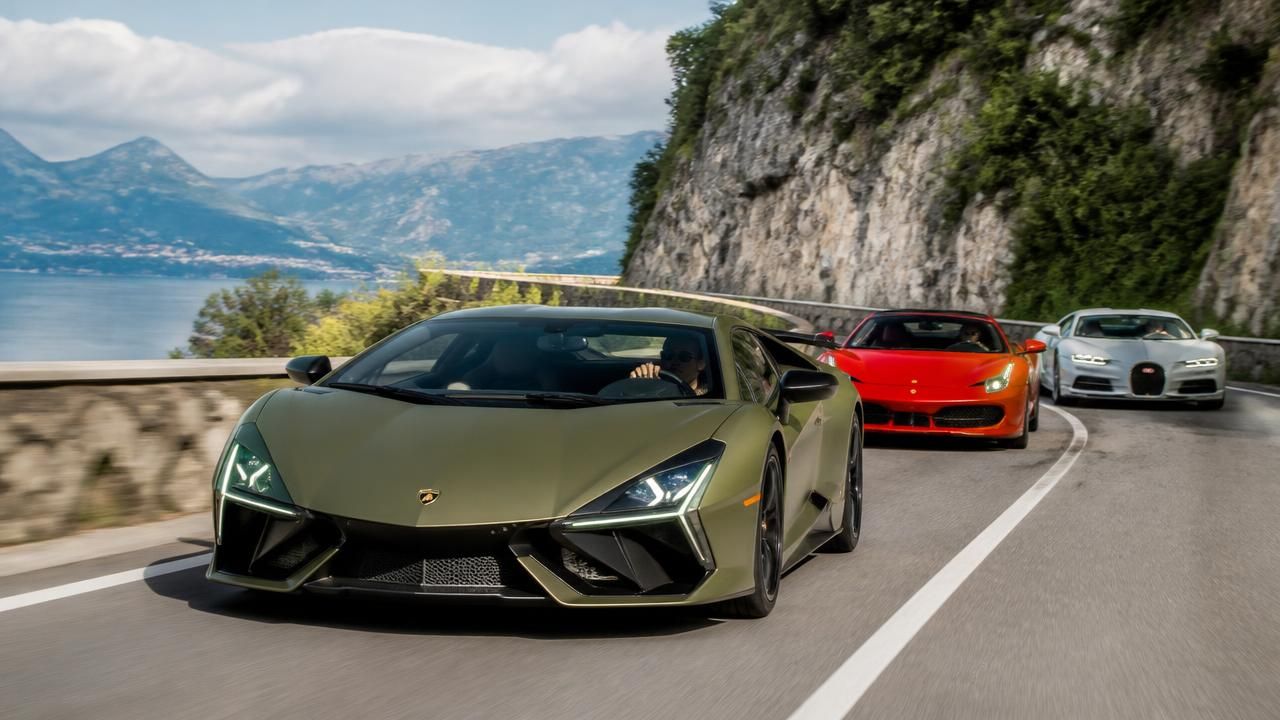
Lamborghini, for instance, has embraced the approach with models like the Revuelto, which pairs a V12 with three electric motors for a combined output exceeding 1,000 horsepower. Ferrari's SF90 Stradale and 296 GTB similarly leverage hybrid tech to shave seconds off lap times while still emitting a glorious V8 or V6 soundtrack. Audi's high-performance RS range and Bugatti's Tourbillon hypercar further underscore the shift. The Bugatti Tourbillon, unveiled in 2024, pairs a naturally aspirated V16 with three electric motors—proof that even the most extreme hypercars are going hybrid.
Sound and Feel: Why Buyers Still Want Combustion
One of the most intriguing aspects of this boom is what it reveals about buyer psychology. While EVs offer instant torque and silent acceleration, many enthusiasts remain attached to the sensory experience of a combustion engine—the exhaust note, the vibration, the mechanical connection.
"Manufacturers are using electric motors to boost performance while preserving the sound and feel buyers still want from combustion engines," Elliott said during the Bloomberg segment. That sentiment echoes through the industry's design studios. A hybrid supercar can deliver the best of both worlds: ferocious acceleration with a roaring engine, yet the ability to creep silently through city streets in electric mode.
The electric motor becomes a performance tool, not just an economy aid.
This approach also helps automakers meet stringent emissions regulations without sacrificing their brand identity. By pairing a smaller, more efficient combustion engine with electric assist, they can lower fleet emissions while maintaining the high horsepower numbers that define their models.
Fuel Range: A Practical Consideration
While performance is the headline, efficiency remains a critical subplot. Motor1.com recently explored a related question: which supercars can go farthest on a single tank of gas? The answer is increasingly influenced by hybrid technology. Models like the Ferrari 296 GTB and McLaren Artura can achieve remarkably long ranges thanks to their ability to cruise on electric power at low speeds, preserving fuel for when the driver wants maximum engagement.
The fuel-range discussion highlights a broader trend: even in the exotic car niche, practicality matters. Owners may not drive their supercars daily, but they want the freedom to embark on grand tours without constant refueling stops. Hybrid systems extend that freedom, offering a combined range that often exceeds that of traditional combustion-only counterparts.
According to industry data, many modern hybrid supercars can travel more than 400 miles on a single tank when driven conservatively—a figure that would have been unthinkable a decade ago for a seven-figure machine.
Industry Implications
The hybrid boom in supercars is more than a trendy engineering choice; it signals a strategic pivot for the entire automotive industry. With EV sales growth decelerating in markets like the U.S. and Europe, automakers are hedging their bets. Pure EVs remain the long-term goal for many, but hybrids—including plug-in hybrids—are now seen as a vital bridge that can span a decade or more of transition.
For luxury brands, this strategy is particularly defensible. High-end buyers often prioritize emotion and experience over efficiency, making them less likely to embrace a pure EV that lacks the character of a combustion engine. By offering hybrids, these brands can appeal to both traditionalists and early adopters of electrification.
Moreover, the technology developed for hybrid supercars—battery management, power electronics, thermal systems—will eventually trickle down to mainstream models. The innovations honed at 200 mph often end up in family SUVs a few years later.
Expert Perspectives
Industry analysts note that the hybrid supercar trend also reflects a broader cultural shift. "We're moving from an either/or mentality to a both/and approach," said one automotive strategist. "Performance and efficiency are no longer opposites."
Bloomberg's Elliott sees this as a positive development for both automakers and enthusiasts. "The technology is maturing," she noted. "These are not compliance cars; they're halo cars that happen to be electrified."
What's Next?
As the world's largest automakers continue to navigate the uncertain road to electrification, expect to see more hybrid supercars in the coming years. Porsche, McLaren, and Aston Martin are all doubling down on hybrid powertrains for their next-generation models. Meanwhile, Ferrari has promised its first fully electric car by 2026, but even that will likely share showroom space with hybrids for years to come.
For buyers, the golden age of supercars has never been more diverse: from roaring V12s with electric assist to fully silent EV hypercars like the Rimac Nevera. The hybrid boom ensures that the combustion engine—at least in some form—will live on for many more years, thrilling drivers and preserving the emotional connection that has defined the automobile for over a century.
In the end, the story is not about technology for its own sake, but about what drivers want. And right now, they want it all: power, sound, and a nod to sustainability. Hybrid supercars deliver precisely that.