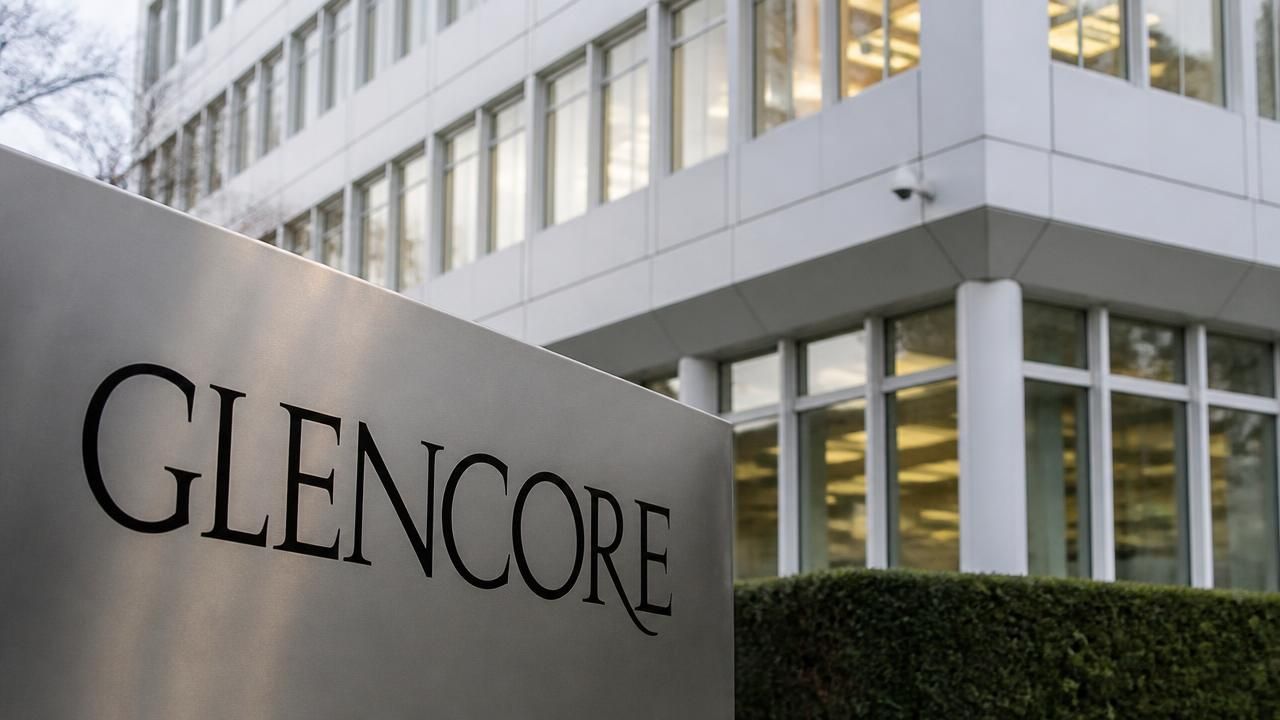
Glencore Plc, one of the world's largest commodity traders, has taken a provision of approximately $480 million on its exposure to Radiant World, an iron ore trader that is under pressure amid concerns it provided falsified documents to banks, according to people familiar with the matter. While the provision is significant, the total exposure may be even larger, with some sources suggesting it exceeds $500 million.
The development underscores the mounting risks in commodity trade finance, where opaque transactions and reliance on trust have allowed fraudulent activities to go undetected for extended periods. Radiant World, a Singapore-based trader, is now at the center of an investigation that has sent shockwaves through the industry.
The Provision and Exposure Figures
Bloomberg Markets, citing sources familiar with the matter, reported that Glencore's provision on its Radiant World exposure is about $480 million. This figure represents the amount Glencore has set aside to cover potential losses from its dealings with the trader. However, MSN, citing separate sources, reported that Glencore's exposure to Radiant World is more than $500 million. The discrepancy between the provision and the total exposure highlights the difference between the total amount at risk and the estimated loss, a nuance that is critical for investors.
Reuters, meanwhile, framed the provision differently, reporting that Glencore said the exposure is not material to its overall financial position. This characterization suggests that while the sum is substantial in absolute terms, it is relatively small for a company of Glencore's scale. Glencore's annual revenue exceeds $200 billion, and its market capitalization is around $70 billion, which would make a $500 million exposure less than 1% of its market value.
"We are taking a prudent approach to our exposure, but it is not material to the group," a Glencore spokesperson was quoted as saying in the Reuters report.
The provision will weigh on Glencore's upcoming earnings, but analysts note that the company has weathered larger shocks in the past. The key question is whether this exposure is an isolated incident or part of a broader pattern of risky trade finance practices.
Radiant World: A Trader Under Pressure
Radiant World is a Singapore-based iron ore trader that has been in the spotlight since concerns emerged that it provided falsified documents to banks. The company, which sources iron ore from major mining regions and supplies steelmakers, is believed to have used fraudulent warehouse receipts or shipping documents to secure financing. This practice, known as trade finance fraud, has plagued the commodity sector for decades, with notable cases involving large banks and trading houses.
The allegations against Radiant World are still under investigation, but they have already triggered provisions from Glencore and potentially other financial institutions. Banks that extended credit to Radiant World may also face losses, though the full extent of the fallout remains unclear.
How the Fraud Occurred
According to preliminary reports, Radiant World may have used duplicate or forged documents to obtain loans from multiple banks against the same cargo of iron ore. Such a scheme can be sustained for a long time if lenders do not verify the documents independently. The iron ore market, with its complex supply chains and fragmented logistics, offers ample opportunity for such deception. The use of intermediaries and shell companies further obscures the trail.
Glencore's Response and Financial Health
Glencore has a history of dealing with trade finance controversies. In the past, it has been involved in the so-called "Daewoo scandal" and other cases, but the company has largely managed to contain the damage. The $480 million provision is a proactive step to address the Radiant World exposure ahead of any formal writedown.
Despite the hefty provision, Glencore's balance sheet remains robust. The company reported strong cash flows in recent years, supported by high commodity prices, and has been returning capital to shareholders through dividends and buybacks. The provision is unlikely to derail those plans, although it could slightly reduce free cash flow.
"The provision is manageable for Glencore," said a senior analyst at a London-based brokerage. "The bigger concern is whether there are other exposures out there, both for Glencore and the wider banking system."
Industry-Wide Implications
The Radiant World case has revived memories of previous commodity trade finance scandals, such as the 2014 Qingdao port fraud in China, where a coking coal and iron ore trader used the same inventory to secure multiple loans, leading to billions in losses for banks. More recently, the collapse of Singapore's Hin Leong in 2020, hiding nearly $800 million in losses, exposed the lack of due diligence in trade finance.
Banks and trading companies are now scrutinizing their trade finance portfolios more closely. The International Financial Reporting Standards require companies to take provisions for expected credit losses, but the opaque nature of commodity trade makes these estimates difficult. The Radiant World case could lead to stricter documentary verification requirements and more conservative lending practices in the sector.
Differing Perspectives from the Sources
The four sources covered this story from distinct angles. Bloomberg Markets provided the most concrete number, $480 million, based on internal information. The second Bloomberg source was a technical page, but the headline reinforced the provision. Reuters emphasized the company's stance that the exposure is "not material," framing the story as a minor financial adjustment. In contrast, MSN highlighted the higher total exposure of more than $500 million, suggesting a more substantial risk.
These contrasting framings underscore the difficulty for investors and the public in gauging the true impact of such events. Regulators may need to standardize disclosure requirements for commodity traders to avoid such disparities.
What to Watch Next
Investors will be closely monitoring Glencore's interim or annual results, where the provision will be formally recorded. Any further revelations about Radiant World's dealings or the involvement of other banks could trigger additional provisions. Additionally, the outcome of investigations into Radiant World could set a legal precedent for how trade finance fraud cases are handled.
For now, Glencore is taking a hit, but the company's diversification across multiple commodities and its strong operational performance provide a buffer. The broader market, however, is on notice: trust in commodity trade finance is fragile, and the next scandal may be just around the corner.