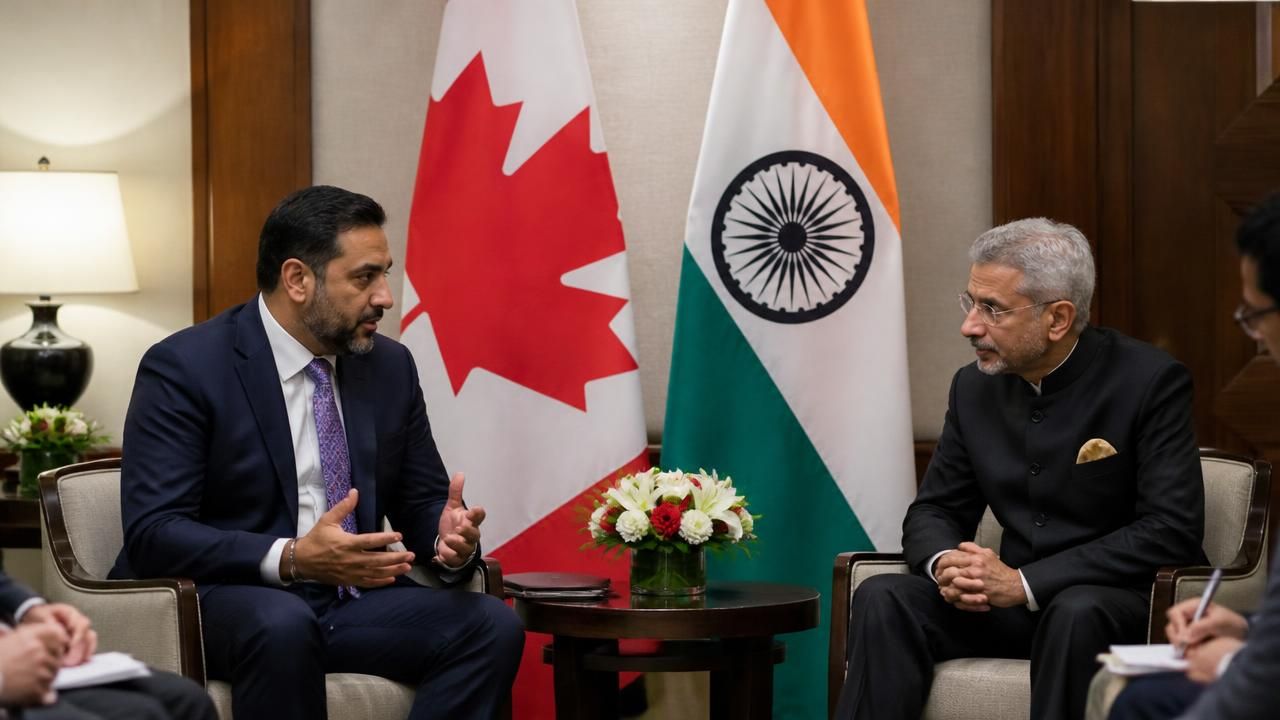
Canada and India are accelerating efforts to conclude a long-delayed Comprehensive Economic Partnership Agreement (CEPA), with negotiators set to open a fifth round of formal talks on October 5 and both governments signaling they hope to finalize a deal before the end of the year. The push is being led by Canada's Minister of International Trade, Maninder Sidhu, who is in India this week accompanied by a 300-member business delegation — one of the largest trade missions Ottawa has dispatched to any single market.
A Message of Trust and Certainty
Speaking at Bloomberg's New Economy Forum, Sidhu framed Canada as a dependable counterpart at a moment of global trade turbulence. "With Canada, there's trust," he said, describing his country as a reliable partner capable of offering businesses greater certainty amid growing trade headwinds. The minister has repeatedly emphasized that Canada "wants to help build India," positioning the relationship as a long-term investment rather than a transactional arrangement.
That message was echoed across Canadian and Indian outlets, though with differing emphases. Bloomberg's coverage, headlined around Canada's desire to "wrap India trade talks soon as US ties fray," placed the diplomacy squarely in the context of Ottawa's deteriorating trade relationship with Washington. Indian business outlets such as Rediff Moneynews and Business Standard focused instead on the mechanics — the calendar of negotiations, ministerial contacts, and the mutual ambition of a year-end conclusion.
What's on the Table
The fifth round of CEPA negotiations will begin on October 5, following earlier rounds that officials say have narrowed differences on goods, services, and investment. Sidhu is expected to return to New Delhi again in October for a further ministerial-level engagement, alongside the technical talks.
- Scope: The CEPA would cover tariff reductions, services market access, investment facilitation, and dispute resolution.
- Target: Both sides have cited an ambition of reaching roughly US$70 billion in bilateral trade by 2030, a substantial increase over current volumes.
- Delegation: The 300-member Canadian business mission spans sectors including agri-food, clean technology, infrastructure, and professional services.
- Timeline: Negotiators aim to conclude by year-end, though officials acknowledge the schedule is ambitious.
Wider Diplomacy and Regional Ambition
The trade mission comes as Canada's foreign minister also heads to India and the United Arab Emirates for parallel discussions covering trade and security. Canada has been broadening its Asia-Pacific footprint, and officials say talks with the Philippines and the broader ASEAN bloc are now roughly 90 percent complete, with a November finish in sight. The India push is therefore part of a wider diversification strategy rather than an isolated initiative.
"With Canada, there's trust." — Maninder Sidhu, Canada's Minister of International Trade, at Bloomberg's New Economy Forum
Why It Matters Now
The urgency reflects two overlapping pressures. First, Canada's trade relationship with the United States remains unsettled amid tariff disputes, giving Ottawa fresh incentive to reduce reliance on a single market. Second, India is actively courting Western investment as it seeks to position itself as a manufacturing and services alternative in global supply chains.
Still, obstacles remain. Canada has previously linked trade progress to labor and environmental standards, and past CEPA rounds have stalled over market access for agricultural goods such as dairy and pulses. Canadian domestic politics have also complicated the file, with debates over temporary foreign workers — a subject raised by a Canadian diplomat in Toronto media — occasionally intruding on the trade agenda.
Different Frames, One Direction
The coverage from the 15 sources reflects a story told from two angles. Canadian outlets frame the mission as a hedge against U.S. unpredictability and a chance to secure "certainty" for exporters. Indian outlets frame it as a growth opportunity — investment, technology transfer, and jobs — with headlines like "Canada Wants To Help Build India." Both readings converge on the same conclusion: the political will to close the deal is stronger now than at any point since talks began.
If negotiators deliver by year-end, the agreement would be one of the most consequential trade accords either country has signed in a decade. If they miss the deadline, the momentum — and the trust Sidhu is selling — could prove harder to rebuild.