Anthropic has introduced a new research preview called the Model Hardware Standard (MHS), a set of standardized drivers designed to let AI agents interface with and control arbitrary physical devices. The announcement, covered by Ars Technica, signals a major step toward extending agentic AI beyond the digital realm of text and code into the physical world.
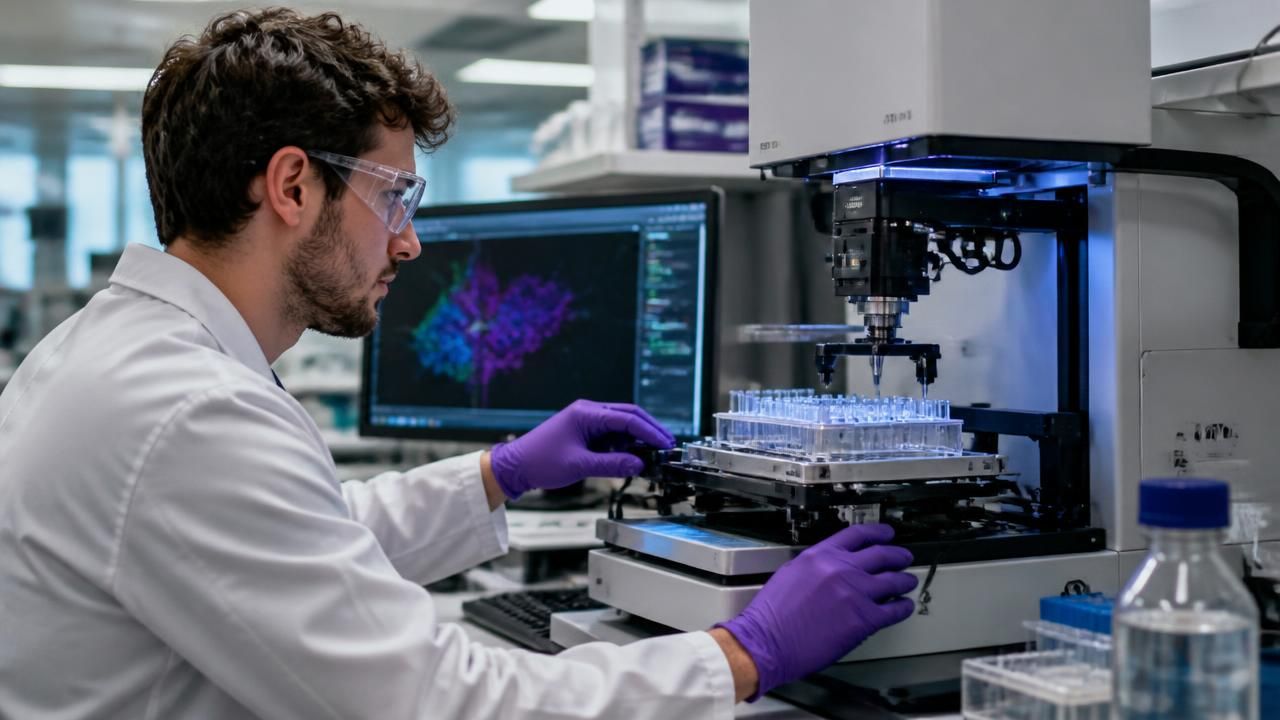
The development was inspired by a neuroscientist's struggle to integrate lab equipment. Alek Kemeny, an Anthropic technical staffer, observed Arco Bast, a postdoc at the Howard Hughes Medical Institute's Janelia Research Campus in Ashburn, Va., working on an experiment about memory formation in the brain. Bast's workflow involved painstakingly customizing software to make different instruments talk to each other—a common bottleneck in scientific research. This observation spurred Anthropic to create MHS, which could reduce the time required for experimental setup from weeks or months to hours or minutes.
MHS functions as a translation layer between AI agents and devices. Instead of writing bespoke code for each combination of hardware, researchers and enterprises can use a common interface and data format, allowing devices to communicate across a network without custom translators. The system is being positioned mainly for scientists initially, but its implications reach far beyond the lab.
Benzinga's coverage framed the news as "Claude Is Getting a New Job: Operating Robots and Lab Equipment," underscoring that Anthropic's Claude AI models can now potentially control physical systems. Futurum Group, an industry analysis firm, went further, asking whether UST and Claude could make "physical AI" the next enterprise standard. UST, a global digital transformation company, likely sees MHS as a way to automate industrial processes, from robotic assembly to facility management.
The move also aligns with broader trends in AI hardware control. For example, QuEra Computing recently announced that it uses AI to automate a critical quantum computer subsystem, accelerating commercial-grade quantum computing deployments. While QuEra's work is separate, it illustrates a growing ecosystem where AI systems are being used to control complex physical infrastructure—precisely the kind of use case MHS aims to standardize.
"Without needing a bespoke 'translator' program in between," the standardized system could reduce weeks or months of exacting experimental setup down to "hours or minutes," Anthropic writes.
Why It Matters: The Rise of Physical AI
For over a year, agentic AI systems have focused on virtual tasks: writing code, generating images, analyzing data. But the physical world remains a largely untapped frontier. MHS addresses a fundamental infrastructure problem. Scientists, for instance, often need to connect microscopes, pumps, sensors, and other instruments from different vendors, each with its own software protocol. Integrating these devices is so time-consuming that many researchers avoid complex experiments altogether.
Anthropic's standard aims to change that by providing a common language for hardware. An AI agent built with MHS can discover devices, send commands, and receive data in a uniform format. The result is not only faster setup but also more reproducible science, as the configuration can be saved and shared.
From Janelia to the Enterprise
The collaboration between Anthropic and HHMI Janelia is a case study in human-centered AI design. Arco Bast's problem-solving approach—meticulously tracing why equipment fails to communicate—caught Kemeny's attention. "This is the kind of work that isn't published in papers," Kemeny said in the accompanying video. "It's the invisible labor of science." MHS automates that labor, freeing researchers to focus on discovery.
The implications for business are equally significant. In manufacturing, logistics, and energy, a standard like MHS could allow AI to control robots, monitors, and control systems without costly custom integration. Futurum's analysis suggests that UST and Anthropic are exploring this enterprise angle, potentially offering physical AI as a service to Fortune 500 companies.
How MHS Works Under the Hood
Anthropic has described MHS as a set of "standardized driver" definitions. For each device, a driver exposes a consistent set of operational capabilities—read, write, actuate, measure—while abstracting away vendor-specific details. The AI agent communicates with these drivers via a network protocol, enabling remote and even collaborative control.
- Discovery: Devices announce their capabilities, so AI can automatically understand what's available.
- Interoperability: A single agent can manage a heterogeneous collection of instruments.
- Scalability: From a single lab bench to a factory floor, the same standard applies.
Challenges and Critiques
While MHS is promising, experts note that it is just a "research preview." Standardization is difficult to achieve across the fragmented world of scientific hardware. Some devices may not be easily adaptable, and security is a concern when AI agents are given control of physical equipment. However, Anthropic's move is a bold step toward solving a century-old problem: how to make instruments interoperable.
"The standardized system could reduce weeks or months of exacting experimental setup down to hours or minutes." — Anthropic
What's Next
Anthropic is inviting researchers and hardware manufacturers to test MHS and provide feedback. If adopted widely, it could become the USB-C of laboratory automation—a ubiquitous standard that makes equipment plug-and-play. The same logic could eventually extend to industrial robots, medical devices, and even home appliances.
For now, the immediate impact is in scientific labs, where the promise of saving months of work is compelling. But as UST and others have recognized, the broader prize is the creation of a physical AI ecosystem, where software agents are not just advisers but operators in the real world. Anthropic's MHS is an early—but crucial—step on that journey.