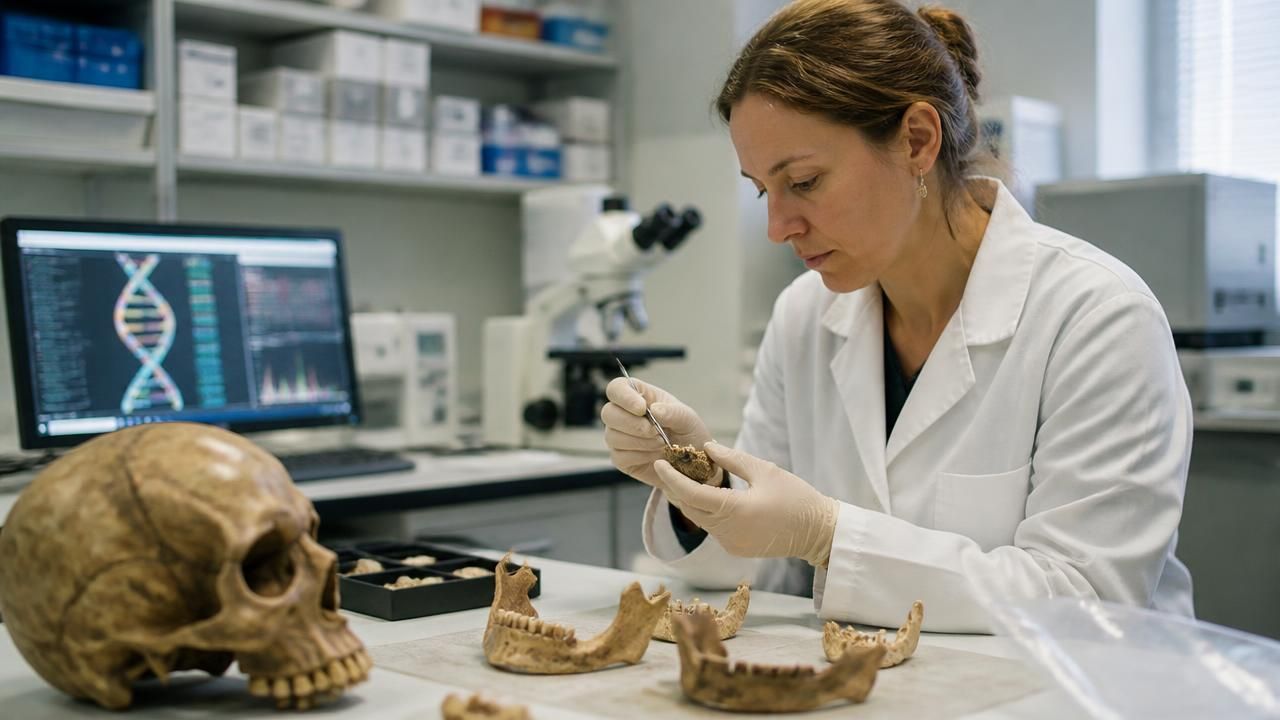
For many people in Western cultures, the idea of eating insects provokes an automatic shudder. But a new study published in Science Daily suggests that this aversion is not just a modern quirk — it may be written in our ancient DNA and fossilized teeth. The research reveals a surprising history of insect eating, with Neanderthals likely consuming bugs far more regularly than modern humans in northern Eurasia, who appear to have only eaten them occasionally.
The Genetic Trace
Researchers analyzed ancient teeth and human DNA from populations across Europe and Asia. They found that modern humans who migrated into northern Eurasia lost some of the genetic adaptations that help digest insect exoskeletons, while populations near the tropics retained those genes. This suggests that as humans moved away from equatorial regions, their diets shifted, and the ability to efficiently digest chitin — the main component of insect exoskeletons — became less advantageous.
Specifically, the study points to the CHIA gene, which encodes an enzyme that breaks down chitin. In tropical populations, variants of this gene that are efficient at digesting chitin are more common. In northern Eurasian populations, these variants are rarer, aligning with dietary evidence from ancient teeth showing only occasional consumption of insects.
Neanderthals: The Original Entomophages
The study also sheds light on Neanderthal diets. While modern humans in northern Eurasia ate insects only sporadically, Neanderthals may have consumed them much more regularly. This difference could reflect distinct survival strategies. Neanderthals, who lived in harsh environments, likely exploited a wider range of food sources, including insects, which were abundant and easy to catch. Modern humans, with more sophisticated hunting tools and social networks, may have relied more on larger game and plant foods.
"Neanderthals were not the brutish cavemen of popular imagination," said Dr. Elena Petrova, a paleoanthropologist not involved in the study, in a commentary for ScienceBlog. "They were adaptable foragers who made use of every available resource. Insects were probably a reliable protein source during lean seasons."
"The disgust response we see today is a cultural overlay on a deep evolutionary history," noted one researcher. "Our ancestors ate bugs for millions of years. It's only relatively recently that some populations stopped."
The 9,000-Year Divide
The title of the MSN article asks, "Why some people hate eating insects may have started 9,000 years ago." The new DNA evidence aligns with this timeline. Around 9,000 years ago, as agriculture expanded in the Fertile Crescent and Europe, human diets shifted dramatically. Grains and domesticated animals replaced wild game and foraged insects in many regions. Over generations, the genetic adaptations for digesting chitin faded from the gene pool of northern Eurasian populations.
This does not mean that all Europeans stopped eating insects entirely. Historical records show that ancient Romans consumed beetle larvae, and some rural European communities continued to eat insects well into the 20th century. But the frequency of consumption dropped, and cultural attitudes turned negative — a shift that may have been reinforced by the new agricultural reality.
Regional Differences in Adaptation
The study highlights a clear geographic pattern. In tropical regions like Southeast Asia, Africa, and Central America, where insects are diverse and available year-round, the genetic variants for chitin digestion remain common. It is no coincidence that these regions also have vibrant culinary traditions featuring insects. In contrast, northern Europeans, with their colder climate and limited insect diversity, lost both the genes and the taste.
The authors suggest that this is a classic case of gene-culture coevolution: as eating habits changed, the genome adapted, and the new genome reinforced the cultural behavior.
Implications for Modern Diets
The findings come at a time when many environmental advocates are promoting insect eating as a sustainable alternative to traditional livestock. Insects require far less land, water, and feed, and produce lower greenhouse gas emissions. But the study suggests that promoting entomophagy in Europe may face an uphill battle, not just because of cultural preferences, but because many Europeans may be less biologically equipped to digest insects efficiently.
"This doesn't mean Europeans can't adopt insect-based diets," said Dr. Marco Santoro, a geneticist at the University of Copenhagen and lead author of the study. "The human gut is adaptable, and we can produce more chitinase with dietary exposure. But it may take a few generations for the full digestive adaptation to return."
How Different Outlets Frame the Story
Each news outlet brings a slightly different lens to the findings. Science Daily focuses on the scientific evidence: ancient teeth and DNA. Discover Magazine, which originally ran a piece titled "Ancient Teeth Suggest Europeans Rarely Ate Bugs — and May Have Been Less Adapted to Digest Them," emphasizes the northern European deficiency. ScienceBlog uses the headline "Europeans Lost the Taste for Insects Thousands of Years Before Anyone Found Them Disgusting," framing it as a cultural loss. Meanwhile, MSN covers the disgust factor, asking whether the revulsion is inherited rather than learned.
These differing framings reflect broader debates in science communication: is the story about genetics, diet, culture, or psychology? The truth, as always, is a mix of all three.
Conclusion
The discovery adds a new layer to our understanding of human evolution and food preferences. It reminds us that taste is not a fixed biological trait, but a dynamic interplay between environment, genes, and culture. As the world looks for sustainable food sources, the humble insect may yet find its way back onto European plates — but it will have to overcome 9,000 years of genetic drift and cultural conditioning.