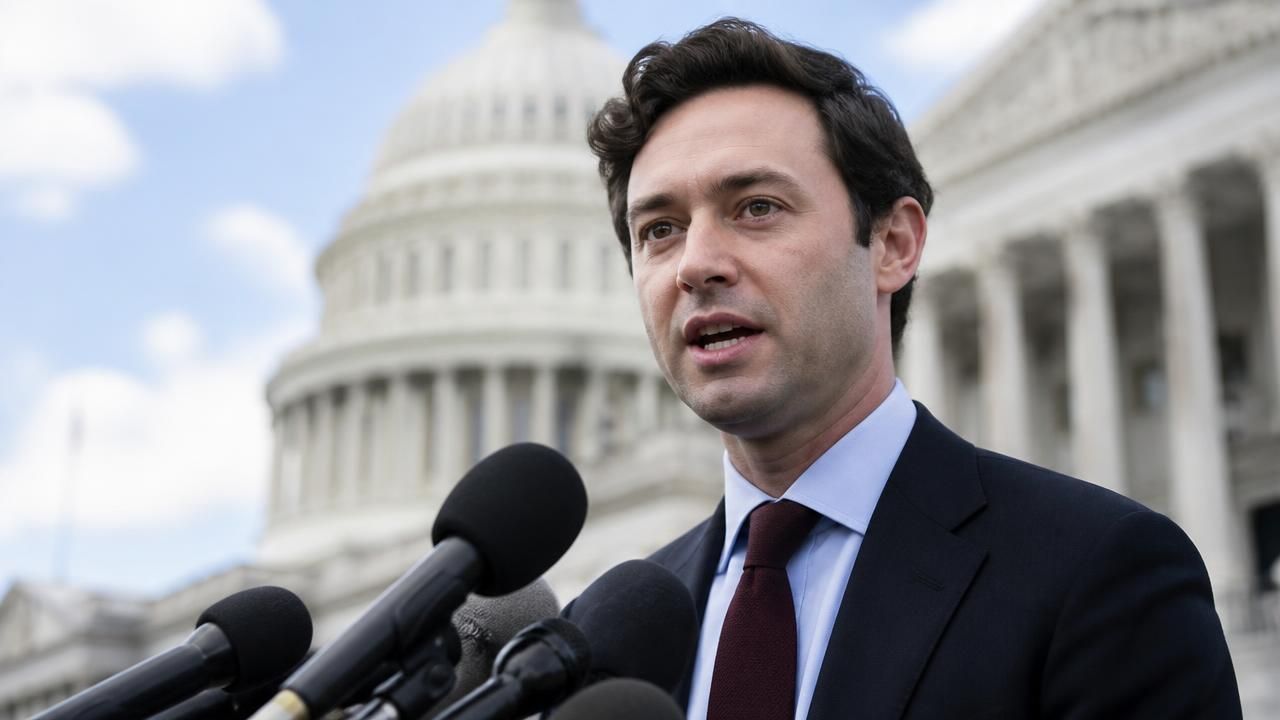
When Jon Ossoff narrowly won Georgia’s Senate runoff in 2021, few expected him to become a national phenomenon. Yet as the 2026 midterm cycle heats up, the 38-year-old Democrat is not only defying expectations in a battleground state—he is emerging as a potential 2028 presidential contender. A recent NPR profile notes that Ossoff, "usually a head down senator," has found a formula to excite Democrats, transforming what should be one of the most vulnerable incumbents in the country into a candidate with a steady poll lead.
This surge has not gone unnoticed. The New York Times opinion section asks, “Why Everyone Wants Jon Ossoff to Run for President,” while The Atlantic explores “Five Theories of the Jon Ossoff Moment.” Reuters lists Georgia’s Senate race among the six key contests to watch in the 2026 midterms, and a wave of conservative endorsements has added a surprising twist to a state that remains deeply purple.
From Underdog to Front-Runner
Ossoff’s path to re-election was never supposed to be easy. Georgia has trended right in recent cycles, and Senate incumbents in similar states have often struggled. Yet early polling shows Ossoff opening a consistent lead over his Republican challenger, businessman and veteran Brett Collins. Analysts attribute this to a combination of Ossoff’s low-key but effective constituent work, his fundraising prowess, and Collins’s struggles to unify the GOP base.
“He’s done the quiet things well,” says a Democratic strategist quoted in the NPR profile. “He’s not flashy, but he’s present.” Ossoff has also leaned into bipartisan messaging on issues like infrastructure, semiconductor manufacturing, and veterans’ health—topics that resonate across party lines in Georgia.
Conservative Endorsements: A Lone Star?
Perhaps the most striking development is the parade of conservative figures publicly backing Ossoff. Yahoo News reports “another conservative endorses Jon Ossoff,” and USA Today highlights the trend, noting that these endorsements come from moderates and former GOP officials who cite Ossoff’s independence and willingness to buck his party. One endorser, a former Republican county commissioner, told USA Today: “He’s not a typical partisan. He listens. That’s rare in Washington.”
These endorsements have given Ossoff cover to run as a pragmatist, even as Democrats nationally lean into progressive policies. They also provide a counter-narrative to Collins’s efforts to paint Ossoff as a liberal rubber stamp.
Debates Scheduled, Differences Expected
The campaign will soon move to a higher-profile phase. According to the Milwaukee Journal Sentinel, Ossoff and Collins have agreed to a series of debates, with dates to be announced later this fall. Their matchup is expected to focus on the economy, immigration, and healthcare—issues where Collins will likely attack Ossoff’s record.
“I’m ready to put my record next to his any day,” Ossoff said in a statement after the debate agreement, while Collins countered that “Georgia needs a senator who puts the state first, not a presidential hopeful.”
The 2028 Question
Even before the midterms, political observers are looking ahead. The Atlantic’s “Five Theories” piece argues that Ossoff’s appeal stems from his ability to blend wonkish detail with a calm, unassuming demeanor—an antidote to the noise of national politics. The NYT opinion column goes further, suggesting that Democrats are desperate for a candidate who can rebuild the “Obama coalition” in swing states.
“Ossoff is what a post-Trump Republican might look like in a Democratic primary,” wrote one columnist. But Ossoff himself has deflected such talk: “My focus is on Georgia and this election. Nothing else.”
For now, his team is carefully managing the narrative. They know that presidential buzz can cut both ways in a state like Georgia, where independents might see him as too ambitious. Still, the speculation persists, and Ossoff’s national fundraising numbers suggest his network has one eye on 2028.
Road Ahead
As the November midterms approach, Georgia’s Senate race remains a bellwether for the nation. If Ossoff wins decisively, he could become the model for Democrats in conservative-leaning states. If he stumbles, the backlash could be severe. Either way, the political world will be watching closely.
In Other News
While the Ossoff story dominated political headlines, several other stories emerged this week:
- Medicare’s obesity drug program: Drugstores report that the new $50-per-month Medicare coverage for weight-loss drugs is gaining traction, with thousands of seniors signing up in the first weeks. The program, part of last year’s spending bill, aims to make treatments like Wegovy and Ozempic more accessible.
- School bus diesel costs: Several school districts are scrambling as diesel prices push transportation budgets to the brink. A report highlights that some districts are cutting bus routes or considering electric bus leases to offset rising fuel costs, adding pressure to back-to-school planning.
- Kennedy Center showdown: The Kennedy Center’s board has threatened to demolish the landmark building ahead of an emergency hearing, sparking a preservation battle. The board claims structural issues, but critics see it as a politically motivated move to clear space for private development.
These stories, while distinct, reflect the broader challenges—from health policy to infrastructure to cultural heritage—that voters care about as the 2026 campaign season intensifies. For now, however, the spotlight remains on Georgia, where Jon Ossoff has become an unlikely symbol of Democratic resilience.