Two very different kinds of political story are converging on the same theme this cycle: the growing willingness of voters to punish their own party's standard-bearers. In one, an incumbent Democrat in a fiercely competitive Washington congressional district is fighting to hold a seat while managing frustration inside her own coalition. In the other, a long tail of presidential candidates — several of them interviewed by Wikinews over the years — keeps testing whether either major party has room for voices that don't fit the mold.
The Swing Seat
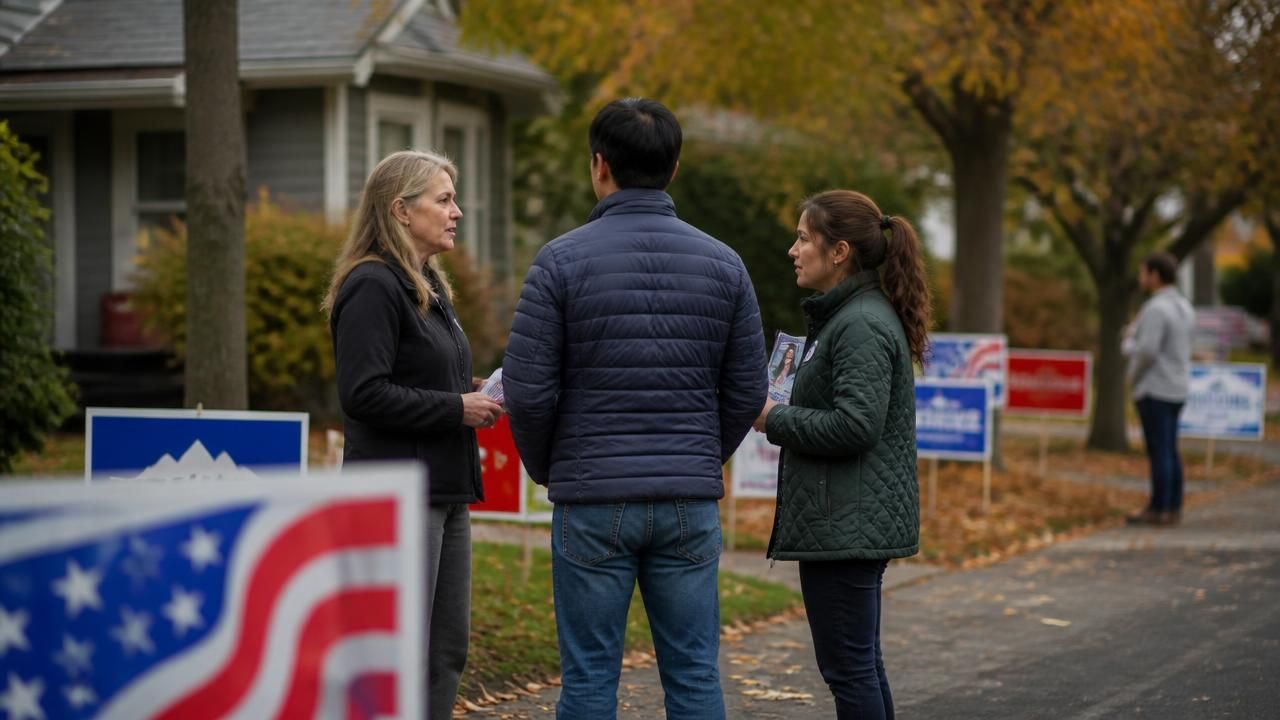
In one of the country's most competitive congressional districts, the Democratic incumbent finds herself squeezed from both directions. According to NPR Politics, she has "angered part of her party base," while her Republican challenger — backed by former President Donald Trump — faces "backlash against the party in power." It is a familiar configuration in the modern House map: the incumbent cannot fully satisfy the activists who knock doors for her, and the challenger cannot fully escape the national brand of the movement that elevated him.
Washington State has become an unlikely battleground in the fight for the House majority. Districts there blend suburban tech workers, rural timber and agricultural communities, and a sizable bloc of unaffiliated voters who decide close races. For an incumbent Democrat, that arithmetic rewards moderation on everything from spending to social policy — precisely the posture that can provoke primary-season anger from the left.
"In a highly competitive Washington congressional race, the incumbent Democrat has angered part of her party base and the Trump-backed Republican challenger faces backlash against the party in power." — NPR Politics
The dynamic is not unique to the Pacific Northwest. Across the country, both parties are running candidates who must simultaneously court a polarized base and reassure a skeptical middle. The result is a campaign in which each side's strongest asset — enthusiastic partisans — is also its most visible liability.
The Outsiders' Circuit
The same tension plays out, in exaggerated form, far from any swing district. For years, Wikinews has interviewed presidential candidates who never came close to winning a nomination, and the roster reads like a catalog of intraparty dissent.
- Fred Karger, a Republican who sought the presidency as an openly gay candidate and pushed for reform of the party's platform on social issues.
- John Wolfe Jr., a Democrat who challenged then-President Barack Obama in the 2012 primaries and drew a surprising share of the vote in several Southern states.
- Duncan Hunter, a California congressman whose long-shot Republican campaign leaned on military and border-security themes.
- Tom Tancredo, a Colorado congressman whose presidential bid centered almost entirely on immigration restriction.
- The Reform Party USA, which convened its own presidential candidates forum as it sought to rebuild a national third-party presence.
Taken individually, these candidacies look quixotic. Taken together, they form a durable pattern: candidates who use alternative and niche media to reach voters who feel unrepresented, and who often channel grievances that later migrate into the mainstream of one party or the other. Tancredo's hardline immigration stance, once treated as a fringe curiosity, previewed arguments that became central to Republican politics a decade later. Wolfe's primary challenge to an incumbent president foreshadowed the more disruptive primary insurgencies of 2016 and beyond.
Why the Fringe Matters
The interviews also illustrate a structural problem for American democracy: the two-party system offers few exits for voters who are dissatisfied but not willing to abandon their affiliation. Third parties such as the Reform Party can attract attention — and, occasionally, decisive shares of the vote in close states — but rarely build durable organizations. Insurgent primary candidates, meanwhile, can shape a party's agenda without ever winning a delegate majority.
That is why the Washington race and the long-shot presidential circuit belong in the same story. In a district decided by a few thousand votes, an incumbent's relationship with her base is not an abstract concern — it determines how many volunteers show up and how many voters stay home. And at the presidential level, the outsiders who never win often define the terms of the debate the eventual nominee must confront.
How Different Outlets Frame It
Coverage of these contests diverges sharply. Outlets like NPR tend to frame competitive House races as tests of governing versus polarization, emphasizing the incumbent's legislative record and the challenger's national ties. Alternative outlets, including Wikinews, have approached the same political terrain through long-form interviews with candidates who receive little or no attention from major networks — a form of coverage that privileges access over horse-race polling.
Both approaches have limits. The interview format can amplify candidates without scrutinizing their claims; the horse-race frame can reduce a district's complicated politics to a single margin. What neither can avoid is the underlying question voters keep asking in both settings: does either party still have room for people who disagree with parts of its own coalition?
The answer will be tallied in November — in Washington's swing district, and in every place where an outsider decided it was worth running anyway.