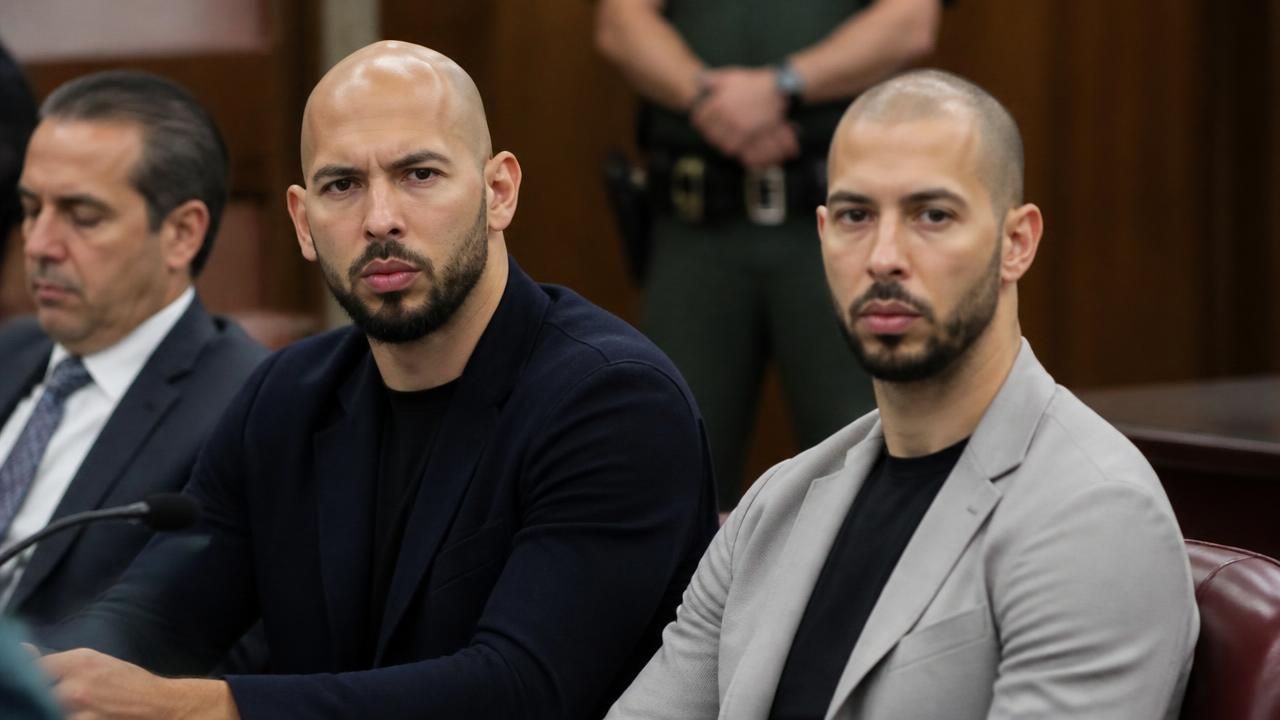
Andrew and Tristan Tate, the controversial social media influencers and former kickboxers, are back in a Miami courtroom this week, fighting a legal battle that could determine whether they are sent to the United Kingdom to face 59 criminal charges, including rape, human trafficking, and sexual assault. The brothers, who were arrested in Romania in 2022 and later released on restrictive conditions, are now in U.S. custody after a separate arrest warrant was issued by British authorities. Their lawyers are seeking release on bond while they contest extradition, but UK prosecutors are pushing back, arguing that the pair pose a significant flight risk.
Who Are the Tate Brothers?
Andrew Tate, 38, and his younger brother Tristan, 36, are no strangers to controversy. Andrew, a former professional kickboxer and self-described misogynist, has amassed millions of followers across social media platforms with his hyper-masculine, often inflammatory content. Tristan, also a former kickboxer, has operated largely in his brother's shadow but is equally entangled in the legal proceedings. The brothers have consistently denied all allegations, characterizing the charges as a coordinated attack on their outspoken lifestyle.
Their legal troubles began in December 2021 when Romanian prosecutors opened a human trafficking case against them. They were arrested in Bucharest in December 2022 and spent several months in detention before being placed under house arrest and later released pending trial. Now, the UK's Crown Prosecution Service has issued a European Arrest Warrant, leading to their detention in Miami, where they are currently being held in solitary confinement at the Turner Guilford Knight Correctional Center.
The UK Charges: Rape, Trafficking, and More
The 59 charges against the Tate brothers in the UK stem from allegations made by multiple women and span a period from 2012 to 2015. According to newly released court documents, the charges include rape, sexual assault, and human trafficking, with prosecutors alleging that the brothers recruited, transported, and exploited women for sexual purposes. The documents, which were unsealed as part of the extradition proceedings, detail claims that the brothers used a "loverboy" method to gain control over their victims, isolating them and subjecting them to physical and psychological abuse.
UK prosecutors have described the case as "exceptionally serious," and the extradition request has been formally submitted to U.S. authorities. The brothers' legal team, however, insists that the charges are baseless and politically motivated. In a statement, they vowed to "fight the extradition with every legal avenue available," including potentially challenging the case in U.S. federal courts, a move that could prolong the proceedings for months or even years.
A Miami Court Weighs Bail
The current focus is on a bail hearing scheduled before a Miami federal judge. The Tate brothers' attorneys are arguing for their release from custody, proposing strict conditions such as GPS monitoring, home detention, and no access to social media. They have also pointed to the brothers' previous compliance with Romanian judicial authorities, noting that they remained in the country after being released on bail there.
But UK prosecutors are urging the judge to keep the brothers locked up, arguing that international extradition cases carry an inherent risk of flight. "These are individuals with significant financial resources, ties to multiple countries, and a demonstrated willingness to avoid accountability," one prosecutor said during the hearing. NPR notes that it is extremely unusual for courts to grant bail in extradition cases, precisely because there is no enforceable mechanism to guarantee a defendant's appearance in a foreign jurisdiction.
In a twist reported by MSN, prosecutors in Miami have also alleged that Andrew Tate has been "faking his uber-wealthy lifestyle" to support his bail application. The claim, which has been seized upon by media outlets, suggests that the brothers' public displays of wealth—luxury cars, private jets, and designer clothes—may be more illusion than reality. "This is not a Marriott," one lawyer quipped, describing the conditions of solitary confinement that the brothers are currently enduring. The remark, reported by Reuters, highlights the stark contrast between the Tate brothers' glamorous online persona and their current reality behind bars.
A Passport Alias and Bond Villain Optics
Adding to the bizarre nature of the case, reports have emerged that Tristan Tate recently attempted to use a passport under an alias, a move that 2oceansvibe compared to "full bond villain nonsense." The incident, which allegedly occurred before their detention, has fueled prosecutors' claims that the brothers are a flight risk. While the details remain murky, the timing could not be worse for a legal team trying to convince a judge that their clients will show up for future proceedings.
The hashtag #FreedTate continues to trend on social media, where the brothers' supporters view them as victims of a globalist conspiracy. However, the UN's independent experts have weighed in, linking Andrew Tate to the broader phenomenon of "harmful masculinity" that fuels online misogyny and violence against women. In a statement, a UN representative noted that the case "sends a powerful message that no one is above the law, regardless of their platform or following."
Synthesizing Sources: Different Frames, One Core Story
Coverage of the Tate brothers' extradition battle spans a wide spectrum. NPR's reporting focuses on the legal hurdles facing the bail request, emphasizing the precedent that extradition defendants are rarely released. CNN and Reuters provide detailed explanations of the charges and the procedural maneuverings, while USA Today offers a helpful overview for readers unfamiliar with the case. The U.K. tabloid press has been more sensational, zeroing in on the "passport alias" and the solitary confinement conditions. Meanwhile, outlets like the Washington Times and the Bozeman Daily Chronicle are covering the local Miami court proceedings, bringing a community perspective to a case with global implications.
One point of consensus across sources is that the brothers' legal strategy appears to be a long game. By seeking bail, filing motions, and potentially appealing any extradition order, the Tates could delay any transfer to the UK for years. Their lawyers have hinted at a Supreme Court challenge, arguing that the charges are non-extradition offenses under the U.S.-UK extradition treaty—an assertion that legal experts view as tenuous but which could nevertheless lead to prolonged litigation.
What Happens Next?
The immediate decision rests with Judge John Doe of the Southern District of Florida, who will rule on the bail request in the coming days. If bail is denied, the brothers will remain in custody while the extradition hearing proceeds. That hearing, which could take months, will require the U.S. government to prove that the UK has presented sufficient evidence to meet the probable cause standard. Only after that will the Secretary of State make a final decision on surrender.
For now, the world watches as a case that blurs the lines between celebrity, crime, and internet culture plays out in a Miami courtroom. The outcome will not only determine the fate of Andrew and Tristan Tate, but also set a precedent for how the U.S. handles extradition requests involving social media influencers accused of heinous crimes. As the legal saga continues, one thing is clear: the Tate brothers' fight is far from over.