From the American heartland to the global market, a series of developments this week underscored the shifting dynamics of supply chains, energy policy, and corporate accountability. The common thread: industries are recalibrating in response to geopolitical tensions, evolving demand, and heightened scrutiny. At the center of these changes is a landmark investment in domestic fertilizer production, while automotive and energy sectors face a reality check, and companies grapple with legal and health-related challenges.
A New Era for Domestic Fertilizer Production
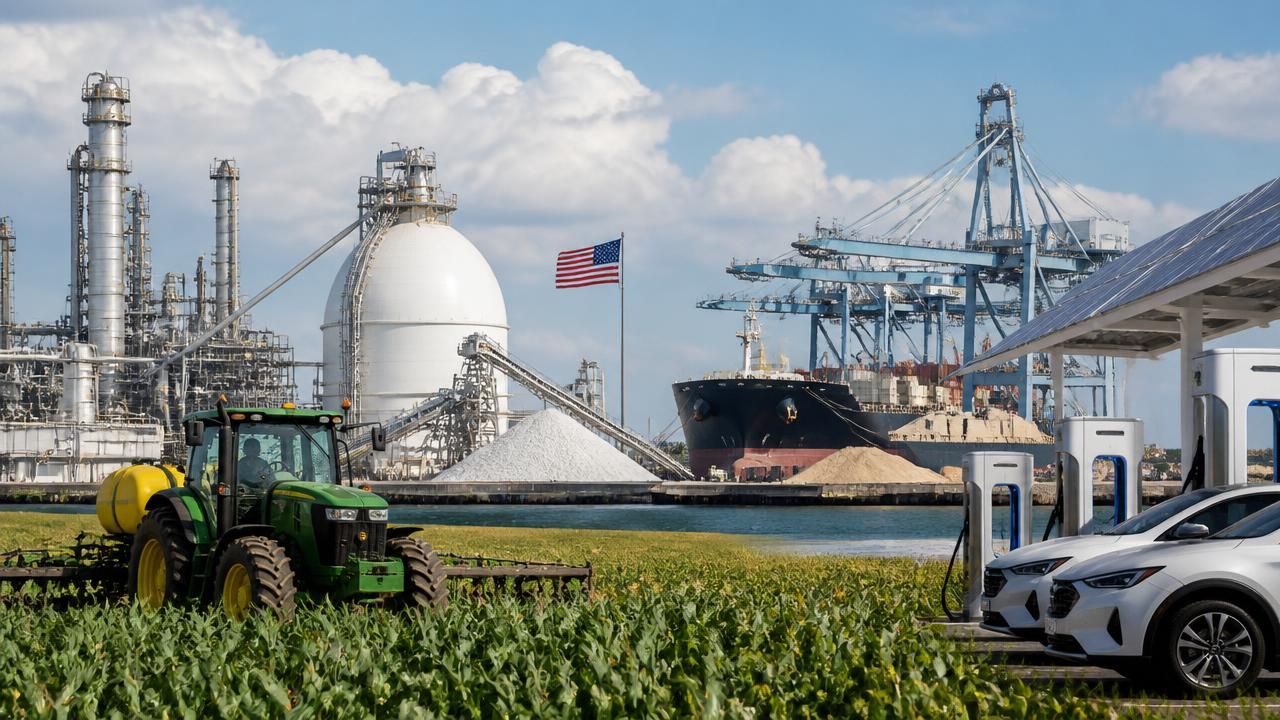
In a move aimed at reducing dependence on foreign crop nutrients, farm cooperative CHS Inc. and OCP North America announced a proposed $450 million phosphate fertilizer plant in Louisiana. Bloomberg Markets described the initiative as the “first US Phosphate Plant in Decades Planned Amid Global Conflict,” noting that it bolsters domestic supplies as global conflicts have “increasingly thwarted the flow of foreign crop nutrients.” The plant, one of the first of its kind in decades, represents a strategic shift toward food security and supply chain resilience.
The announcement arrives against a backdrop of geopolitical maneuvering. According to Ynetnews, the Trump administration’s pro-Morocco stance on phosphate imports is aimed at strengthening ties with Israel, leveraging the Abraham Accords. Morocco holds a dominant share of global phosphate reserves, and that move directly influences fertilizer markets. Meanwhile, on the other side of the globe, ABC News reported that North West Phosphate has begun mining Paradise South in outback Queensland, Australia—the country’s largest phosphate deposit—amid surging global demand for fertilizer and renewable energy technologies. These simultaneous developments highlight a global race to secure phosphate supplies.
“The proposed plant underscores the urgency of bolstering domestic supply chains,” said a spokesperson for CHS, cited by Bloomberg. “We are investing in American production to shield farmers from international disruptions.”
For Minnesota, where CHS is headquartered, the project is a point of pride. Star Tribune coverage (Source 4) echoed the significance, framing it as a response to global supply chain shocks that have hit farmers hard.
Electric Vehicles and Battery Storage: A Reckoning
The transition to electric vehicles is facing turbulence. Ford announced it will delay several EV launches and instead offer a full hybrid lineup by 2030, according to Detroit News. The decision reflects softening consumer demand and infrastructure challenges. Similarly, LG Energy Solution has halted construction on its Arizona battery plant, citing weak EV sector conditions, as reported by KED Global. These moves signal a strategic pause in the industry’s aggressive expansion plans.
Yet, the battery storage market is surging. Benchmark Mineral Intelligence launched a new price index for 314Ah lithium-iron-phosphate (LFP) battery energy storage systems (BESS), responding to the global storage market surge. This index provides critical pricing data for a sector that remains bright even as EV demand falters, suggesting a bifurcation in the clean energy economy.
Corporate Governance and Legal Troubles
Several companies faced legal and governance headwinds this week. In Minnesota, tax evasion charges against Walser were dropped after the auto dealership group agreed to pay $490,000, per Star Tribune. The resolution underscores a trend of settlements in white-collar cases. UnitedHealth, another Minnesota giant, saw a “ghost employee” fraudster sentenced to three years in prison, a case that highlighted internal control failures.
Activist investors also made waves. H.B. Fuller rejected a billion-dollar activist offer for a key business division, signaling management’s confidence in its long-term strategy despite shareholder pressure. On the macroeconomic front, Star Tribune columnist Ramstad argued that President Trump could address the structural issues driving up interest rates but is unlikely to do so, a critique of inaction with implications for all these corporate decisions.
Health and Safety: Companies Under Scrutiny
Public health crises also intersected with business. Cambria, a Minnesota-based countertop maker, is caught in the fallout from a lung disease outbreak among California workers, raising questions about workplace safety and liability. Meanwhile, the Minnesota Department of Health traced an E. coli and salmonella outbreak to a local alfalfa grower, prompting recalls and highlighting food supply vulnerabilities. Both stories, reported by Star Tribune, remind stakeholders that corporate responsibility extends beyond finances.
Looking Ahead
This week’s news reflects an economy in transition. The phosphate plant investment signifies a strategic pivot toward self-sufficiency, while EV delays and battery innovations illustrate the uneven pace of clean energy adoption. Legal and health scandals test corporate reputations, and interest rate concerns loom over all. As these threads converge, business leaders and policymakers must navigate complexity with foresight. The decisions made now—from Louisiana to Queensland—will shape supply chains for decades.