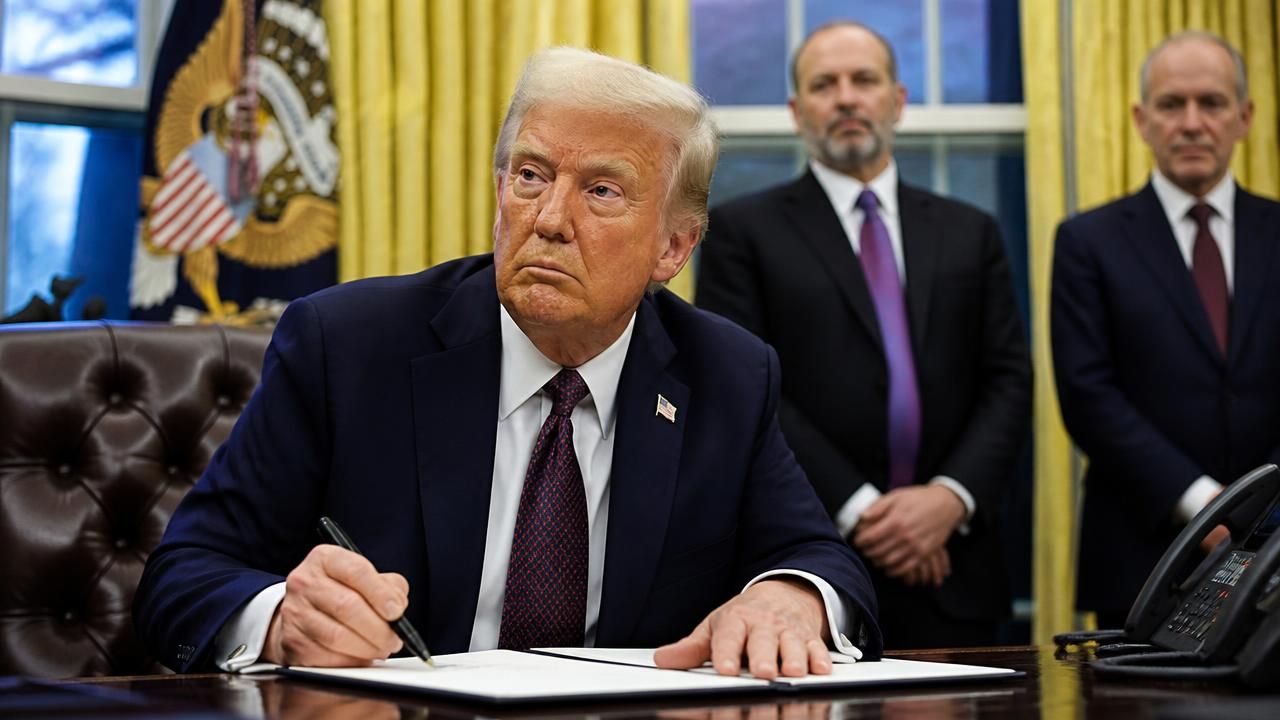
The Trump administration has dropped a bombshell on the U.S. tech sector and beyond: a new fee of more than $100,000 on H-1B visas for skilled foreign workers. The Department of Homeland Security (DHS) announced the rule on Monday, sending shockwaves through an industry already grappling with talent shortages and prompting a swift lawsuit from a major business group.
The fee, which multiple sources report as $100,000 per petition and up to $150,000 for employers heavily dependent on the visa program, is the latest salvo in President Donald Trump's broader immigration crackdown. The Verge noted the figure as over $103,000, while ABC News cited $150,000, reflecting confusion that even NBC News described as “panic and confusion” among employers.
What Is the H-1B Visa?
Created in 1990, the H-1B visa allows U.S. companies to temporarily employ foreign workers in specialty occupations, particularly in technology, engineering, and medicine. It is capped at 85,000 new visas per year, with an additional 20,000 for workers with advanced degrees from U.S. universities. The program has long been a lifeline for Silicon Valley, with companies like Google, Microsoft, and Amazon filing thousands of petitions annually.
The new rule imposes an annual “H-1B and L-1 visa modernization fee” on employers with 50 or more employees where at least half hold such visas. For those firms, the fee is $100,000 per visa petition. A second tier raises it to $150,000 for employers where H-1B workers constitute an even higher percentage of the workforce. The fee applies to new petitions and renewals, though the White House says it will not affect current workers until they extend their status. It is added on top of existing filing fees, which typically range from $1,000 to $10,000.
Big Tech and Startups Brace for Impact
The tech industry, which relies on H-1B visas to fill critical engineering and research roles, is bracing for a significant financial hit. The Wall Street Journal reported that Big Tech companies are already preparing to skirt the fee by restructuring their workforce or moving employees to overseas offices. For large employers, the cost could reach tens of millions of dollars annually.
“The only way Trump can get the deportation numbers he wants is by stripping legal immigrants of status,” The Verge wrote, pointing to the simultaneous State Department plan to revoke visas for up to 200,000 asylum seekers.
Startups are even more vulnerable. Forbes argued that the fee is “a gift to European AI startups,” because it makes the U.S. less competitive in the global race for talent. “This is not a jobs program; it's a tax on innovation,” one industry analyst told Reuters. Smaller firms, already struggling to compete against giants like Apple and Meta, may be forced to hire abroad or abandon plans to grow in America.
Economists Warn of Growth Risks
Economists have cautioned that the fee could do more harm than good. The Guardian reported that “Trump’s $100,000 H-1B visa fee could hurt US growth,” as businesses either pass on costs or forgo hiring altogether. H-1B workers are often paid higher-than-average wages and are disproportionately represented in patent filings and STEM fields, according to research cited by the American Immigration Council. Reducing their numbers could lower productivity, innovation, and tax revenue.
A Reuters analysis echoed these concerns, noting that the fee would make the United States one of the most expensive developed countries in which to hire skilled foreign workers. The impact could be especially severe in sectors that depend on global talent, from artificial intelligence to healthcare.
Rural Communities and Hospitals at Risk
The fee’s consequences extend far beyond Silicon Valley. PBS News highlighted that rural schools and hospitals, which rely on H-1B workers to fill roles like teachers and physicians, will be disproportionately affected. “These are communities that are already struggling to attract talent,” the report noted. A rural hospital in Montana might need an H-1B pediatrician, but a $100,000 fee makes that impossible. Similarly, small school districts recruiting special-education teachers from abroad would face untenable costs.
Global Repercussions: India and Europe
India, which receives the majority of H-1B visas, is watching closely. BBC News reported that Indian tech workers and outsourcing firms will be hit hardest, potentially reshaping the global IT services industry. Many Indian nationals use the visa as a stepping stone to U.S. permanent residency, but the fee adds a formidable financial barrier.
Meanwhile, European countries are positioning themselves as beneficiaries. Forbes wrote that the fee “is a gift to European AI startups,” as U.S. companies seeking talent may turn to Berlin, London, or Paris instead. Canada’s fast-track visa programs and remote work policies are also expected to attract disaffected workers and the companies that employ them.
Legal and Political Backlash
The backlash was immediate. Reuters reported that a major U.S. business group—believed to be the U.S. Chamber of Commerce—has filed a lawsuit challenging the fee, arguing that the administration lacks statutory authority to impose such a levy. The suit seeks to block the rule before it takes effect, calling it arbitrary and an overreach of executive power.
NBC News described “panic and confusion” among employers scrambling to understand the rules. The confusion is partly due to inconsistent messaging: some outlets reported a flat $100,000 fee, while ABC News cited $150,000. The DHS maintains that the fee is necessary to encourage employers to hire American workers and to fund border security initiatives. The White House has also said that the fee will not apply to current H-1B holders until they seek renewal, a point emphasized by ABC News.
What's Next?
As the legal battle unfolds, tech companies are weighing their options. Some may shift more workers to Canada or other nations with welcoming immigration policies. The fee could also accelerate trends toward remote work, automation, and overseas hiring. Quartz noted that the fee has not yet “pounded” the Magnificent Seven stocks, but the risk remains if the policy is upheld. The Independent reported that the administration is moving to make the fee permanent, locking it into U.S. immigration law.
The H-1B fee debate underscores a fundamental tension in American immigration policy: the desire to protect domestic workers versus the reality that U.S. firms need global talent to compete. While the administration argues that the fee will force employers to “look at American workers first,” economists, businesses, and rural communities fear it will do the opposite—driving jobs, innovation, and tax revenue abroad. As the courts weigh in, the fate of America’s skilled immigration system hangs in the balance.
For now, companies and workers alike are left in limbo, waiting to see whether the fee stands or falls—and what the long-term consequences will be for an economy built in part on the talents of immigrants.