In the relentless battle against cancer, the immune system is both a powerful ally and a frustratingly elusive one. While therapies like checkpoint inhibitors have revolutionized treatment for some cancers, solid tumors—the most common form—remain stubbornly resistant to immune attack. Now, a wave of new research is exploring ways to 'supercharge' natural killer (NK) cells, the immune system's frontline assassins, to penetrate and destroy these formidable tumors. These advances, alongside cutting-edge imaging and molecular discoveries, are painting a promising picture of the future of cancer therapy—but experts caution that the road from laboratory to clinic is long and fraught with hype.
The NK Cell Breakthrough
Natural killer cells are a type of white blood cell that patrol the body, recognizing and killing abnormal cells, including cancer. Unlike T cells, they do not need prior sensitization to attack. However, solid tumors create a hostile microenvironment that repels and suppresses NK cells, limiting their effectiveness. Researchers have long sought ways to 'turbocharge' these cells, and a recent study offers a compelling strategy.
Scientists developed a method to turn ordinary NK cells into 'tissue-resident' cells—a specialized state that allows them to home in on tumors and persist within the tumor microenvironment. In mouse models, these supercharged cells dramatically slowed the growth of melanoma and head and neck cancers. When combined with the antibody drug cetuximab, which tags cancer cells for destruction, the effect was even more pronounced. The findings, reported by Science Daily and Medical Xpress, suggest that preparing NK cells to become tissue-resident may be key to overcoming one of immunotherapy's biggest obstacles.
A Multi-Pronged Attack
The NK cell study is just one of several recent advances that highlight the diversity of approaches being pursued. In a separate development, researchers at MIT announced they had found a way to strip cancer cells of their 'sugar shield'—a dense coating of sugars that camouflages them from immune detection. By removing this shield, the immune system can more easily recognize and attack the tumor. The MIT team's work, reported by Science Daily, offers a complementary strategy to cell-based therapies.
Meanwhile, scientists at UCLA are 'turbocharging' immune cells to attack prostate cancer, showing that similar principles can be applied to different cancer types. And in another study, a molecule was discovered that stops aggressive breast cancer in its tracks, potentially offering a new targeted therapy. These disparate efforts share a common goal: to make cancer more vulnerable to the body's own defenses.
Precision Imaging of Antibodies
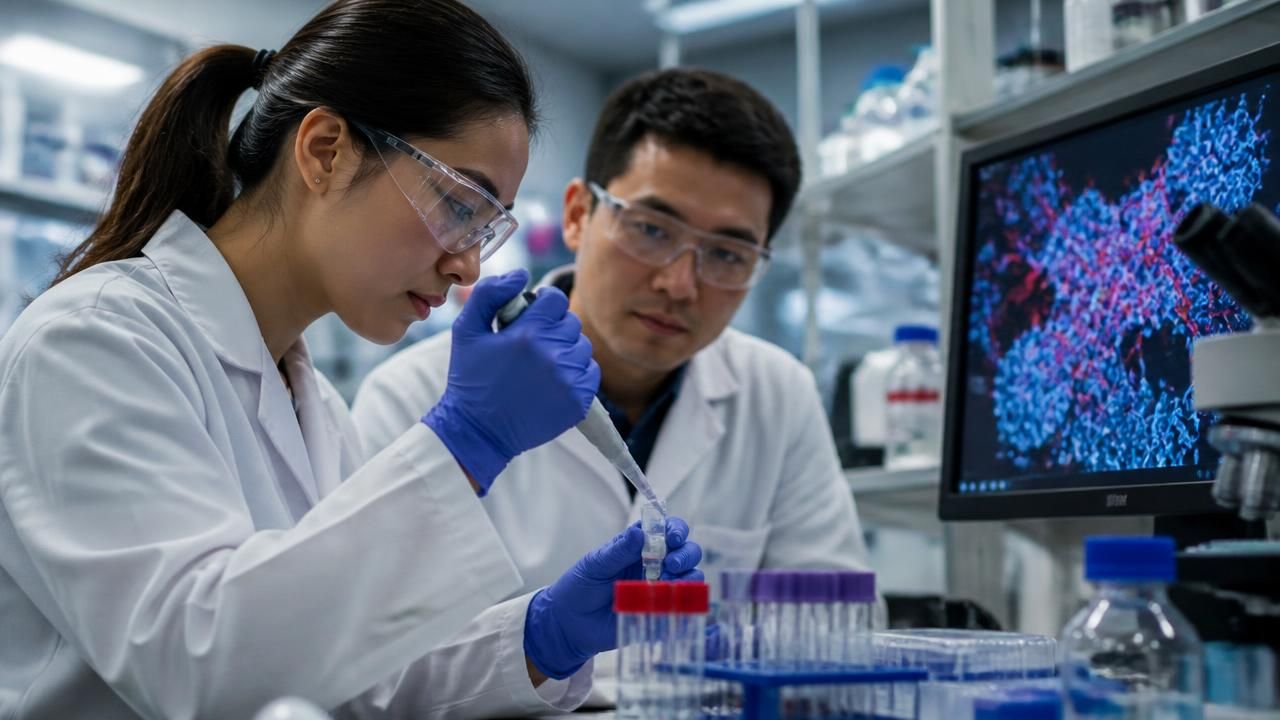
To refine these therapies, researchers need to see exactly what is happening inside tumors. A team at Stanford University has developed a technique to pinpoint the location of cancer-fighting antibodies in human tumors with unprecedented detail. This imaging breakthrough allows scientists to observe how antibodies distribute within the tumor and interact with cancer cells, providing critical insights that could guide the design of more effective drugs. The Stanford work, highlighted on med.stanford.edu, is a powerful tool for the next generation of immunotherapy.
The Myth of the 'Super-Charged' Immune System
Amid the excitement, caution is warranted. BBC News recently explored the widespread notion of a 'super-charged' immune system, arguing that it is often a myth. The concept suggests that we can simply 'boost' immunity to conquer disease, but the reality is far more nuanced. In the context of cancer, an overactive immune system can cause autoimmunity and severe side effects. As one BBC analysis put it, 'The immune system is a complex network of checks and balances, and pushing it too hard can be dangerous.'
"The immune system is a complex network of checks and balances, and pushing it too hard can be dangerous."
This perspective is echoed by researchers in the NK cell study, who emphasize that their results, while encouraging, are still in mice. 'We have a long way to go before this is ready for patients,' they note. The history of immunotherapy is littered with promising preclinical findings that failed to translate to humans.
Implications and Future Directions
So, what does this mean for the future of cancer treatment? The convergence of these studies suggests a move toward personalized, multi-pronged strategies. Supercharged NK cells could be combined with sugar-stripping agents, antibody drugs, and checkpoint inhibitors to attack cancer from multiple angles. Moreover, the ability to image antibody distribution in real time will allow clinicians to optimize treatment regimens for individual patients.
The UCLA and breast cancer molecule studies further underscore the breadth of opportunity. By targeting different vulnerabilities, these approaches could eventually provide a comprehensive arsenal against even the most aggressive forms of the disease.
Key Takeaways
- Supercharged tissue-resident NK cells penetrate solid tumors and slow growth in mice.
- MIT's sugar-shield stripping method enhances immune recognition of cancer.
- Stanford's advanced imaging tracks antibodies in tumors with high precision.
- UCLA's turbocharged immune cells show promise against prostate cancer.
- A newly discovered molecule halts aggressive breast cancer in preclinical models.
However, experts urge patience. 'We are learning how to harness the immune system, but we are not there yet,' says a spokesperson for the American Cancer Society. The gap between laboratory success and clinical reality is a canyon, but each new discovery lays another stone.
Conclusion
The story of cancer immunotherapy is one of incremental victories and humbling setbacks. The recent wave of research—supercharged NK cells, sugar shields, antibody imaging, and targeted molecules—represents significant progress. Yet the BBC's reminder about the myth of a 'super-charged' immune system is a timely caution: we cannot simply order our immune cells to fight harder without understanding the consequences. Still, for the millions facing cancer, these advances offer hope that the next decade will bring safer, more effective treatments that turn the body's own defenses into a precision weapon against the disease.