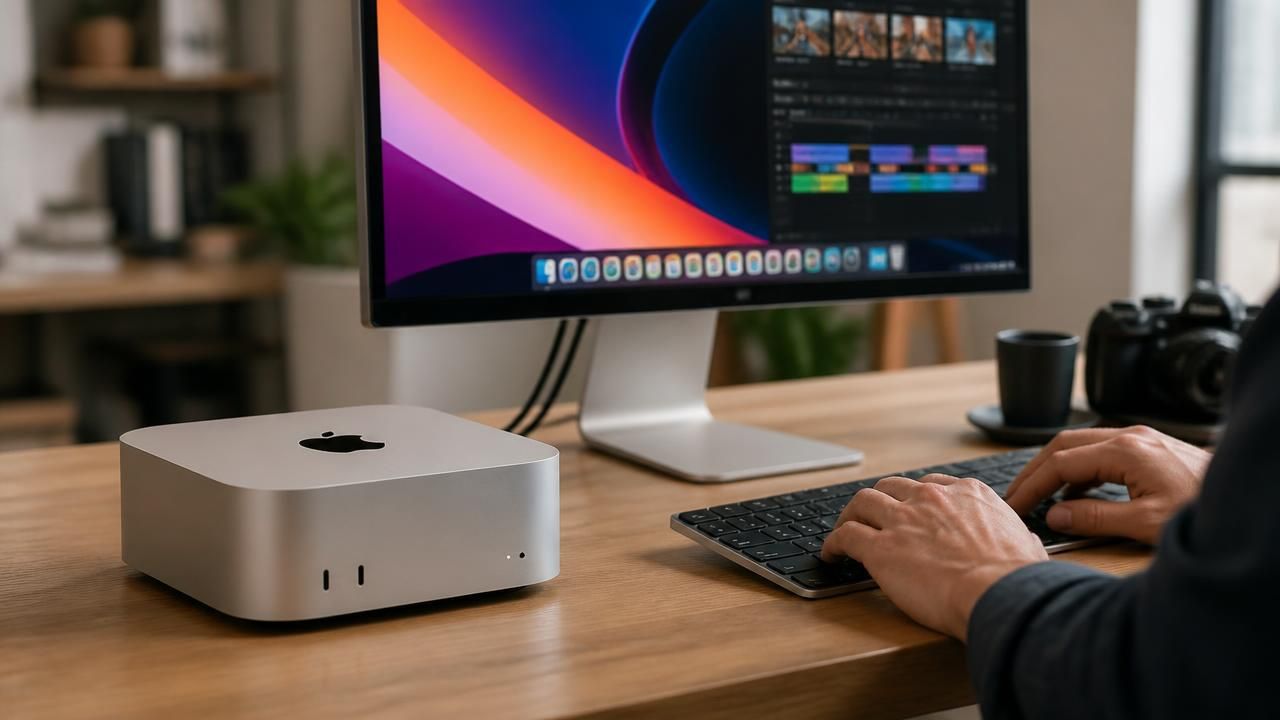
Apple has kicked off a major desktop refresh with the surprise announcement of the new Mac mini and Mac Studio, powered by the next-generation M6 and M5 Ultra chips. Preorders went live immediately, with first shipments scheduled to arrive on September 22, 2026. As The Verge noted, “The new machines are already available for preorder directly from Apple, with shipping for most configurations starting on September 22nd, 2026.”
A Compact Powerhouse: The New Mac Mini
The Mac mini has traditionally been Apple’s most accessible desktop, but the 2026 model pushes it firmly into prosumer territory. It now comes in two flavors: an M6 chip starting at $899 and an M5 Pro version starting at $1,699. That base price is a significant jump—$300 more than the M4-equipped model from 2024, which started at $599. AppleInsider described it as “a new record-high starting price” for the mini, a sentiment echoed by several outlets.
Beyond the chip, the new mini delivers meaningful connectivity upgrades. For the first time, 2.5Gb Ethernet is standard, and the machine supports Wi-Fi 7 and Bluetooth 6. As The Verge put it, “the previous generation Mac mini only featured the M4 and M4 Max chips, so this represents a big upgrade for Apple’s most compact desktop.”
M6 and M5 Pro Configurations
The M6 chip is the headline addition, offering more CPU and GPU cores alongside a beefed-up Neural Engine for AI workloads. Apple is positioning the M6 Mac mini as an entry point for on-device AI development. The M5 Pro variant targets users who need extra graphics and memory bandwidth without stepping up to the Mac Studio.
The Pro Workhorse: Mac Studio with M5 Max and M5 Ultra
The Mac Studio, Apple’s compact powerhouse for creative professionals, also receives a substantial update. It starts at $2,499 with the M5 Max chip—the same price as the outgoing M4 Max model—and can be configured with the all-new M5 Ultra. The M5 Ultra is Apple’s most capable desktop chip to date, effectively combining two M5 Max dies for extreme multi-core performance and expanded AI capabilities. A fully loaded Mac Studio can reportedly cost up to $18,299, as AppleInsider highlighted.
The Silicon Story: M6 and M5 Ultra
The new chips are the heart of this announcement. The Verge reported that the M6 chip “gets more cores and more AI compute,” signaling Apple’s continued push to make its Macs serious tools for AI inference and development. The M5 Ultra, meanwhile, is designed for the most demanding workflows—3D rendering, video editing, and large-scale machine learning models. Forbes observed that Apple launched these chips “unexpectedly,” without a big keynote event, reflecting a shift to quieter product drops.
Pricing and Preorder Landscape
Preorders are now open through Apple’s website, but early indications suggest that supply may be tight. Cult of Mac reported that “Mac mini and Mac Studio face long shipping delays,” and Ars Technica warned that the Mac mini could be “hard to get for months.” This is partly attributed to ongoing memory component shortages and high demand for AI-capable hardware.
Retailers are already offering discounts. Tom’s Guide highlighted ways to save $500 or more on both machines through bundled deals, while Adorama is offering up to $100 off the Mac mini, as reported by The Verge.
Supply Chain Woes and the RAM Crisis
The timing of this launch is notable. The Next Web asked whether the stockouts were “the RAM crisis or an M5 refresh,” and Ars Technica pointed to a broader trend of Apple desktops becoming harder to acquire. The memory industry has been grappling with soaring prices for DRAM and NAND, which may explain both the higher starting price and the constrained supply. This is a critical issue for professionals who rely on consistent hardware refresh cycles.
Beyond the Desktops: A Wider Product Drop
Apple didn’t stop with the Mac mini and Mac Studio. The company also unveiled new Studio Displays, including a mini-LED Studio Display XDR, and introduced the M5 Pro and M5 Max MacBook Pro. The announcements came alongside macOS Tahoe 26.3.1, which includes updated Studio Display drivers. Apple also appears to have launched a new iPhone 17e and MacBook Neo in the same window, according to MacRumors. This coordinated release suggests Apple is refreshing its entire ecosystem for the AI era.
Perspectives: What the Press Is Saying
Different outlets are framing the story in distinct ways:
- Forbes called the launch “unexpected,” focusing on the stealthy nature of the announcement.
- Wired emphasized the “AI-ready” nature of both chips, framing the machines as essential tools for developers.
- Macworld provided practical buying advice, noting the Mac Studio’s long-overdue update and the Mac mini’s price hike.
- Ars Technica took a critical look at availability, questioning whether Apple can meet demand.
What It Means for Creative Professionals
For video editors, 3D artists, and AI researchers, the new Mac Studio offers a compelling upgrade path, especially with the M5 Ultra’s unified memory architecture and enhanced Neural Engine. The Mac mini, despite its higher entry price, remains a compact option for developers who want Apple silicon performance without a workstation price tag. However, the increased cost and potential shipping delays may give some buyers pause, especially in a climate where memory prices are volatile.
The Bottom Line
Apple has made it clear that it’s betting big on AI. The M6 and M5 Ultra chips deliver substantial compute gains, and the updated desktops are ready for the next wave of on-device intelligence. But the higher prices and supply constraints are a reminder that even Apple isn’t immune to the global memory shortage. As preorders open and the September 22 shipping date approaches, enthusiasts and professionals alike will be watching to see how quickly Apple can deliver these machines—and whether the AI performance lives up to the hype.