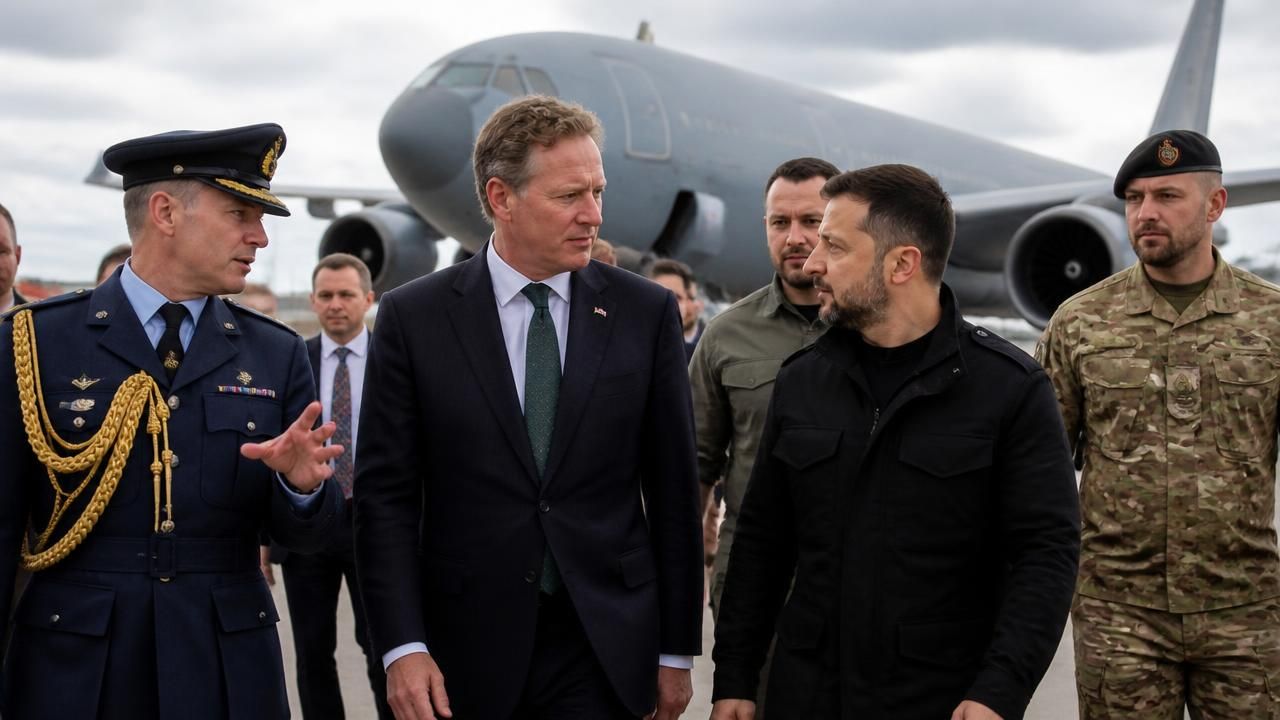
On Ukraine's Independence Day, the United Kingdom delivered a symbolic but substantive boost to Kyiv's war effort: a commitment to share the classified technology and blueprints for the Storm Shadow cruise missile, enabling Ukraine to manufacture its own long-range strike weapons. The announcement, made during a visit to Kyiv by British official Burnham, marks another step in the UK's evolving role as one of Ukraine's most assertive military backers.
A Landmark Transfer of Technology
Burnham was in the Ukrainian capital alongside other allied officials on Aug. 24, the anniversary of Ukraine's independence, traditionally a time for renewed pledges of support. The UK Ministry of Defence confirmed that MBDA, the European missile manufacturer, will release detailed technical information on the SCALP/Storm Shadow system to Ukrainian state defense enterprises. This will allow local engineers to assemble and eventually produce the missile, which is currently supplied by both the UK and France. The exact timeline for domestic production remains unclear, but the transfer of blueprints is seen as a major strategic step.
The Storm Shadow: A Battle-Tested Weapon
The Storm Shadow—known as SCALP-EG in France—is a long-range, air-launched cruise missile with a range of over 250 kilometers. It has already been supplied to Ukraine and used to strike strategic targets in occupied Crimea and elsewhere. Until now, Kyiv has had to rely on donated munitions; with blueprints, it can begin to indigenize production and reduce its dependence on foreign supplies. As one analyst told CNN, the move is not just about immediate military impact but about long-term defense industrial capacity.
Kremlin Reactions: Threats of Retaliation
Russia wasted no time reacting. Kremlin spokesman Dmitry Peskov called the British decision "clearly aggressive" and warned it would "add fuel to the fire." More alarming was a comment from a Kremlin adviser, quoted in multiple sources, suggesting that British factories involved in missile production could face attacks from "unknown sources"—an apparent threat of sabotage or direct strikes. The UK government dismissed these as "outrageous threats" and reaffirmed its commitment.
"The UK will be with Ukraine for as long as it takes," Burnham declared during the visit, standing alongside Ukrainian officials.
Will It Make a Difference?
While the symbolic value is significant, the BBC and other outlets have been quick to point out that the blueprint transfer is not a silver bullet. "These missiles are not what President Zelensky needs most," the BBC noted. Kyiv's most urgent demand is for air defense systems, particularly Patriot interceptors to counter Russian missile barrages. At a simultaneous meeting of the "coalition of the willing" in Kyiv, allies discussed the delivery of 300 Patriot missiles and the creation of a shared European anti-ballistic shield. That initiative, supported by the UK, France, and other allies, is aimed at protecting Ukraine's skies in the near term.
A Broader Coalition Effort
The visit was part of a larger gathering of defense officials from dozens of countries in Kyiv. The centerpiece of the meeting was a pledge to provide Ukraine with hundreds of interceptor missiles and to accelerate the delivery of F-16 fighters. However, the UK's missile blueprint offer stole the spotlight, signaling that Western support is moving from direct supply to the transfer of production capabilities. This shift is seen as a double-edged sword: it empowers Ukraine in the long run, but it also raises the stakes for European security as a whole.
Beyond Missiles: AI and Defense Innovation
The UK and Ukraine also signed a separate agreement on artificial intelligence cooperation in defense, a move that aligns with London's ambition to become a leader in battlefield innovation. The partnership will focus on using AI for targeting, situational awareness, and logistics—a domain where Ukraine has already shown impressive agility and creativity under fire.
Escalation and European Security
For Moscow, the move is yet another example of the West crossing a red line. Some analysts argue that the UK is deliberately escalating its stance, pointing to four indicators: the missile blueprint transfer, the new AI defense pact, expanded military aid, and the hardening rhetoric from British officials. But UK officials maintain that they are merely helping Ukraine exercise its right to self-defense. The threats of Russian attacks on British factories evoke the "grey zone" warfare that MI6 chief Blaise Metreweli recently warned about—a mix of cyberattacks, sabotage, and covert operations below the threshold of open conflict.
The Road Ahead
The immediate impact of the blueprint transfer will take months or even years to materialize. Ukraine will need to establish manufacturing facilities, train engineers, and source components. In the meantime, air defense remains the top priority. As the independence visit wrapped up, Burnham issued a stark warning: "The UK will be with Ukraine for as long as it takes." That resolve, however, will be tested by Russian retaliation—both on the battlefield and in the shadows of subversion.
Since the full-scale invasion in 2022, the UK has been one of Ukraine's most consistent supporters, providing NLAW and Javelin missiles early on, followed by Challenger 2 tanks and long-range weapons. The decision to share the Storm Shadow production technology deepens that commitment, transforming Ukraine from a recipient of arms into a potential producer of strategic weapons. Whether these blueprints arrive in time to alter the course of the war remains to be seen, but the message from both London and Kyiv is clear: Ukraine is not just receiving arms—it is being equipped to build its own future, one missile at a time.