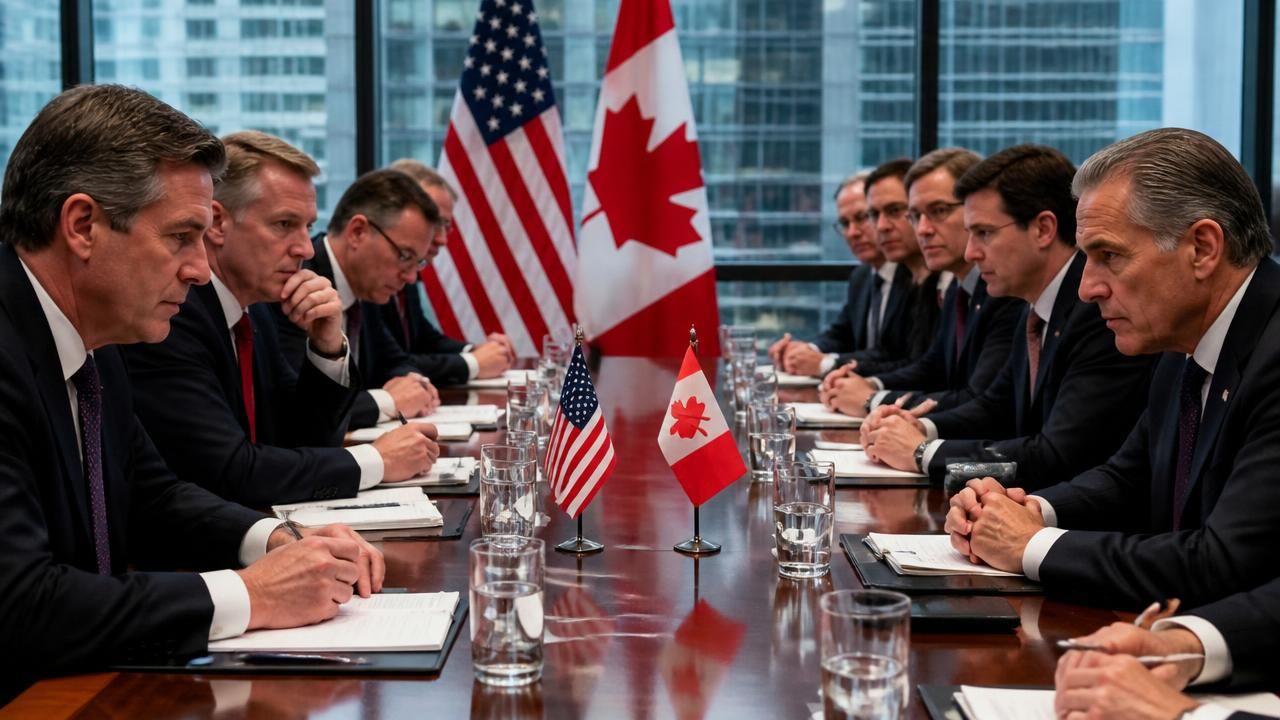
The decades-long economic partnership between the United States and Canada shattered this week as trade negotiations collapsed, ushering in an all-out trade war that has already seen 50 percent tariffs applied to billions of dollars in goods. The breakdown, described as sudden and dramatic, has sent shockwaves through markets, businesses, and the political establishment on both sides of the border.
How the Negotiations Fell Apart
According to sources familiar with the final hours of talks, the United States presented what it called the most favorable terms offered to any trading partner. But those terms came with conditions that Canadian officials viewed as "unthinkable"—demanding concessions that would effectively gut Canadian sovereignty over key industries and trade policy. Canadian Prime Minister Mark Carney, who has taken a hard line against Washington, reportedly walked away when it became clear that the U.S. offer was a take-it-or-leave-it ultimatum.
The collapse was swift. Within hours, the U.S. imposed 50 percent tariffs on Canadian steel, aluminum, and other goods worth approximately $20 billion. Canada responded immediately with retaliatory tariffs on U.S. products, targeting everything from agricultural goods to consumer items. The escalation marks a historic low in what was once one of the world's closest and most durable alliances.
"They asked too much," a senior Canadian official said, describing the U.S. demands as a fundamental assault on Canada's economic autonomy.
Trump Threatens Auto Tariffs
The conflict escalated further when former President Donald Trump—a central figure in the tariff push—threatened to impose additional duties on Canadian-made automobiles. Speaking to reporters, Trump warned that if Canada continued to retaliate, the U.S. would hit its auto sector with tariffs as high as 100 percent. The auto industry, which relies on deeply integrated cross-border supply chains, would face immediate disruption.
Carney, undeterred, vowed to respond. In a nationally televised address, he said Canada would not bow to threats. "We will defend Canadian workers and Canadian families," he declared. "We did not ask for this fight, but we will not back down."
Political Fallout: Ford's F-Bomb and Republican Rebuke
The escalating rhetoric has not been confined to trade. Ontario Premier Doug Ford, whose province is the heart of Canada's manufacturing sector, gave a blunt assessment of the U.S. President: "He can kiss my ass," Ford said, capturing the frustration of many Canadians. Ford has called for retaliatory measures targeting U.S. states that rely heavily on Canadian trade.
Surprisingly, Trump's tariffs are also drawing fire from within his own party. A growing number of Republican lawmakers and governors are turning against the Canadian tariffs, warning that businesses in their districts are being forced to "pass on" the higher costs to consumers. Several Republicans have introduced legislation to block the tariffs, citing the economic pain they are causing in American communities.
Economic Impact: Prices, Dollar, and Consumers
The immediate consequences are being felt at the cash register and in financial markets. The Canadian dollar slid sharply against the U.S. dollar as investors fled to safety. Analysts warn that prices for a wide range of goods—including groceries, electronics, and construction materials—will rise on both sides of the border.
In British Columbia, grocery shoppers are heeding the call to "buy local" as tariffs threaten to inflate the cost of imported produce. Similar movements are emerging across Canada as consumers reassess their purchasing habits.
- Steel and aluminum: Tariffs will raise costs for construction, automotive, and manufacturing sectors.
- Agriculture: U.S. farmers lose access to a key export market, while Canadian consumers pay more for U.S. goods.
- Auto industry: Potential 50% or higher tariffs would devastate cross-border supply chains.
- Consumer goods: Expect price increases on everything from washing machines to maple syrup.
Experts Weigh In: Can Canada Survive?
The Walrus magazine convened seven economists and trade experts to assess Canada's options in the face of Trump's trade war. Their consensus: Canada is in a difficult position, but not defenseless. Key recommendations include diversifying trade partners, investing in domestic manufacturing, and using strategic counter-tariffs to pressure U.S. industries.
One expert noted that Canada holds significant leverage through its energy exports and critical minerals. Another pointed out that the U.S. tariffs violate the USMCA trade agreement, giving Canada grounds for legal challenge.
However, all agreed that the short-term pain will be substantial. The trade war is expected to shave percentage points off both nations' GDP and could tip Canada into a mild recession.
Framing the Story: Media Perspectives
Coverage of the crisis reflects deep divisions in how the story is being told. The New York Times portrays the collapse as a result of excessive U.S. demands, describing the Canadian concessions requested as "unthinkable." The BBC emphasizes the personal confrontation between Trump and Carney. Meanwhile, conservative outlets focus on the economic disruption and Republican backlash, while Canadian media highlights national unity and resistance to bullying.
The one undeniable fact is that the U.S.-Canada relationship—often called the world's longest undefended border—is now a battleground. The rupture has profound implications for geopolitics, trade policy, and the daily lives of millions of people.
What Happens Next?
With negotiations stalled, the immediate outlook is grim. Both sides are preparing for a protracted trade war. Canada may impose further tariffs on U.S. goods, while Washington could expand its duties to new sectors. There is also the possibility of third-party mediation or a court challenge under USMCA.
Yet, as several analysts note, neither country can afford a permanent rupture. The two economies are deeply intertwined, and the longer the trade war lasts, the more damage it inflicts on both. The question is whether political pride will allow a path back to the negotiating table—or whether the world's most successful trade partnership is gone for good.