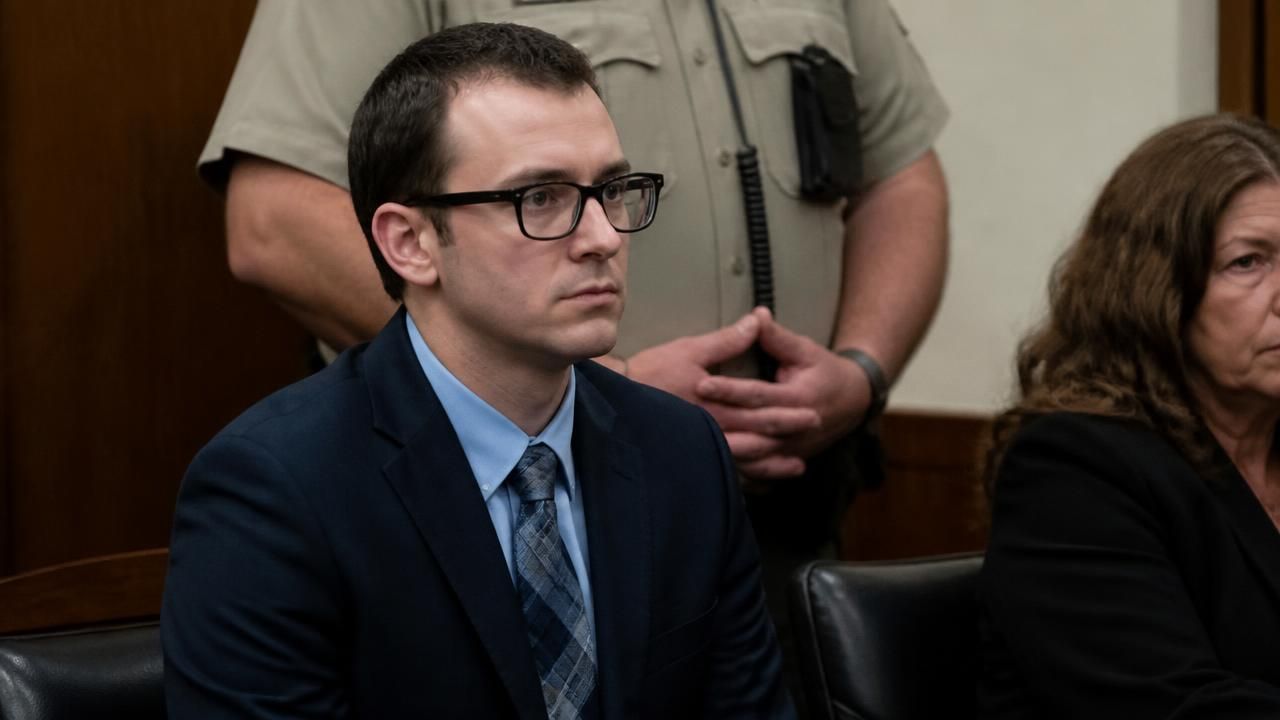
Sean Grayson, the former Illinois sheriff’s deputy whose shooting of Sonya Massey became a national flashpoint over police use of force, has died in prison at age 32, his lawyer confirmed on Sunday. Grayson was six months into a 20-year sentence for the July 2023 killing of Massey, a 36-year-old Black woman, in her Springfield, Illinois, home.
His death follows a reported cancer diagnosis and comes just days after a court or prison board denied his request for early medical release, according to Newsday. The exact cause of death has not yet been released, but a family source told MSN that Grayson had been battling cancer.
The Fatal Encounter
Massey called 911 on July 6, 2023, to report a possible intruder outside her home. Grayson and another deputy responded. Body-camera footage released later showed Grayson ordering Massey to move a pot of boiling water from her stove. When she hesitated, Grayson yelled at her, and as she moved back, he shot her twice, striking her in the face. He then whistled and told her, “I’m not going to get burned.” The second deputy did not fire.
Massey, who was unarmed, was pronounced dead at the scene. Her family and community leaders immediately condemned the shooting as another example of excessive force by police, particularly against Black women. The case drew national attention, with protests erupting in Springfield and across the country.
Trial and Sentencing
Grayson was fired from the Sangamon County Sheriff’s Department in the days after the shooting and charged with multiple counts, including first-degree murder. In October 2024, a jury convicted him on all counts, and he was sentenced to 20 years in prison. The verdict was widely hailed by Massey’s family and activists as a rare, and overdue, instance of police accountability.
During the trial, prosecutors argued that Grayson acted with reckless disregard for life. Defense attorneys, however, claimed he acted in a panic and was legally justified in fearing for his safety. The jury rejected that defense. Massey’s son and mother testified about the devastating impact of her death, with her mother telling the court, “She was a beautiful soul taken too soon.”
Death in Prison and Medical Release Denial
Grayson’s incarceration lasted barely six months. On Sunday, his attorney, John S. Ryan, said that Grayson had died in the Illinois Department of Corrections’ custody. Details of the death were still pending, but multiple sources confirmed that Grayson had been diagnosed with cancer and that his health deteriorated rapidly.
Newsday reported that Grayson had recently filed a request for medical release, arguing that his illness had become too severe to warrant continued imprisonment. That request was denied. The decision highlights a broader issue within the U.S. prison system, where terminally ill inmates often struggle to obtain compassionate release, even when they pose no public safety risk. Criminal justice experts point out that such denials are not uncommon, often due to stringent legal standards or a reluctance to appear lenient.
“This is a tragic end to a deeply troubling case,” said Darren D. Moore, a law professor at the University of Illinois. “But it also raises serious questions about how we treat the aging and the sick inside our prisons.”
Reactions and Broader Impact
Massey’s family and their advocates have had mixed reactions to Grayson’s death. In a statement, the family’s attorney, Lee J. Gibson, said that while they never celebrated a human life ending, they hoped this moment would “dampen the flames of rage” and allow the family to continue their crusade for police reform. “We have always sought justice, not vengeance,” Gibson said. “This brings a complicated closure, but the fight for change continues.”
Sonya Massey’s name has become part of the larger national reckoning on police violence, alongside George Floyd, Breonna Taylor, and others. Her death prompted calls for the so-called “Sonya Massey Act,” a proposed Illinois law that would mandate stricter use-of-force training and require officers to intervene when a colleague is acting improperly. Although the bill was not passed, the memory of Massey remains a rallying call.
In Springfield, community organizers have continued to honor her legacy. A mural at the site where she was killed remains a gathering place for vigils. As one local activist put it: “Sean Grayson’s life ended, but Sonya’s story did not. It will keep shaping us until we fix this system.”
What Comes Next
The Illinois Department of Corrections will conduct an internal investigation into the circumstances of Grayson’s death, as it does with all inmate deaths. The coroner will release an official cause of death, likely within the next few weeks.
Meanwhile, the case underscores a broader, uncomfortable truth: accountability in the justice system is sometimes measured in years, but life—of the victim and the perpetrator—is measured by different clocks. Grayson’s death closes a chapter, but the questions he left behind remain.
For Massey’s family, the next chapter is focused on continuing the push for legislative change, ensuring that her name is not just attached to a hashtag, but to concrete reforms. As her mother once said, “I don’t want Sonya to be a number. I want her to be a reason.”