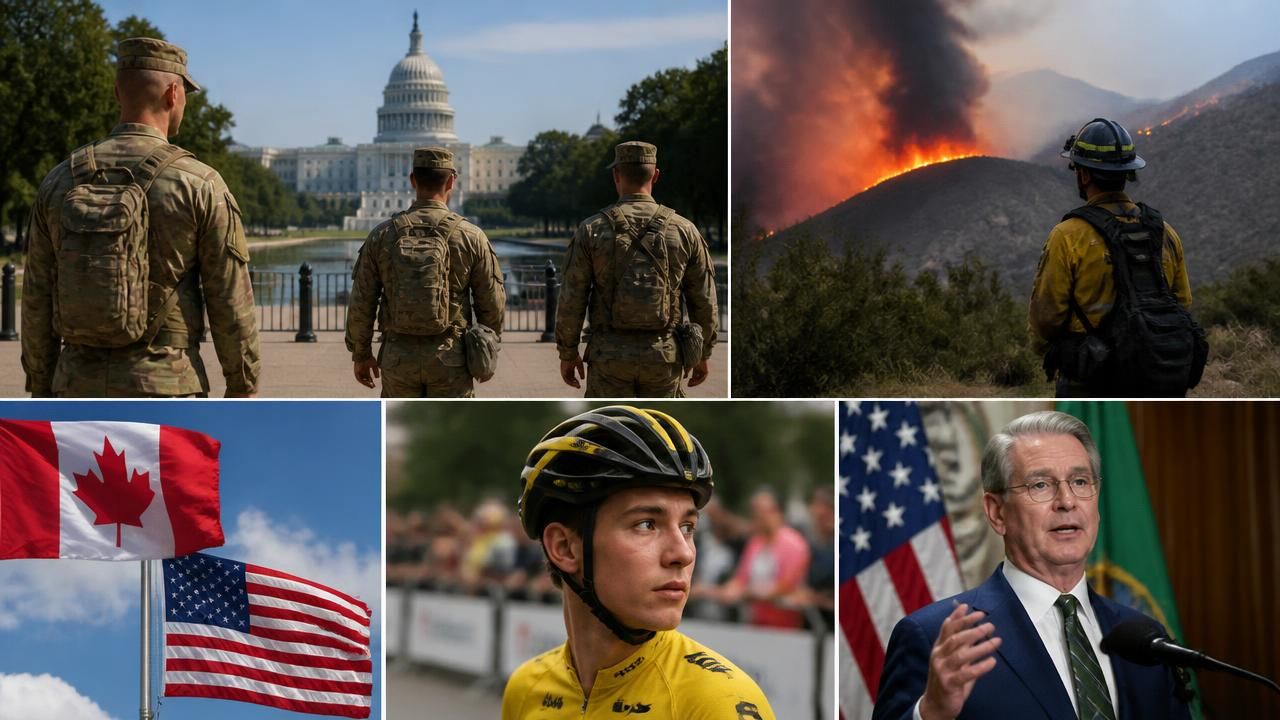
From the corridors of power in Washington to the wildfire-stricken hills of Nevada, today's news cycle captures a nation in flux. NPR and its member stations across the country have reported on a wide array of critical stories—ranging from escalating trade tensions with Canada and new sanctions on Iran, to the human toll of a D.C. deployment and the tragic death of a young cycling star. This briefing synthesizes these reports into a single snapshot of the day's most pressing developments.
National Guard Members Break Silence on D.C. Deployment
In candid interviews with NPR, three National Guard members who served months on the ongoing mission in Washington, D.C., have spoken out about their experiences. The deployment, now entering its second year under President Trump's orders, has been a subject of intense debate. The guardsmen described long hours, uncertain roles, and the emotional strain of being stationed in the nation's capital during a period of political unrest. Their accounts offer a rare, behind-the-scenes look at a mission that has largely remained opaque to the public.
"We weren't sure why we were there half the time," one guardsman told NPR. "But we followed orders."
Economic Pressure Points: Iran Sanctions and Canadian Retaliation
Treasury Secretary Scott Bessent is set to unveil new economic sanctions on Iran, signaling a continued hardline approach from the administration. The move, reported by wglt.org, comes alongside broader U.S. efforts to squeeze Tehran's oil revenues. Meanwhile, trade relations with Canada have hit a boiling point. Canadian Prime Minister Mark Carney declared that his nation is "at war" with the U.S. as Ottawa readies retaliatory tariffs against American goods. The escalating rhetoric marks a significant deterioration in a long-standing economic partnership, with potential consequences for consumers and industries on both sides of the border.
The $40 Trillion Debt Milestone
Amid these international financial maneuvers, the U.S. federal debt has crossed $40 trillion for the first time. Analysts point to a combination of tax cuts, increased spending, and economic slowdowns as drivers. The milestone raises urgent questions about fiscal sustainability, interest payments, and the long-term health of the American economy, with experts calling for difficult choices in the years ahead.
Wildfire Forces Mass Evacuations in Reno
Thousands of residents were forced to evacuate parts of Reno, Nevada, as a fast-moving wildfire raged through the region. Dry conditions and high winds fueled the blaze, which destroyed homes and threatened critical infrastructure. Emergency crews worked through the night to contain the fire, but officials warned that the danger is far from over. Climate scientists note that such intense wildfires are becoming more frequent and severe, a trend linked to rising global temperatures.
Technology and Surveillance: ICE Facial Recognition App
Investigative reports reveal that local police departments in several states have access to an ICE facial recognition application, raising privacy and civil liberties concerns. The app allows officers to identify individuals by comparing photos against databases that may include immigration records. Critics argue this blurs the line between local law enforcement and federal immigration enforcement, potentially eroding trust in immigrant communities. Supporters counter that the tool is a valuable asset for solving crimes and enhancing public safety.
Justice and Tragedy: Memphis Shooting and Cyclist Death
In Memphis, attorneys for a civilian shot by a federal agent have released bodycam footage that they say shows the use of force was "unjustified." The incident has reignited debates over accountability and the conduct of federal law enforcement. In a separate, heartbreaking story, top American cyclist Magnus White, just 17 years old, died after being struck by a car while training. White, a rising star in the sport, was remembered by teammates and fans for his exceptional talent and infectious spirit. The accident underscores ongoing concerns about cyclist safety on American roads.
Inside the White House: Susie Wiles Speaks
In an exclusive interview with Vanity Fair, White House Chief of Staff Susie Wiles offered a candid assessment of President Trump's first year in his second term. She discussed the administration's priorities, the dynamics of internal power, and the challenges of governing in a deeply divided political climate. Wiles also spoke about Vice President JD Vance and the so-called "junkyard dogs"—a group of aggressive political operatives. The interview provides a rare glimpse into the inner workings of the Trump White House.
From Sports to Science: Health and Community News
In health news, new research indicates that high-intensity sprints can trigger molecular changes in the bloodstream, potentially offering benefits beyond cardiovascular fitness. The findings, reported by oceanstatemedia.org, suggest that brief bursts of exercise may positively influence gene expression and metabolic pathways. In a lighter note, Bayou Jamb Media Day 2026 took place at the end of the article, offering a preview of the upcoming high school football season in Louisiana. Coaches and players gathered to discuss their teams' prospects, highlighting the enduring importance of local sports in community life.
Echoes of the Past: McCain's Warning
Finally, a report from Missouri resurrects a prescient warning from the late Senator John McCain, who argued that failure to pass meaningful legislation would have severe economic consequences. Though the original context was the 2017 health care debate, his words resonate today as lawmakers grapple with an ever-growing federal debt and a polarized political landscape. McCain's call for bipartisan compromise serves as a reminder of what is at stake when governance fails.
Together, these stories from NPR and member stations paint a portrait of a nation facing interconnected challenges: economic uncertainty, environmental crises, questions of surveillance and justice, and the ever-present human stories that lie beneath the headlines. As the day unfolds, these developments will continue to shape the national conversation.