Volcanoes have always been agents of destruction and creation, but today they are also laboratories for understanding our planet and others. From the first globally documented catastrophe at Krakatoa in 1883 to the record-breaking eruptions of Kīlauea and the mysterious origins of Mount Etna, volcanic science is experiencing a golden age of discovery. This article synthesizes reporting from dozens of outlets to capture the latest findings, historical context, and human stories behind the world's most dynamic geological phenomena.
Krakatoa: The Birth of Modern Volcanology
As Ars Technica recounts, the modern science of volcanology was forged in the ash and tsunami of August 27, 1883, when Krakatoa erupted between Java and Sumatra. Victorian-era telegraphs carried the first near-real-time disaster reports: “Terrific detonations from Krakatau,” followed by “Stones falling. Village near Anjer washed away.” More than 36,000 people died, mostly in tsunamis, and two islands were obliterated. That event demonstrated how a single volcano could influence global climate and agriculture, laying the groundwork for everything from volcano monitoring to climate science. It remains the benchmark against which all subsequent eruptions are measured.
Record-Breaking Eruptions: Kīlauea and Iceland
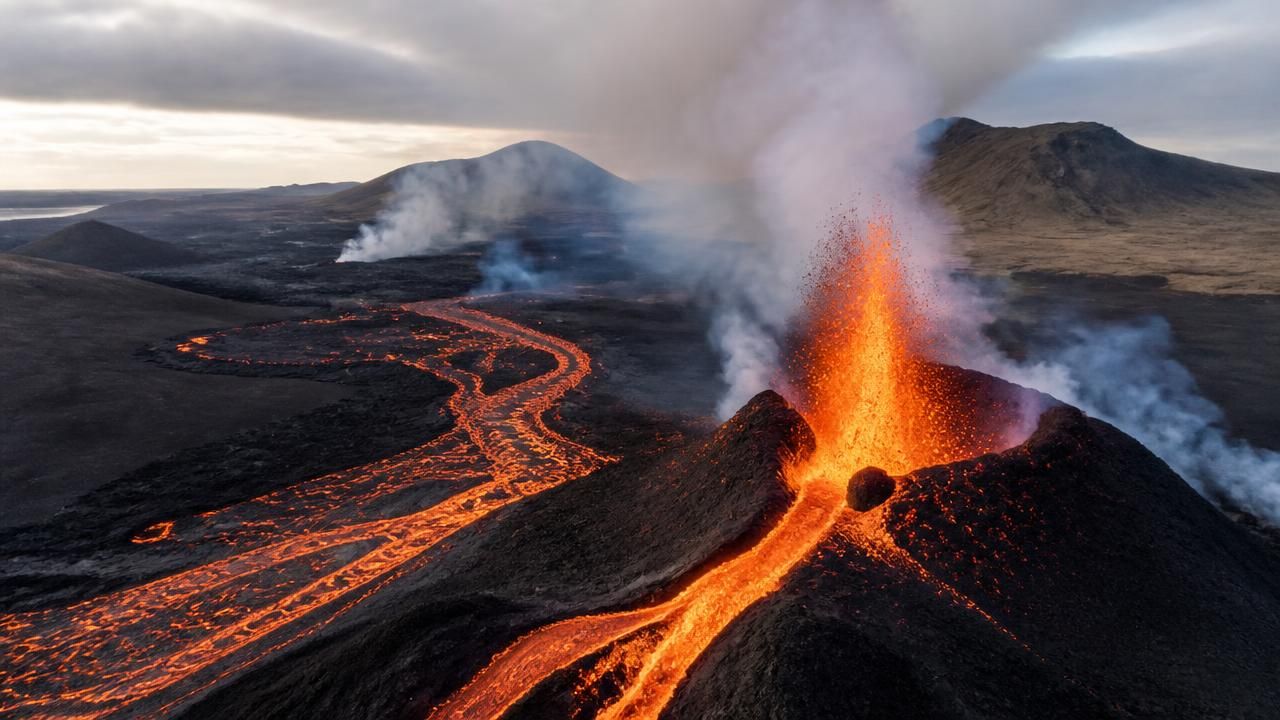
Fast forward to the present, and Kīlauea in Hawaiʻi has just erupted for a record 48th time, according to KITV and TravelPirates. This repeated activity gives scientists a rare window into volcano behavior, allowing them to track magma pathways and predict future events with unprecedented precision. Meanwhile, Iceland—a country built on volcanic activity—has seen renewed eruptions; National Geographic warns that the latest may be “the most dangerous in recent history” as lava flows threaten infrastructure and communities. Russia's Klyuchevskoy volcano, dormant for 600 years, also erupted recently, while Indonesia's volcanoes continue to emit billions of tonnes of CO2, reminding us that volcanic degassing is a major climate factor. These events highlight the volatile nature of the Pacific Ring of Fire and the North Atlantic.
Mount Etna's Secret Origin
One of Europe's most iconic and active volcanoes, Mount Etna, has long puzzled geologists. ScienceDaily and Discover Magazine report that Etna may stem from a rare magma mechanism, not the usual subduction-zone process. Futura-Sciences says scientists are “stunned” by the discovery, which could rewrite textbooks about how volcanoes form. This finding is part of a broader reevaluation of Earth's mantle behavior—including a study of Easter Island's volcanic history, which suggests the mantle is far more heterogeneous than previously assumed. Even the Giant's Causeway in Ireland, as Discover Magazine notes, had its volcanic history shortened by 8 million years, overturning long-held beliefs about its formation.
Ancient Super-Eruptions and Hidden History
On a longer timescale, researchers from the University of Hawaiʻi have identified the source of a 120-million-year-old “super-eruption” that transformed an entire oceanic plate. ScienceDaily also highlights Earth's biggest volcanic event, which rewired the planet's geology. Even older volcanic mysteries abound: National Geographic explores a billion-year-old enigma beneath Lake Superior, and Smithsonian Magazine notes how glaciers, geysers, and volcanoes created iconic American rocks. In Germany's Eifel region, visitors can explore volcanic history and the world's largest basalt mine, while even Norway and Louisiana hide surprising volcanic pasts, and the UK has dozens of dead volcanoes at tourist hotspots. Mount St. Helens remains a poignant reminder of the power of these forces, now preserved as a national volcanic monument.
Case Studies in Volcanic Impact
- Costa Rica's Arenal volcano erupted in 1968, transforming the region and building a tourism industry, as Much Better Adventures details.
- Mount Vesuvius' ash cloud may have turned a victim's brain into glass, a unique preservation discovered by researchers and reported by National Geographic.
- In New England, residents wonder about local volcano risk after Mount Etna's eruption, though the region's volcanic history is ancient, explains Seacoastonline.
- The 2022 Tonga eruption destroyed an island and created many mysteries, with scientists still piecing together its effects, including its implications for Martian volcanism.
Beyond Earth: Moon and Mars Volcanoes
The study of volcanoes extends far beyond our planet. Ancient moon volcanoes produced tiny glass beads, as Yahoo News and Mashable report—a discovery that sheds light on the Moon's volcanic past. On Mars, National Geographic suggests that Olympus Mons, the largest volcano in the solar system, may have once been an island in a vast ocean. The Tonga eruption of 2022, which destroyed an island and created many mysteries, has also taught scientists about Mars' history, according to BBC Science Focus, because the explosion's dynamics mimic ancient Martian eruptions. Daily Galaxy adds that new findings about Mars' volcanoes are continuously reshaping our understanding of the Red Planet's geologic past.
Human Stories: Art, Records, and Rebuilding
Volcanoes also weave through human culture. BBC.com explores how historic eruptions are encoded in art, from Romantic paintings of Vesuvius to Japanese woodblocks. Personal records continue to be set: a Made in Chelsea star ran the first-ever marathon over a volcano, and a father-and-sons team ascended a volcano on motorcycles to a record altitude, according to Guinness World Records and The Independent. And after the 2021 Nyiragongo eruption destroyed parts of Goma, the Natural History Museum reports on the incredible story of outrunning the world's fastest-flowing lava and rebuilding a city. These narratives underscore the resilience of people living in volcanic shadows.
Monitoring Our Restless Planet
Keeping track of all this activity is the Smithsonian's Global Volcanism Program, which has published weekly eruption reports for 25 years. As Smithsonian Magazine explains, their work is essential for aviation, disaster preparedness, and understanding volcanic hazards. The program monitors around 1,500 potentially active volcanoes worldwide, using satellite imagery, seismic data, and a global network of observers. The 12 biggest eruptions in recorded history, compiled by Live Science, offer a stark reminder of the scale of these events, while Britannica's list of major volcanoes provides a useful reference for scientists and travelers alike.
“Where once Mount Krakatau stood the sea now plays.” — Victorian-era telegram, quoted by Ars Technica
Today, that telegram's message resonates even more deeply. Volcanoes are not just geological features; they are engines of planetary change and windows into the deep Earth. From Kīlauea's repeated eruptions to the ancient peaks of Mars, each discovery brings us closer to understanding the forces that shape our world—and others. As research continues, the collaboration between observatories, universities, and global networks ensures that the next eruption, wherever it occurs, will be met with ever greater foresight and resilience.