In a race against time, NASA has launched an emergency mission to rescue its Swift Observatory, a gamma-ray burst hunter that has been in orbit since 2004. The spacecraft, built by startup Katalyst Space Technologies, lifted off Friday with the goal of intercepting the drifting telescope and boosting its altitude before it burns up in Earth's atmosphere—potentially as soon as this year.
A Telescope in Peril
The Swift Observatory, designed to study gamma-ray bursts from distant cosmic explosions, has been a workhorse for astrophysics. But recent solar storms have thickened the upper atmosphere, increasing drag on the satellite and causing its orbit to decay faster than expected. Swift currently circles Earth at an altitude of about 224 miles (360 kilometers), down from its original operational orbit. Without intervention, it could re-enter and disintegrate within months.
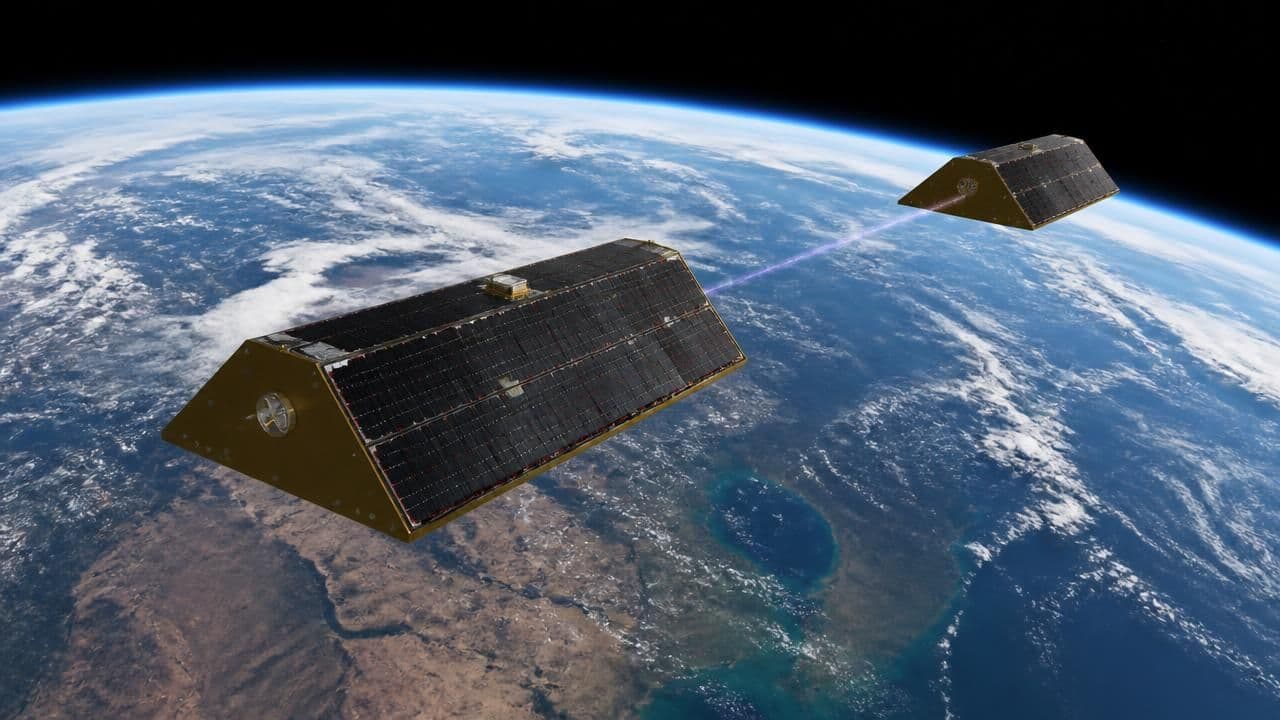
NASA's solution: a small, three-armed spacecraft called Link, developed by Katalyst Space Technologies. Link launched as a secondary payload on a SpaceX Falcon 9 rocket from Cape Canaveral, Florida. Its mission is to rendezvous with Swift, latch onto it, and fire its thrusters to raise the observatory's orbit by roughly 150 miles (240 kilometers)—back to a safe altitude.
Last-Minute Launch Drama
The rescue mission faced a nail-biting delay just before liftoff. Reports from multiple outlets, including halifax.citynews.ca and bastillepost.com, noted a last-minute problem that briefly held up the launch. Engineers scrambled to resolve the issue, but the rocket eventually lifted off successfully. The exact nature of the problem was not disclosed, but it highlights the high-stakes nature of orbital rescue operations.
Katalyst Space Technologies, a relatively new player in the space industry, specializes in satellite servicing. CEO Dr. Elena Voss said in a statement:
'This mission demonstrates that we can extend the life of valuable assets in space, preventing them from becoming debris. Swift is a scientific treasure, and we're proud to help save it.'
How the Rescue Will Work
Link's design is unique: it uses three robotic arms to grapple Swift, which has no propulsion system of its own. The maneuver is complex, requiring precise alignment and a gentle touch to avoid damaging the aging telescope. Once attached, Link will fire its electric propulsion system over several weeks to gradually raise Swift's orbit.
This is not the first time NASA has attempted to salvage a satellite. In 2021, the agency's OSIRIS-REx mission briefly considered a similar boost for the Hubble Space Telescope, but that plan was shelved. Swift's rescue, however, is more urgent because of its rapid orbital decay.
Implications for Space Debris
The mission also has broader implications for space sustainability. With thousands of satellites in low Earth orbit, the ability to boost or de-orbit spacecraft could reduce the growing problem of space debris. Experts have long called for active debris removal technologies, and Katalyst's Link could serve as a prototype for future servicing missions.
Dr. John Matthews, an astrophysicist at the University of Cambridge, commented:
'Swift's rescue is a proof of concept. If we can save a telescope that's been up there for 20 years, we can apply the same technology to newer satellites that run out of fuel or suffer malfunctions.'
A Conflicting Narrative
While most sources celebrated the launch, a separate story from people.com reported a tragic space mishap: a capsule carrying the ashes of over 160 people crashed into the Pacific Ocean after a failed re-entry. That incident, unrelated to Swift's rescue, underscores the risks of space operations. Some outlets initially confused the two events, but NASA confirmed that Swift's mission is proceeding as planned.
What's Next
Link will take several days to reach Swift's orbit. If successful, the telescope could continue its scientific mission for another decade. Meanwhile, NASA is monitoring the situation closely, with backup plans in case the rendezvous fails.
For now, the world watches as a small startup attempts what was once thought impossible: giving an old satellite a second life.