In 2021, a micro-budget horror film premiered at the Sundance Film Festival and instantly became one of the most talked-about titles of the year. We're All Going to the World's Fair, the debut feature from writer-director Jane Schoenbrun, follows a lonely teenager as she takes part in an internet challenge that blurs the line between reality and performance. The film was praised for its intimate, unsettling portrayal of online identity, and it has only grown in stature since. Now, with Schoenbrun's acclaimed follow-up I Saw the TV Glow playing in theaters and a major Netflix adaptation on the horizon, audiences are rediscovering the film that started it all on HBO Max, where it has been streaming since 2022.
An Internet Horror Story for the Lonely Generation
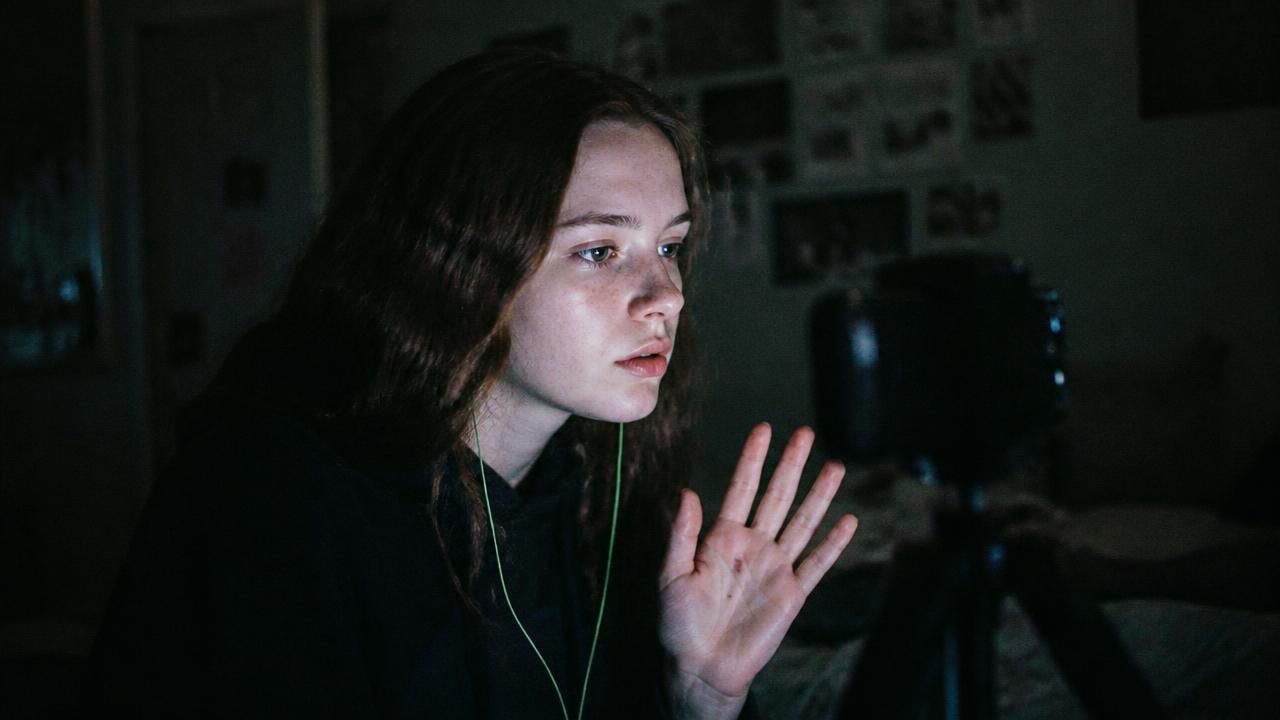
The film centers on Casey (a breakout performance by Anna Cobb), a teenager home alone in an anonymous suburban town. Late one night, she films herself participating in the "World's Fair Challenge," a creepy online ritual involving a repeated mantra, a drop of blood, and a video that allegedly changes those who complete it. What follows is not a conventional jumpscare-filled horror movie but a slow, psychological descent into isolation. Casey spends most of the film alone in her room, interacting with strangers onscreen, and her growing unease mirrors the audience's own disorientation.
As The Verge's review noted, the film deliberately weaponizes horror tropes—creepy mantras, bloodletting, mysterious videos—but delivers them through "this young girl alone in her room who just stares directly in... the camera." It is a speedrun of familiar internet-age anxieties, filtered through a deeply personal lens. Hyperallergic's coverage asked "Do you dare take the World's Fair Challenge?"—a question that gets at the film's central tension between the desire to belong online and the fear of losing oneself to it.
More Than a Screen Life Movie
While We're All Going to the World's Fair is often grouped with "screenlife" horror, critics have been quick to point out that its concerns go far beyond the surface. Nylon declared the film "about way more than the internet," emphasizing its themes of queer identity, coming of age, and the profound loneliness of contemporary adolescence. IndieWire's review described it as "an intimate exploration of modern internet culture," while Variety praised it as "provocative but sensitive drama" that lets us into a teenager's online world without judgment.
Thrillist traced the film's roots in the deep, dark corners of the internet—creepypasta, ARGs, and so-called "challenges" that circulate among teens. Schoenbrun, who is non-binary, has spoken about how the film drew from their own experiences growing up online, where fictional personas could feel more real than everyday life. The result is a horror movie that functions as a metaphor for gender dysphoria, dissociation, and the search for identity in digital spaces.
"It's a movie about feeling like you're disappearing, and finding a community in that feeling." — a critical sentiment echoed across multiple reviews
Critical Acclaim and Festival Success
The film premiered at the 2021 Sundance Film Festival, where it was one of the breakout hits of the virtual edition. The Ringer highlighted it among the festival's best, and it quickly landed distribution with HBO Max and Utopia, as Deadline reported at the time. The deal was seen as a win for indie horror and for Schoenbrun, who was immediately positioned as a bold new voice in genre filmmaking.
Since then, the film has appeared on numerous critics' lists, including IndieWire's roundups of the scariest internet movies and the best films of the 2020s. It has also become a touchstone in discussions of queer horror, with IndieWire including it in a list of 35 queer and homoerotic horror films, from Psycho to I Saw the TV Glow. The film's influence can be felt across a wave of internet-era horror that followed.
The Rise of Jane Schoenbrun
We're All Going to the World's Fair was always more than a calling card—it was a thesis statement. Schoenbrun's follow-up, I Saw the TV Glow, premiered to rapturous reviews and has been called "a one-of-a-kind masterpiece" by Bloody Disgusting. That film, which stars Justice Smith and Brigette Lundy-Paine, explores fandom, memory, and identity through the lens of a mysterious TV show, and it cemented Schoenbrun's reputation as a chronicler of queer Millennial and Gen Z experience. The Verge called it "a tribute to the transformative power of fandom," and Consequence named Schoenbrun Filmmaker of the Year.
Even before I Saw the TV Glow reached theaters, the momentum was building. In a competitive situation, Netflix tapped Schoenbrun to adapt Charles Burns' graphic novel Black Hole, a disturbing coming-of-age horror story about a sexually transmitted infection that causes bizarre mutations. Dread Central, which first reported the news, noted that Schoenbrun was the perfect choice for the material, given their ability to blend teen angst with genuine unease.
Why It Matters Now
Streaming on HBO Max, We're All Going to the World's Fair has found a generation of new viewers who recognize its vision of the internet as both a refuge and a trap. It is a film that feels even more relevant now than it did in 2021, as our lives become increasingly mediated by screens. With Schoenbrun's star on the rise and a Netflix adaptation that could introduce their sensibility to an even wider audience, the World's Fair challenge is far from over. For those who have not yet taken the dare, the film is waiting—and it may leave you checking your reflection a little more closely.