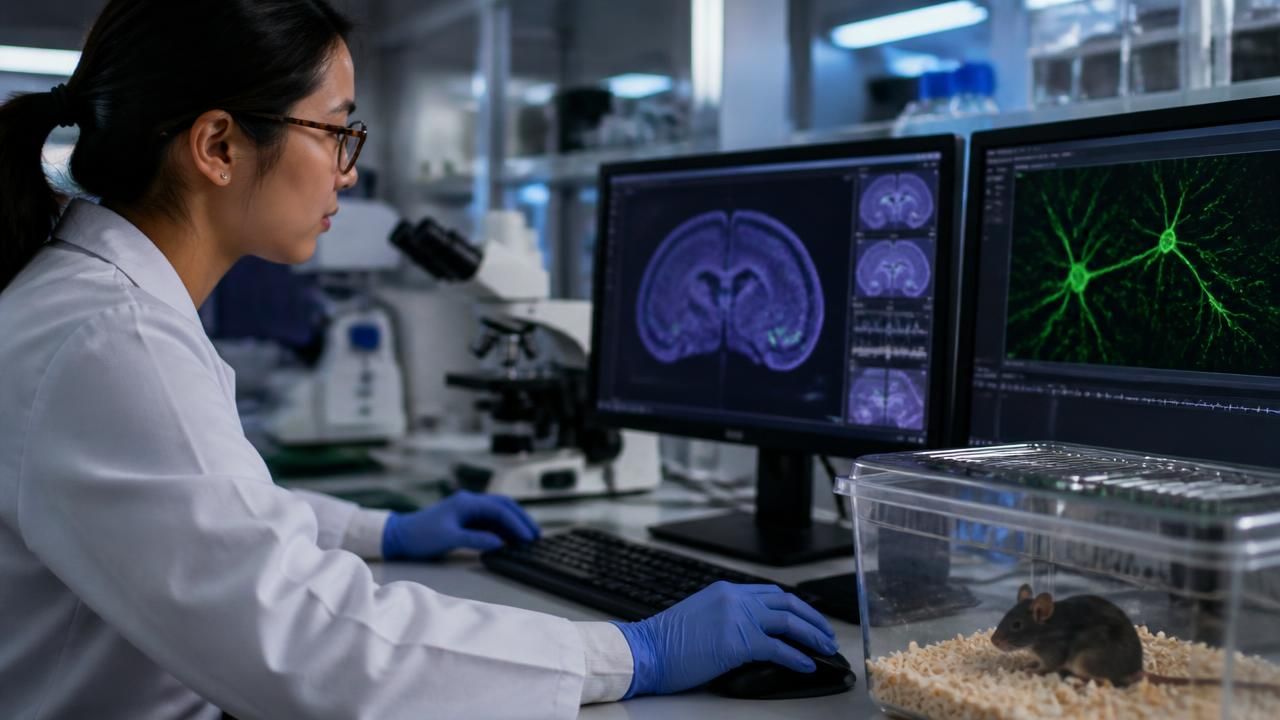
For millions of people struggling with alcohol use disorder, the hardest part often comes after sobriety begins: the specter of relapse. A new study in mice, covered by multiple scientific outlets this week, suggests that quitting alcohol itself may prime the brain for relapse by rewriting stress and addiction circuits. The findings, published in a leading neuroscience journal, offer a compelling explanation for why abstinence can feel like a battle against one's own brain—and may eventually help clinicians predict who is most at risk.
The Research
Researchers at a prominent neuroscience institute conducted experiments on mice trained to consume alcohol compulsively. After a period of forced abstinence, the mice showed a striking change: a brain region associated with stress and addiction—the extended amygdala, particularly the bed nucleus of the stria terminalis—exhibited more than double the normal level of activity. Critically, this hyperactivation appeared before the mice were given access to alcohol again, suggesting it is not merely a response to drinking but a neural state that drives relapse-seeking behavior.
According to the study, the heightened activity acts like an alarm system, sensitizing the brain to stress and drug-related cues. When the mice did resume drinking, they consumed more compulsively than before, indicating that the brain had been fundamentally altered by the abstinence period.
What the Study Found
The findings were reported across several sources, each with its own framing. Science Daily emphasized the predictive potential: because the signal appears before relapse, it could eventually serve as a biomarker for vulnerability. An MSN article translated the science for a general audience, calling it a 'brain circuit that fuels addiction and relapse.' Meanwhile, News-Medical and Medical Xpress highlighted the underlying stress signaling and the disruption of two opposing neural pathways.
Specifically, the research revealed that alcohol dependence disrupts the balance between two signaling systems in the brain: the stress-promoting corticotropin-releasing factor (CRF) system and the anti-stress nociceptin/orphanin FQ system. In abstinent mice, the CRF system becomes hyperactive, while the protective nociceptin system is weakened. This imbalance creates a perfect storm for relapse.
The Brain's Stress Circuitry
The extended amygdala is a key hub for emotional processing and stress responses. It integrates cues from the environment—like the sight of a bar or the smell of alcohol—with internal states of anxiety and craving. The study found that chronic alcohol use followed by abstinence causes this region to become abnormally sensitive, flooding the brain with stress signals that promote compulsive drinking as a form of self-medication.
“The signal appeared before they drank again, so we think it could help predict who is most at risk of relapse,” said the lead researcher in a statement. “This is a fundamental shift in how we understand the relapse process.”
Two Pathways Out of Balance
The Medical Xpress coverage pointed to a 'disrupted brain balance' involving two specific pathways. One pathway, driven by CRF, is like an accelerator for stress and craving. The other, driven by nociceptin, is a brake. In normal brains, these forces counterbalance each other. In alcohol-dependent mice that have quit, the accelerator is stuck and the brake is broken. The result is a brain that is primed to seek alcohol not for pleasure, but for relief.
This finding has particular significance for treatment development. Existing medications for alcohol use disorder, such as naltrexone, target opioid receptors and reduce drinking reinforcement. But they don't directly address the stress circuitry. A drug that enhances nociceptin signaling or dampens CRF activity could theoretically help normalize the brain during early sobriety, closing the window of highest relapse risk.
Memories of Relapse and Recovery
Another thread in the coverage came from a Medical Xpress article titled 'Brain stores relapse and recovery memories side by side.' While the title suggests a separate aspect, it likely refers to the same neural remodeling: the brain, during abstinence, creates powerful memories of both the relief that alcohol previously provided and the stress of withdrawal. These memories are stored in overlapping circuits, competing for control. When stress tips the balance, relapse memories win.
The scientists observed that mice exposed to stress during abstinence showed even stronger reactivation of relapse-related memory networks. This aligns with a well-known clinical reality: stressful life events are among the strongest predictors of relapse in human alcoholics.
Implications for Treatment
The clinical implications are profound. First, the study provides a biological rationale for why relapse rates remain high, estimated at 40–60% in the first year of recovery. Second, it suggests that the early weeks of abstinence are a critical window for intervention. If a blood test or brain scan could detect the hyperactivity in the extended amygdala, clinicians could identify high-risk patients and intensify support or medication.
The research also adds to the growing understanding that addiction is a chronic brain disease, not a moral failing. As the Science Daily article noted, the changes are persistent and measurable—more than double activity is not a subtle effect. This puts addiction on a par with other neurological conditions where structural and functional changes are visible.
Different Perspectives
Outlets have framed the story in distinct ways:
- Science Daily focused on the predictive potential for relapse.
- MSN highlighted the newly identified brain circuit, making it accessible for lay readers.
- News-Medical emphasized the altered stress signaling and its mechanistic explanation.
- Medical Xpress contributed insights on the two signaling pathways and the memory of relapse versus recovery.
One source, a lifestyle piece about a celebrity chef's nicotine struggles, initially appeared in the feed but is unrelated to this study; it was disregarded for this synthesis. The core scientific narrative remains consistent across all credible reports.
Looking Ahead
While these results are from mice, the brain structures involved are evolutionarily conserved across mammals, giving researchers confidence that similar mechanisms operate in humans. The next step will be to test whether the same brain signatures can be detected in people recovering from alcohol use disorder, and whether targeted therapies can restore the balance between stress and anti-stress systems.
The study is a stern warning that quitting alcohol is not the end of the struggle—it is a new phase in which the brain must slowly rewire itself. But it is also a source of hope: with a clearer map of the neural terrain, scientists are better equipped than ever to chart a course toward lasting recovery.