A familiar milestone, an unsettling trend
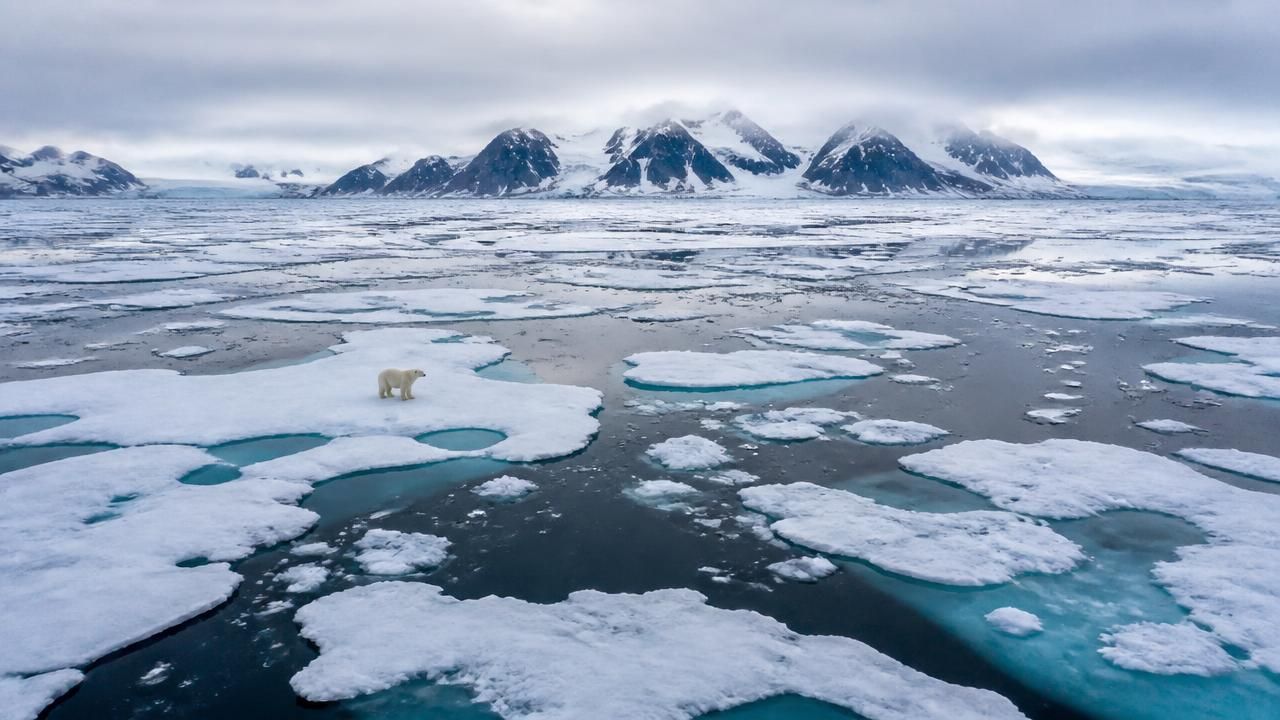
Arctic sea ice reached its annual minimum extent on September 12, 2026, covering 4.6 million square kilometers (1.78 million square miles), according to NASA and the National Snow and Ice Data Center (NSIDC). The total ties 2008, 2010 and 2022 for the 10th-lowest minimum in the satellite record, which began in 1979. NASA’s Earth Observatory called the update part of its World of Change series, which tracks long-term change on Earth’s surface through satellite imagery.
The number is not a record low. That distinction still belongs to 2012, when sea ice shrank to 3.39 million square kilometers. But 2026 adds another data point to a decades-long decline. The ice now covers less of the Arctic Ocean at both its annual maximum and minimum than it did a few decades ago, NASA noted.
Alaska-sized deficit, India-sized frame
Compared with the 1981–2010 average minimum of about 6.22 million square kilometers, the 2026 figure is roughly 1.6 million square kilometers short—an area about the size of Alaska. MSN framed the story that way: the Arctic finished an Alaska-sized area short of normal. Another MSN headline stressed the ranking: the 2026 summer low tied for the 10th-smallest ever measured.
NASA satellites captured the retreat, with imagery showing what one report called Earth’s white crown melting. Hindi-language coverage on MSN translated the scale for South Asian readers, noting that the remaining ice cover is about 1.4 times the size of India. The different framings reflect a common set of numbers viewed through regional lenses: a global climate signal, a continental-scale loss, and a local comparison that makes the abstract tangible.
Why the ice is moving strangely
Scientists have recently discovered why Arctic sea ice moves so strangely. As the ice thins, it becomes more mobile and more responsive to winds and ocean currents. Changes in atmospheric circulation—including shifts in the jet stream and more frequent storms—can push ice into warmer waters or toward coastlines, where it melts faster. That research helps explain why some years see rapid, uneven retreat even when air temperatures are not extreme.
Storms are a major part of the puzzle. Back-to-back Arctic storms can double sea ice loss, according to recent findings. A single strong cyclone can break up ice, churn warmer water upward and accelerate melt. When two storms strike in succession, the effects compound, potentially doubling the seasonal loss. This matters for the 2026 minimum because storm activity can influence how much ice survives the summer.
Polar oceans transformed
The consequences extend beyond the ice edge. Research on polar oceans shows that warming is melting ice habitats and transforming marine ecosystems. The loss of sea ice changes light availability, plankton blooms and the timing of primary production. It affects fish, seabirds, seals, walrus and polar bears, and it alters the lives of Indigenous communities that depend on stable ice for travel and hunting. The Arctic is not just losing white space on a map; it is losing a habitat, a platform and a way of life.
The ice-albedo feedback amplifies the change. Bright sea ice reflects sunlight back to space. When it melts, the darker ocean absorbs more solar energy, warming the region further. The Arctic is warming nearly four times faster than the global average, a phenomenon known as Arctic amplification. That warming can influence mid-latitude weather patterns, though the links are complex and still debated.
What it means for the planet
The 2026 minimum is a reminder that the Arctic is being reshaped in real time. Thinner, younger ice is more vulnerable to storms and warm ocean water. The decline affects shipping routes, resource development, national security and climate policy. It also affects global climate models, which rely on sea ice data to project future warming and sea-level rise.
‘Satellite records show the ice now covers less of the Arctic Ocean at its annual maximum and minimum than it did a few decades ago,’ NASA’s Earth Observatory reported.
NASA and NSIDC will continue tracking the ice through the coming winter, when it grows again toward its March maximum. The 2026 minimum will be studied alongside the storms, winds and ocean heat that shaped it. For scientists, it is another line in a long record. For the Arctic, it is another season of change.