In a significant defeat for the former administration's restrictive immigration policies, a federal judge has ruled that the Trump administration's 2020 visa ban affecting citizens of 75 countries was illegal. The policy, which effectively prohibited the issuance of visas to citizens of these nations on the grounds that they would likely need public assistance, was found to have unlawfully discriminated on the basis of nationality.
A Policy Rooted in the Public Charge Rule
The challenged measure was an extension of the "public charge" rule, a long-standing principle in U.S. immigration law that allows officials to deny entry to individuals who are likely to become primarily dependent on the government. The Trump administration expanded this concept dramatically, arguing that mere use of certain public benefits, or even the likelihood of future use, was grounds for rejection.
In early 2020, the administration went a step further, identifying 75 countries—predominantly in Africa, Asia, and Latin America—whose nationals were presumptively considered likely to require public assistance. Visa applicants from these countries were subject to heightened scrutiny and, in practice, most were denied. The policy, implemented through a presidential proclamation, bypassed the usual rulemaking process and drew immediate legal challenges.
“The policy was a blanket presumption that entirely ignored individual circumstances and the statutory framework Congress established,” said one immigration attorney familiar with the case.
The Court's Decision
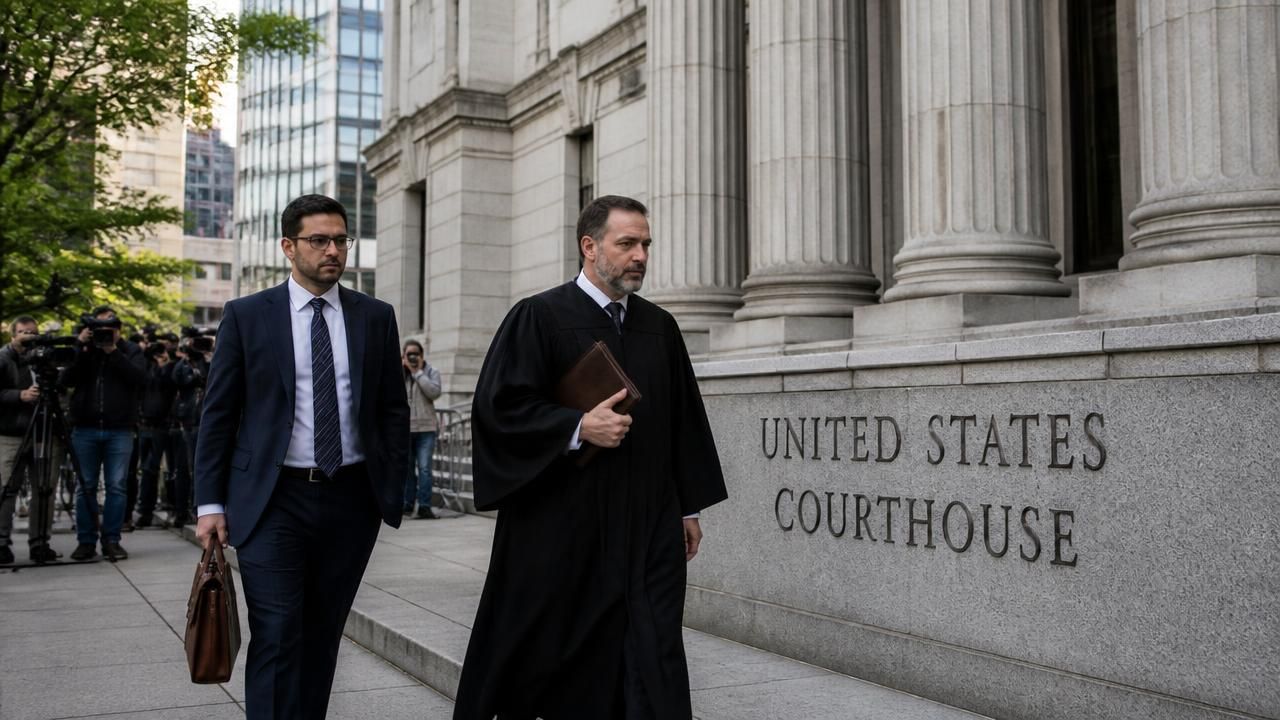
The court ruled that the policy exceeded the executive branch's authority and violated the Immigration and Nationality Act, which requires that visa decisions be made on a case-by-case basis. Judge — whose name was not disclosed in the initial ruling — found that categorically banning applicants from specific countries based on nationality was a form of discrimination not authorized by law.
The decision also criticized the administration's justification, noting that a public charge determination must be based on a person's specific age, health, family status, and financial resources—not on their passport. The court emphasized that the government provided no evidence to support the particular list of countries, making the policy "arbitrary and capricious."
Key Findings
- The policy constituted "unlawful discrimination on the basis of nationality."
- The administration failed to engage in required rulemaking, violating the Administrative Procedure Act.
- The country list was not backed by empirical data and was therefore arbitrary and capricious.
Historical Context
The public charge rule has existed in some form since 1882, but the Trump administration's 2019 expansion was the most aggressive interpretation in modern history. The 75-country ban was an unprecedented geographic extension, moving away from individualized assessment to categorical exclusion. It was part of a broader set of immigration restrictions that included travel bans on several predominantly Muslim countries and the suspension of certain work visas during the COVID-19 pandemic.
Critics argued that these policies were motivated by racial and economic bias rather than legitimate public policy concerns. Supporters, however, contended that the measures were necessary to protect American taxpayers and reduce reliance on welfare programs. The latest ruling sidesteps that political debate, focusing instead on the legal process and statutory interpretation.
Impact on Immigrant Communities
The policy disproportionately affected individuals from countries with lower average incomes, effectively creating a "wealth test" for immigration. Families were separated, and many who had waited years for visa appointments faced indefinite delays. Economic sectors that rely on immigrant labor—such as healthcare, agriculture, and technology—also voiced concern.
Advocates welcomed the ruling as a validation of their long-held argument that the policy was unjust. "This is a victory for the rule of law and for the thousands of families who were caught in a dragnet based on their nationality," said an advocate involved in the litigation. "It sends a clear message that the government cannot use nationality as a proxy for poverty."
Expert Perspectives
Immigration scholars note that the ruling reasserts the primacy of Congress in setting immigration policy. "The executive branch has broad discretion in immigration matters, but it is not a blank check," said a law professor who studies immigration law. "This decision is a reminder that discrimination, even cloaked in public charge rhetoric, is still discrimination."
Legal analysts also point to the broader significance beyond the 75 countries. The ruling may affect other pending challenges to Trump-era policies, including those related to travel bans and asylum restrictions. It reinforces the need for administrative agencies to follow procedural rules and provide evidence when implementing broad policy changes.
Implications and Next Steps
The ruling does not automatically issue visas to affected applicants, but it requires the government to return to individualized determinations. Those previously denied may have grounds to reapply, and the U.S. Department of State must now create a new process to handle these cases without the blanket prohibition.
The government is expected to appeal the decision, which could lead to a prolonged legal battle. The Biden administration has already revised the public charge rule, yet questions remain about how to balance enforcement with fairness. The outcome of this case will likely influence how future administrations craft immigration policy, and whether they can use broad-brush measures to target specific countries.
What This Means for Affected Applicants
- The decision sets a precedent that nationality alone cannot be used to presume future reliance on public benefits.
- Individuals previously denied under the 75-country ban may seek reconsideration or reapply through the standard visa process.
- The State Department must issue updated guidance to diplomatic posts regarding visa adjudications for these countries.
Conclusion
While the ruling is a milestone, the broader battle over immigration policy continues. The Biden administration's own public charge rule, which took effect in 2022, is also subject to legal challenges. The future of U.S. immigration will be shaped by these judicial and political contests for years to come.
For now, the court's decision offers a measure of justice for those who were denied opportunities merely because of the country they came from. It reaffirms a fundamental principle of immigration law: decisions must be made on the individual, not the passport.