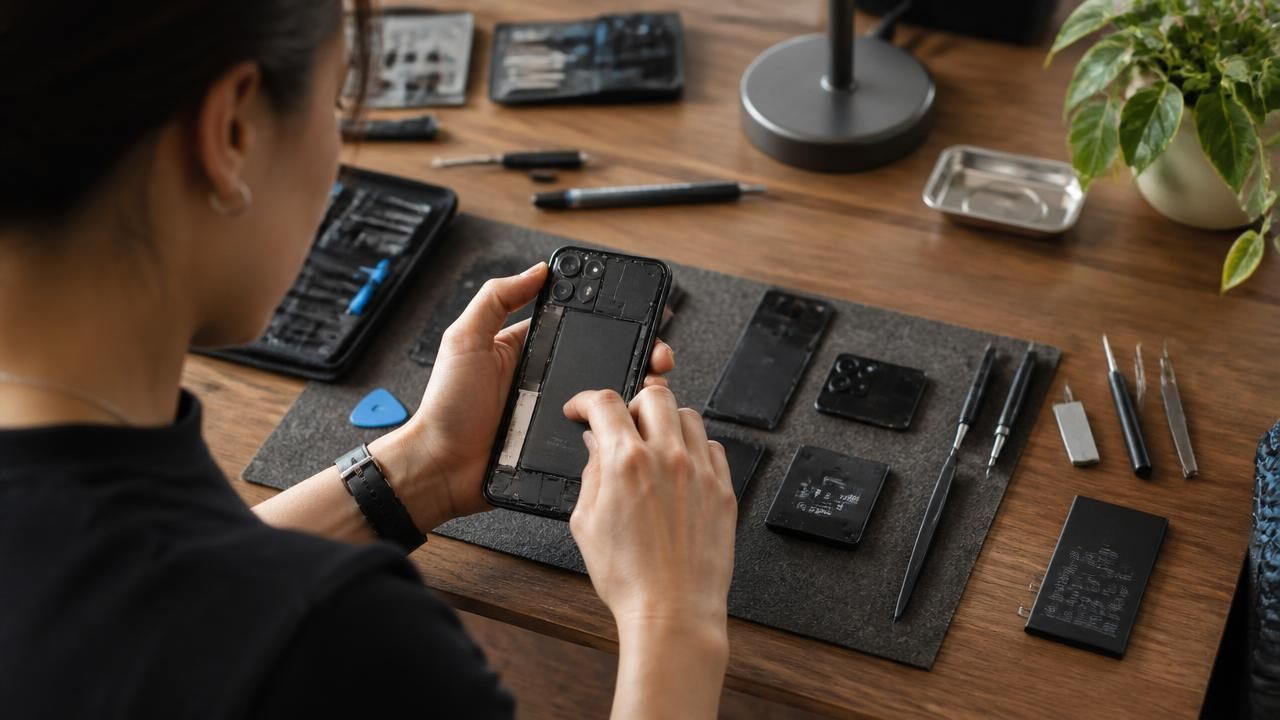
The consumer electronics industry is at a crossroads. For decades, the mantra has been 'out with the old, in with the new,' with devices designed to be replaced rather than repaired. But a growing coalition of manufacturers, activists, and consumers is pushing back, championing a future where your phone, laptop, and headphones are built to last. Recent releases and teardowns show that repairability is no longer a niche concern—it's becoming a mainstream selling point.
This shift was on full display in late 2025 and early 2026, as a wave of repairable gadgets hit the market, alongside new analyses that reveal which companies are leading the charge and which are lagging behind.
Fairphone Finally Lands in the US
One of the most anticipated developments is the arrival of Fairphone in the United States. The Dutch company, known for its modular, ethically sourced smartphones, has long been a darling of the sustainability set but was confined to European markets. That changed with the company's latest device, the Fairphone 5, now available in the US for $650. While the price is comparable to premium mid-range phones, the real value lies in its repairability.
The Fairphone 5 features a user-replaceable battery, display, camera, and USB-C port, and is designed to receive software support for at least eight years. The company also introduced the Fairphone 6, a smaller variant with swappable accessories that let users change the look and function of their device without replacing the whole phone. Adding to the ecosystem, Fairphone's new headphones offer a best-in-class module that is backward-compatible with the original model, proving that repairability can coexist with innovation.
'We're not just making phones; we're changing the way the industry thinks about ownership,' said a Fairphone spokesperson. 'Every module you can swap is a device that doesn't end up in a landfill.'
Framework Expands Its Repairable Laptop Lineup
In the laptop world, Framework has been a trailblazer with its modular, user-upgradeable designs. The company's latest release, the Framework Laptop 12, aims to make repairable laptops more accessible with a cheaper price tag and a splash of color. Unlike the company's previous models, which were primarily silver or black, the Laptop 12 comes in vibrant hues, appealing to students and creative professionals. The laptop maintains Framework's commitment to repairability, with easily replaceable components and a design that encourages upgrades rather than replacement.
Ars Technica called it 'a cheaper, more colorful take on a repairable laptop PC,' noting that it fills a crucial gap in the education market, where students often face broken devices that are difficult to fix.
The Repairability Divide: Apple and Lenovo Lag, Others Lead
Not all manufacturers are embracing the repairable revolution. A comprehensive analysis from Ars Technica found that Apple and Lenovo currently produce the least repairable laptops on the market, with components glued and soldered in ways that make upgrades or repairs nearly impossible. This stands in stark contrast to Framework and even some Dell and Asus models, which have earned high repairability scores from iFixit.
However, Apple may be slowly turning the tide. A teardown of the iPhone 17 Pro suggests a more repair-friendly design than its predecessors, with easier access to the battery and display. Yet, the iPhone Air, the company's ultra-thin model, is mostly battery, according to iFixit's teardown, leaving little room for user serviceable parts. Meanwhile, iFixit reported that the Nintendo Switch 2 is even harder to repair than the original, disappointing gamers who hoped for a more sustainable console.
The Nokia G22 and Other Budget Pretenders
Some devices market themselves as repairable but fall short in practice. Ars Technica reviewed the Nokia G22, a phone designed 'for repairability' that turned out to be 'just a normal cheap phone.' While it offered replaceable parts, the design was not significantly better than other budget devices, highlighting the gap between marketing and reality.
For those seeking truly sustainable alternatives, the PineTab 2, a Linux-based tablet, offers a different approach—no supply crunch, open source software, and a design that invites tinkering, though it won't appeal to average consumers.
The Bigger Picture: Retro Gadgets and Family Savings
The repairability movement isn't just about new products; it's also about rethinking our relationship with old ones. As ABC News reported, many 20th-century gadgets—from vintage radios to mechanical cameras—still work today precisely because they were made to be repaired. In an era of disposable tech, these retro devices stand as testaments to the value of durability.
Repair also saves families real money. A report from the Public Interest Research Group (PIRG) highlights that repairing a phone screen or replacing a laptop battery costs a fraction of buying a new device. For households already stretched by rising costs, the right-to-repair is a financial lifeline, not just an environmental nicety.
Navigating the Market: Expert Buying Advice
With so many options, how can consumers make ethical, sustainable choices? Wired's guide to buying eco-friendly electronics recommends prioritizing devices with modular components, long software support, and transparent supply chains. They also suggest checking iFixit's repairability scores before making a purchase.
For laptops, The Verge's recommendations for 'just about anyone' emphasize battery life, performance, and build quality—while increasingly factoring in repairability. Mashable's best Windows laptops for 2026 also highlights models that are easier to upgrade and service. Parents shopping for back-to-school students will find that many of the 12 best laptops for high school and college students now include repairable options from Framework and Acer.
The holiday season and Cyber Monday bring a deluge of deals, but The Guardian's gift guide for tech gadgets reminds consumers to consider long-term value over flashy features. Even baby monitors, as The Guardian's roundup notes, now come in durable, repairable designs that can be handed down through families.
For those looking to green their homes, a list of environmentally friendly gadgets includes everything from solar chargers to refillable smart pens, proving that sustainability can be integrated into every aspect of our lives.
Made in India and the Global Shift
Across the globe, the push for repairable and ethical tech is gaining momentum. Bisinfotech reports that 2025 marked the beginning of a new tech era in India, with 'Made in India' gadgets focusing on localized repair networks and sustainable manufacturing. This aligns with a broader global trend toward circular economies, where products are designed for disassembly and reuse.
Still, challenges remain. The supply chain for spare parts is often fragmented, and consumers may lack the skills or tools to perform repairs. Advocacy groups continue to push for legislation that requires manufacturers to provide parts and manuals for years after a product's release.
Conclusion: A Future We Can Fix
The repairability movement is no longer a fringe idea—it's a practical, economic, and environmental imperative. With companies like Fairphone and Framework leading the way, and analysts like iFixit holding others accountable, consumers have more choices than ever. But the onus is also on us to vote with our wallets, choose devices that can be repaired, and resist the cult of the new. In a world of finite resources, the most radical thing we can do is make things that last.