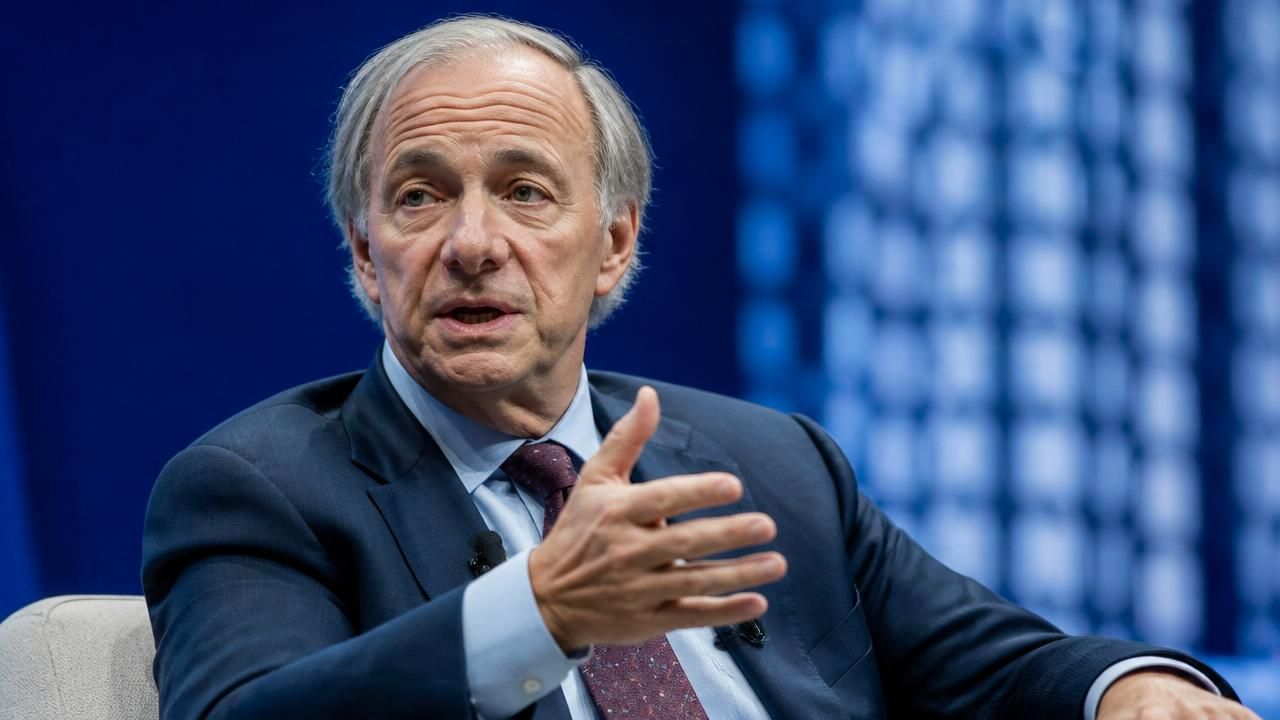
Billionaire investor and Bridgewater Associates founder Ray Dalio has issued a stark warning: the United States is careening toward a debt crisis that could trigger a 1930s-style financial repression, and investors should reposition now by holding gold and bitcoin in place of bonds. With the national debt now exceeding $38 trillion, Dalio argues that the country is “past the point of no return.”
“Gold is now the second-largest currency,” Dalio said, citing what he calls “capital wars” that are driving central banks and investors into bullion. “My grandchildren and great grandchildren not yet born are going to be paying off this debt.”
Dalio’s warning has resonated across financial media, from Bloomberg to Kitco, Yahoo Finance, and TheStreet. His core advice: sell bonds, buy gold, and allocate up to 15% of a portfolio to gold and bitcoin. In a recent series of comments, he suggested that the Federal Reserve’s policies are inflating a bubble that could send both assets soaring before ultimately imploding.
A Debt Spiral Worse Than a Recession
Dalio has long warned about the unsustainable trajectory of US government debt. He now says the nation is in a “debt death spiral” that could hit within three years. The combination of high interest rates – with 10-year Treasury yields around 5% – and rising debt servicing costs threatens to crowd out other government spending and force the Fed into monetary financing, a process known as financial repression.
“We’re heading for challenging times by 2029,” Dalio said, echoing the ominous timeline he has laid out in his recent book, “Principles for Dealing with the Changing World Order.” He contends that the “world order has broken down” as major powers compete for capital and resources.
His concerns are shared by political figures abroad. Iran’s Supreme Leader Ayatollah Ali Khamenei recently mocked America’s financial state, warning of a “brand new” crisis hitting the US as Treasury yields climb and the national debt balloons to $39 trillion. While Khamenei’s taunts are politically motivated, they underscore the global perception that American fiscal dominance is weakening.
The Gold vs. Bitcoin Debate
Dalio’s recommendation to hold both gold and bitcoin marks a shift from his earlier skepticism of cryptocurrency. He now calls bitcoin an “alternative currency” and a potential hedge against fiat devaluation. However, he maintains that gold is the more reliable store of value. Kitco News reports that Dalio views gold as “the second-largest currency” in the world, after the US dollar, with central banks globally increasing their bullion reserves.
BlackRock, the world’s largest asset manager, has also weighed in, suggesting that the $38 trillion debt could boost bitcoin, gold’s most prominent rival. In a report, BlackRock noted that growing fiscal deficits and debasement fears are pushing investors toward hard assets and emerging digital stores of value.
Robert Kiyosaki, author of “Rich Dad Poor Dad,” has likewise urged investors to accumulate bitcoin before the “global debt bubble bursts.” In a recent social media post, Kiyosaki warned that the coming financial reset will reward those who hold bitcoin, gold, and silver, while savers in fiat currencies will be left impoverished.
Implications for Investors
Dalio’s advice represents a fundamental challenge to traditional portfolio construction, where bonds are seen as the safe-haven allocation. With interest rates high and debt levels rising, he argues that bonds are becoming one of the riskiest assets. He recommends that investors hold 5–15% in gold as a hedge, and consider bitcoin as a smaller, speculative alternative.
- Reduce or eliminate long-term bond holdings
- Allocate 5–15% of your portfolio to gold
- Consider a small allocation to bitcoin as a currency hedge
- Prepare for financial repression and potential currency devaluation
Not everyone agrees with Dalio’s timing. Some analysts point out that bitcoin’s volatility makes it a poor hedge compared to gold, and that Dalio himself has been relatively late to embrace crypto. Others argue that calling for a crisis is a perennial Wall Street pastime, and that the US has repeatedly avoided default through monetary expansion. However, the sheer scale of the debt – and the political unwillingness to address it – makes Dalio’s warnings hard to dismiss.
The Path Forward
Dalio’s message is clear: the era of easy money and stable debt markets is ending. Whether through a slow slide into financial repression or an abrupt debt crisis, the coming years will likely be defined by currency devaluation and a restructuring of global finance. For investors, the lesson is to diversify beyond paper assets and into those that have held value for millennia – gold – and those that represent the future of money – bitcoin.
As Dalio's warnings gain traction across the financial world, the debate over how to protect wealth intensifies. One thing is certain: the conversation has moved from the fringes into the mainstream, as more investors ask not whether the debt crisis will come, but how they can survive it.