In a significant strategic reversal, the European Space Agency (ESA) has confirmed that planned upgrades for the Ariane 6 rocket—designated Block 3—have been shelved. The decision, reported by multiple outlets including Ars Technica and European Spaceflight, marks a sober reckoning for Europe's flagship launch vehicle, which has enjoyed a smooth operational debut but now faces a future clouded by high costs and fierce competition from SpaceX and others.
ESA Confirms Shelving of Block 3 Upgrades
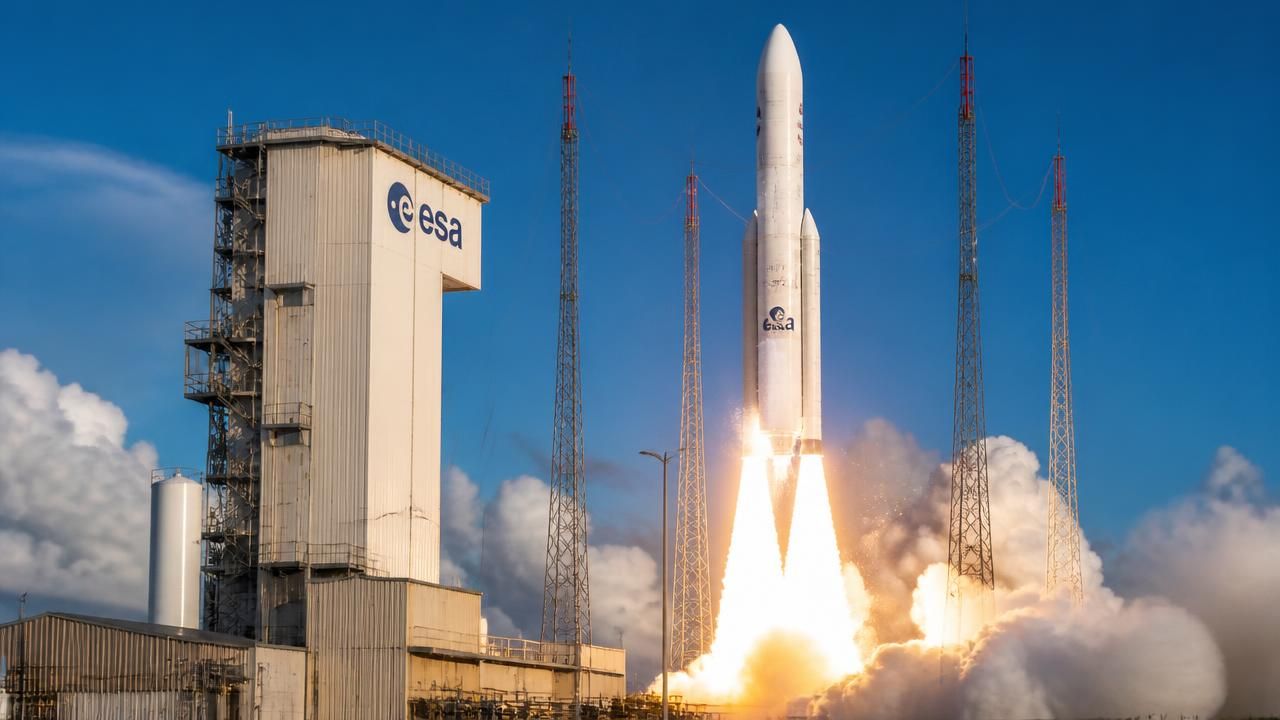
According to European Spaceflight, ESA has officially confirmed that the Ariane 6 Block 3 upgrades—which were intended to increase payload capacity and reduce costs—have been canceled. The move comes just two years after the rocket's largely successful maiden flight, during which it has completed eight missions, all reaching orbit safely. Ariane 6 boasts a capacity of more than 20 metric tons to low-Earth orbit, making it a workhorse for European institutional launches and commercial satellites alike.
However, the program has struggled to achieve the cost efficiencies needed to compete with reusable launchers, particularly SpaceX's Falcon 9. An earlier report from Ars Technica highlighted that despite its robust performance, the Ariane 6's future was "clouded by high costs." The shelving of Block 3 upgrades is a direct acknowledgment that further investment in an expendable architecture may not yield the necessary returns.
A Success Story Clouded by Cost
Ariane 6's rollout has been notably smoother than comparable U.S. vehicles. Blue Origin's New Glenn and United Launch Alliance's Vulcan Centaur have both experienced significant growing pains, including delays and anomalies. In contrast, Ariane 6 has conducted eight successful launches since its debut, earning praise from European officials. Yet, as Ars Technica notes, "even though the Ariane 6 rocket has had a successful debut, its future is clouded by high costs."
The cost issue is not new. When Europe agreed to build the new-generation Ariane 6 in 2014 (as reported by France 24), the goal was to halve launch costs compared to its predecessor, Ariane 5. But savings have been elusive, and with SpaceX driving down prices industry-wide, Ariane 6 remains commercially uncompetitive. The decision to cancel Block 3—which likely included upgrades to the upper stage and boosters—underscores the financial reality.
"Reusable Ariane 6 'Not Economically Interesting,'" said ArianeGroup CEO, according to European Spaceflight, capturing the prevailing sentiment in the industry that reusability is the future—but not for this rocket.
Delays and Anomalies Add Pressure
Compounding the cost challenge, Arianespace has pushed the first flight of the Ariane 64 variant—the version with four boosters designed for heavier payloads—back to 2026. Originally slated for February 2025, the delay reflects both technical hurdles and the uncertain demand environment. In a separate development, an anomaly during an earlier Ariane 6 mission was deemed to have "no consequence" on upcoming missions, according to European Spaceflight, but it underscores the fragility of the program.
Meanwhile, ESA has also signaled "no urgency" to upgrade the Vega C booster, another workhorse in Europe's launch fleet. This parallel cost-cutting measure suggests a broader retrenchment as the agency prioritizes budget discipline over capability expansion.
Rocket Shortage Looming by 2030
The timing of these cuts is problematic. A report from Yahoo News highlights that Europe faces a rocket shortage by 2030 as satellite demand surges, driven by mega-constellations and Earth observation. The situation was worsened by Russia's suspension of Soyuz launch operations from French Guiana, which removed a critical intermediate-class vehicle from Europe's arsenal. The loss of Soyuz left a gap that Ariane 6 and Vega C were expected to fill, but delays and now shelved upgrades threaten to leave Europe dependent on non-European launchers.
The global launch market is consolidating, and SpaceX continues to dominate with its reusable Falcon 9 and Starship. For Europe, maintaining independent access to space is both a strategic and political imperative. The cancellation of Block 3 upgrades raises fundamental questions about the continent's ability to compete.
Perspectives on the Decision
Coverage of the shelved upgrades varies. Ars Technica frames it as a sobering acknowledgment of economic realities, pointing out that even successful launch vehicles can be rendered obsolete by cost. European Spaceflight provides technical depth, noting that the Ariane 6 and Vega C P160C booster upgrade had already passed critical design review and was fully qualified—meaning the capabilities were within reach, but the cost-benefit calculation no longer made sense.
Space.com focused on the rocket's early successes, highlighting its third launch which sent a weather satellite into orbit. This pattern—operational excellence versus economic viability—reflects the broader dilemma facing Europe: it can build excellent rockets, but it cannot yet build them cheaply enough.
What's Next for Europe?
With upgrades shelved, Europe must now look to next-generation concepts. The ArianeGroup CEO's dismissal of a reusable Ariane 6 suggests that any future reusable vehicle will need a clean-sheet design. ESA has begun preliminary work on a new generation of low-cost, partially reusable launchers, but these remain years away. In the interim, Europe will have to rely on existing Ariane 6 and Vega C vehicles, even as their upgrades are deferred.
The decision to cancel Block 3 is not without risk. It may save money in the short term, but it could widen Europe's launch gap just as demand surges. With competitors like SpaceX and China's Long March rockets aggressively courting commercial customers, Europe's market share could erode further. The once-dominant Arianespace now finds itself in a defensive posture, forced to make tough choices to remain relevant in an industry defined by rapid innovation.
Ultimately, the shelving of Ariane 6 upgrades is a warning that technical success is not enough in the new space economy. Affordability, reusability, and agility are now the key currencies—and Europe is still searching for a rocket that can deliver all three.