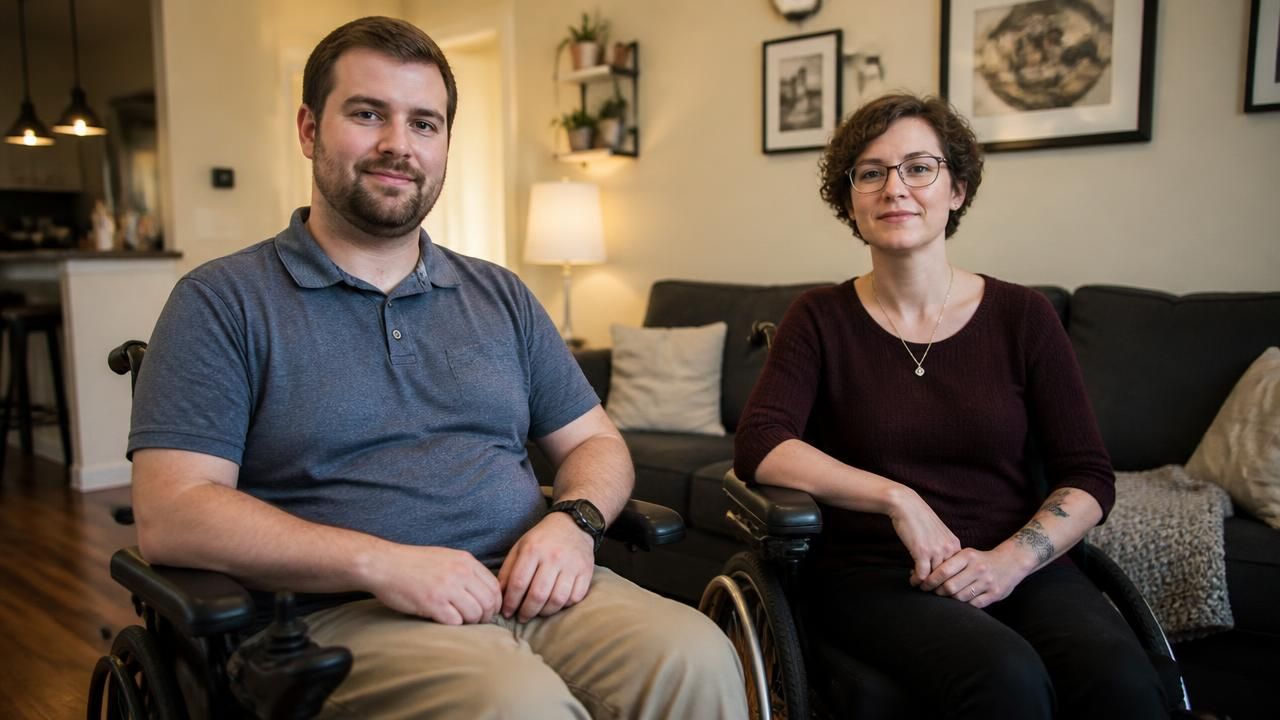
For Cody and Kaleigh Brendle, the Americans with Disabilities Act (ADA) was not just a law—it was a promise. Growing up with cerebral palsy, they were among the first generation of Americans with disabilities to expect a life of inclusion: neighborhood schools, competitive employment, and the freedom to choose where to live. That promise, rooted in the 1990 ADA and reinforced by the 1999 Supreme Court ruling in Olmstead v. L.C., is now under threat, and the Brendle siblings have become impassioned advocates determined to protect it.
"We were told we could grow up and be part of our communities, and we did," says Kaleigh, 32, a graphic designer living in Richmond, Virginia. "But now, with budget cuts and new legislative proposals, we're seeing that promise unravel."
A Promise of Integration
The ADA famously prohibits discrimination against people with disabilities, but it was the Olmstead decision that cemented their right to live and receive services in the community rather than in institutions. The ruling held that segregation of individuals with disabilities is a form of discrimination under the ADA, requiring states to provide community-based services whenever appropriate.
For the Brendles, that meant growing up in a family home, attending mainstream classes, and eventually living semi-independently with supportive services. Cody, 34, works part-time at a library and lives in an apartment with a roommate, with in-home care funded by Medicaid's Home and Community-Based Services (HCBS) waiver. "That waiver is my independence," Cody explains. "Without it, I'd be forced into a nursing home just because of my disability."
The evolution of disability policy since the 1960s has been dramatic. In 1967, nearly 200,000 people with intellectual disabilities lived in large state institutions. By 2020, that number had plummeted to fewer than 20,000, thanks largely to advocacy and legal victories. The Brendles represent a generation that has never known the institutionalized past—but they fear their future may look like it.
A New Threat
The threats today are not overt calls to reinstate institutions. Rather, they come in the form of proposed Medicaid block grants, work requirements for beneficiaries, and state budget shortfalls exacerbated by inflation and the end of pandemic-era funding. Disability rights advocates point to a spate of state-level proposals that would cap HCBS waivers, extend waiting lists, or impose strict eligibility reviews. In Virginia, a bill introduced earlier this year would have cut funding for community-based disability services by 15%—a measure supporters said was necessary to balance the budget but opponents criticized as a return to the "warehousing" era.
"We're seeing a slow erosion," says Susan Fisher, a disability rights attorney with the Arc. "It's not a repeal of the ADA, but a hollowing out of the services that make community integration a reality. Without HCBS, Olmstead is just a piece of paper."
"We grew up believing that integration was a right. Now we're having to fight for it like it's a privilege." — Kaleigh Brendle
The Cost of Regression
Advocates warn that the human toll of such rollbacks is matched by a fiscal one. Numerous studies have shown that community-based care is often less expensive than institutionalization. A 2019 Kaiser Family Foundation analysis found that the median annual cost of HCBS was about $36,000 per person, compared to over $70,000 for a nursing facility. Yet, because Medicaid is an entitlement for institutional care but not for home- and community-based services, a structural bias persists.
According to the Kaiser Family Foundation, in 2022, nearly 800,000 people with disabilities were on HCBS waiting lists, waiting months or years for services. "When you cut or stagnate funding for these waivers, you're not saving money; you're shifting costs to families, to emergency rooms, and to a less productive society," notes Dr. Michael Turner, a health policy researcher at Georgetown University.
Data That Tells the Story
- 660,000: Number of people on Medicaid HCBS waiting lists in 2023, up from 450,000 in 2016.
- 4 to 1: Ratio of people with disabilities who prefer community living over institutions, per a 2021 survey.
- 34%: Increase in state proposals to restrict or reduce disability services in 2023, as tracked by the disability policy consortium.
Why Now?
The Brendles have taken their fight to state capitols and to Washington. They recently testified before a Senate subcommittee on health and disability policy, urging lawmakers to reject a House budget proposal that would convert Medicaid to a block grant, a move they say would inevitably lead to reduced services. "We're not asking for charity," Cody told the committee. "We're asking to have the same opportunities as everyone else to live, work, and contribute to our communities."
When asked why now, the siblings point to a confluence of factors: the ongoing pandemic disrupted routines and services, labor shortages in direct care have reached crisis levels, and political fatigue with "special interests" has made disability programs an easier target. "There's a perception that we've already achieved equality because of the ADA," Kaleigh says. "But a law is only as strong as the services that support it."
Implications for the Future
The stakes are existential for the disability community. Without robust community services, the ADA's promise of integration is unfulfilled. Legal experts say that while Olmstead remains the law, a lack of funding and state discretion in administering Medicaid allow for de facto segregation. "If a state simply fails to provide HCBS capacity, there is little individuals can do," Fisher explains. "The courts have been reluctant to second-guess state funding decisions."
The Brendles remain hopeful, citing a growing coalition of disability advocates, family members, and even some lawmakers who have personal connections to disability. "The pendulum has swung before, but every time, we've pushed it back," Kaleigh says. "We have to. Our lives depend on it."
How You Can Help
The siblings encourage people to engage with disability rights organizations, contact their representatives, and, most importantly, listen to the experiences of those with disabilities. "We don't need people to speak for us," Cody adds. "We need them to stand with us."
As they leave the hearing room, Cody and Kaleigh both pause to watch a group of young adults with disabilities entering the building, many in wheelchairs and others with service animals. "They're the next generation," Kaleigh says quietly. "We have to leave them the same rights we were given—if not better."